Smyrnium, Genus, spp., Multiple species,
- Genus
- Multiple species
alexanders
Europe, the Mediterranean, North Africa, and western Asia
Overview
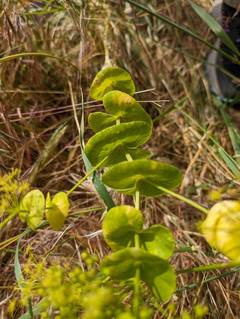
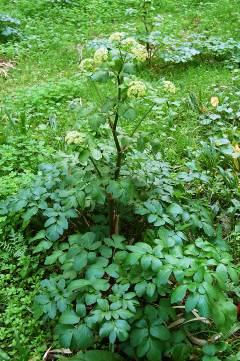
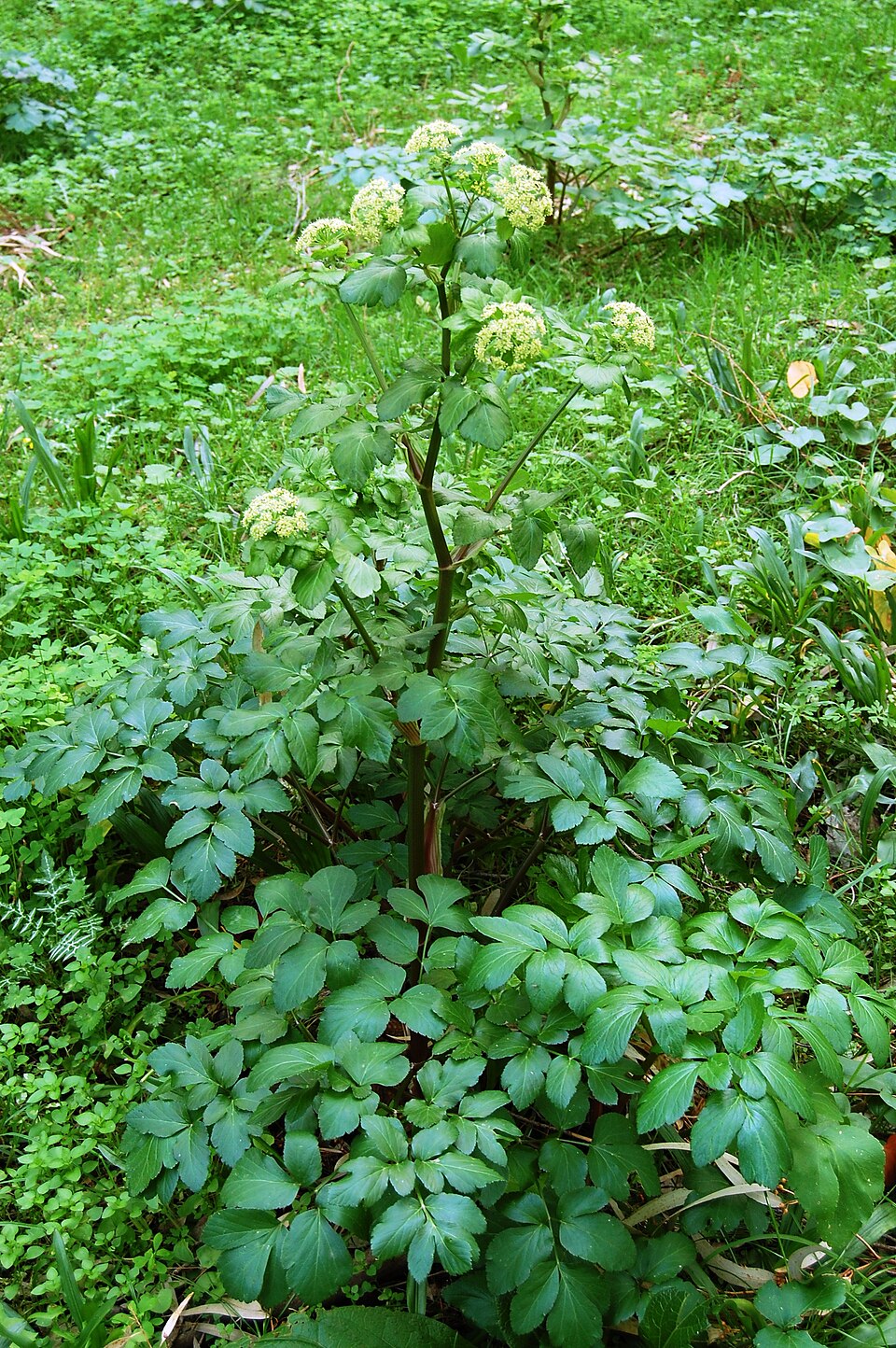
Smyrnium is a genus of biennial and perennial herbs in the carrot family, with about eight species native to Europe, North Africa, and western Asia. Alexanders (Smyrnium olusatrum), the species most often grown, forms a leafy clump the first year and a branched, solid stem 2-5 feet (0.6-1.5 m) tall the second. Lower leaves are large, glossy, and divided into broad, toothed leaflets in threes; upper leaves of some species, such as S. perfoliatum, are yellow-green and clasp the stem. Domed compound umbels of tiny yellow-green flowers, 1-2.5 inches (2.5-6 cm) across, open in spring. The flowers are followed by ridged black fruits. The whole plant is aromatic, and the stems, leaves, and roots of S. olusatrum were once widely eaten as a pot herb. As a biennial, the plant dies after flowering and setting seed. It self-sows freely and can naturalize on roadsides, hedge banks, and coastal ground.
Native Range
Smyrnium is native to Europe, the Mediterranean region, North Africa, and western Asia. It grows in hedgerows, woodland edges, roadsides, waste ground, and coastal banks, on moist, fertile soils. S. olusatrum has naturalized widely in temperate Europe, especially near the coast.Suggested Uses
Grown in herb gardens, wild and woodland plantings, and edible landscapes, spaced 12-18 inches (30-45 cm) apart, with the young stems and leaves of S. olusatrum used as a vegetable and S. perfoliatum grown for its yellow-green spring foliage. The free self-sowing and large size leave it hard to contain in small, formal beds. The umbels attract early bees and hoverflies.How to Identify
Appearance
Size & Dimensions
Height2' - 5'
Width/Spread1' - 2'
Bloom Information
Flowering occurs in spring, mainly April through June, earlier than many umbellifers. The umbels open over three to four weeks. Black ridged fruits ripen by midsummer, after which the biennial plant dies back.
Detailed Descriptions
Foliage Description
glossy dark green to yellow-greenGrowing Conditions
Sun Requirements
Requires 4-8 hours of direct sunlight daily
• Full Sun: 6+ hours of direct sunlight
• Partial Shade: 3-6 hours of direct sunlight
• Full Shade: Less than 3 hours of direct sunlight
Care & Maintenance
Care Guide
Smyrnium grows in full sun to part shade on moist, fertile soils and tolerates the partial shade of hedge banks and woodland edges. It is raised from seed sown fresh in fall, as germination can be slow and erratic and the taproot resists transplanting. Plants form a leafy rosette the first year and flower in the second. They self-sow freely and can spread where seed is left to ripen. Few pests or diseases affect them.Pruning
No routine pruning is needed. Cutting back flowering stems before the seed ripens limits self-sowing. Spent biennial plants die after fruiting and are cleared.Toxicity
Non-toxicPlanting Guide
Planting Methods & Timing
Planting Method
direct sow
Plant Spacing
15 inches