Sisymbrium, Genus, officinale, Species,
- Genus & species
hedge mustard
Europe, North Africa, temperate Asia
SunFull Sun
Overview
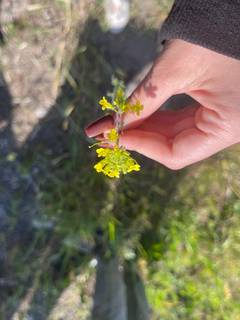
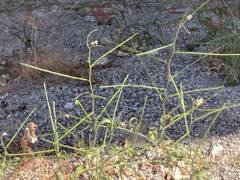
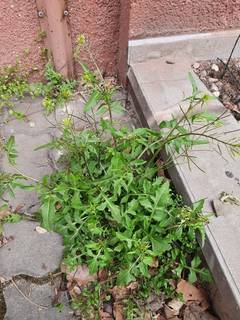
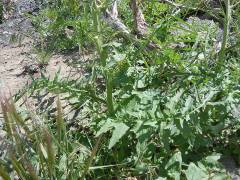
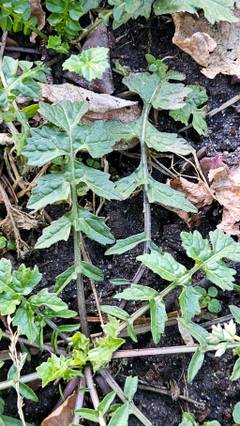
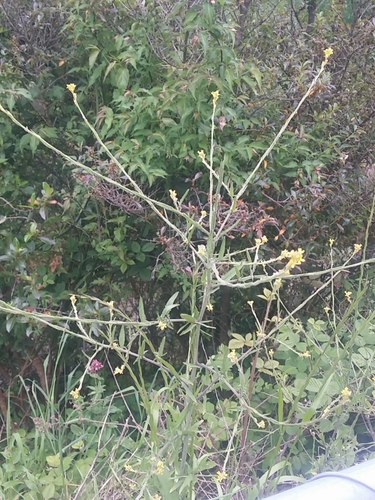
Sisymbrium officinale is an erect annual or biennial herb of the cabbage family, growing 1-3 feet (30-90 cm) tall with a stiff, wiry, widely branching stem. A basal rosette of deeply lobed leaves forms first; the lower stem leaves are lyre-shaped and 2-8 inches (5-20 cm) long, while the upper leaves are smaller and narrower. From late spring through summer the branch tips carry small four-petaled yellow flowers about 0.1-0.3 inch (3-8 mm) across in elongating clusters. The seed pods are narrow, 0.3-0.8 inch (8-20 mm) long, and pressed tightly against the stem on short stalks, tapering to a point. Each plant produces large numbers of seeds and self-sows freely, behaving as a pioneer of disturbed ground. The young leaves have a long record of culinary and folk-medicinal use for the throat and voice. It grows on roadsides, waste ground, field margins, and gardens, tolerating poor soil and drought but completing its short life cycle within a single season in most climates.
Native Range
Native to Europe, North Africa, and temperate Asia. It has naturalized across North and South America, southern Africa, and Australasia, growing as a common weed of cultivated and disturbed land.Suggested Uses
Grown occasionally in herb and culinary gardens for its peppery young leaves and traditional use as a throat remedy. In most settings it appears as a self-seeded plant of waste ground rather than an intentional planting.How to Identify
Appearance
Size & Dimensions
Height1' - 3'
Width/Spread8" - 1'6"
Bloom Information
Detailed Descriptions
Foliage Description
greenGrowing Conditions
Sun Requirements
Requires 6-10 hours of direct sunlight daily
• Full Sun: 6+ hours of direct sunlight
• Partial Shade: 3-6 hours of direct sunlight
• Full Shade: Less than 3 hours of direct sunlight
Water & Climate
Water Needs
Drought Tolerance
Drought tolerant when established
Care & Maintenance
Care Guide
Grows in full sun on almost any well-drained soil, including poor, dry, and disturbed ground, across a pH of 6.0-8.0. It tolerates drought and low fertility and needs no supplemental water in most climates. As a fast-cycling annual or biennial, it is grown from seed sown in spring, germinating readily on bare soil. Dense shade and waterlogged ground limit its growth. It self-sows heavily and can become weedy, so removing seed pods before they ripen controls its spread. No fertilizer is needed.Pruning
No formal pruning is required. Cutting or pulling plants before the pods ripen prevents seeding and limits spread. Spent plants are cleared once they have dried after seed set.Toxicity
Non-toxicPlanting Guide
Planting Methods & Timing
Planting Method
direct sow
Direct Sow Timing
spring
Days to Maturity
60–90 days
Plant Spacing
8 inches