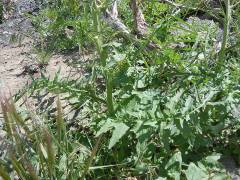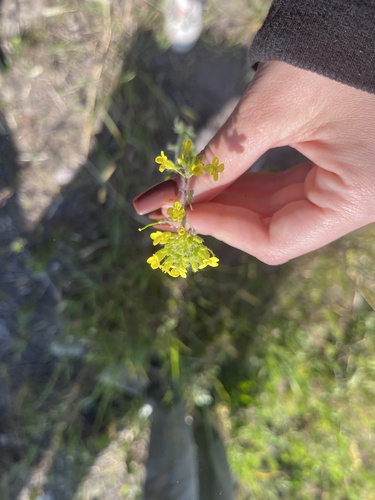
Sisymbrium, Genus, spp., Multiple species,
- Genus
- Multiple species
Hedgemustards
Europe, temperate Asia, and North Africa
SunFull Sun
Overview
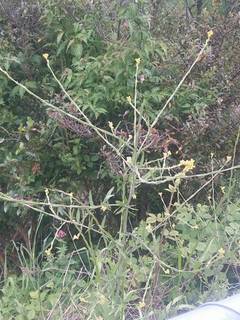
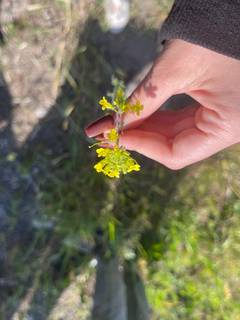
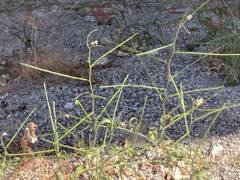
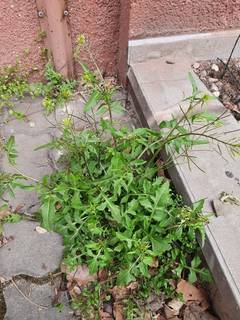
Sisymbrium is a genus of about 40 annual, biennial, and short-lived perennial herbs in the mustard family, Brassicaceae, known as hedge mustards. Plants form a basal rosette of deeply lobed leaves and send up branched stems 1-3.5 feet (30-105 cm) tall. The small four-petaled flowers are usually pale to bright yellow, 0.1-0.3 inch (3-8 mm) across, carried in elongating clusters at the stem tips. As flowering continues, the cluster stretches and forms slender cylindrical seed pods (siliques) 0.4-4 inches (1-10 cm) long pressed close to the stem. The genus is native to Europe, Asia, and North Africa, and several species, including S. officinale and S. irio, have naturalized worldwide as weeds of roadsides, fields, and waste ground. Young leaves and shoots of some species are edible and have been used as a pungent potherb. Most species complete their cycle quickly, germinating in autumn or spring and flowering within months, then dying after setting large quantities of seed. Plants tolerate poor, dry soil but spread quickly and can become weedy in cultivated ground.
Native Range
Sisymbrium is native to Europe, temperate Asia, and North Africa, with its center of diversity in the Mediterranean and western Asia. Several species have naturalized across North and South America, southern Africa, and Australia, where they grow on disturbed and cultivated ground.Suggested Uses
Grown occasionally as an edible potherb and salad green from young leaves, and used in some herbal traditions. In the wild the genus is mostly a pioneer of disturbed soil rather than a garden plant. Naturalized species appear on roadsides, field edges, and waste ground.How to Identify
Appearance
Size & Dimensions
Height1' - 3'6"
Width/Spread8" - 1'6"
Bloom Information
Flowering runs from spring into autumn, generally April to October, with overlapping waves of small yellow flowers as the stems keep elongating. Each plant blooms for many weeks because new flowers open at the tips while pods ripen below. In mild climates some plants flower nearly year-round.
Detailed Descriptions
Foliage Description
greenGrowing Conditions
Sun Requirements
Requires 6-10 hours of direct sunlight daily
• Full Sun: 6+ hours of direct sunlight
• Partial Shade: 3-6 hours of direct sunlight
• Full Shade: Less than 3 hours of direct sunlight
Water & Climate
Water Needs
Drought Tolerance
Drought tolerant when established
Care & Maintenance
Care Guide
Sisymbrium species grow in full sun on a wide range of soils, from fertile loam to poor, dry, or disturbed ground, with a pH near 6.0-7.5. The genus grows with little care and self-sows freely once established. Seed germinates in autumn or spring without special treatment, and plants need little water once rooted. Crowded stands thin themselves as plants compete. Clearing plants before pods ripen limits the spread of seed, which can persist in soil for years.Pruning
Sisymbrium requires no pruning. Cutting or pulling plants before the pods ripen reduces self-seeding. Spent plants are cleared at the end of the season as they die back.Toxicity
Non-toxicPlanting Guide
Planting Methods & Timing
Planting Method
direct sow
Direct Sow Timing
Autumn or early spring
Days to Maturity
50–90 days
Plant Spacing
8 inches