Silybum, Genus, spp., Multiple species,
- Genus
- Multiple species
milk thistle
Mediterranean, southern Europe, North Africa, and western Asia
Overview
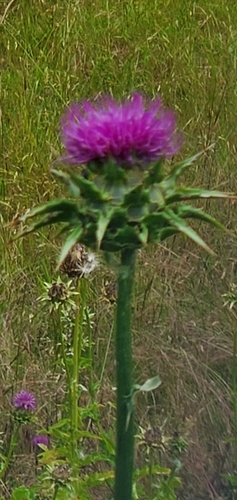
Silybum is a genus of two species of robust annual or biennial herbs in the daisy family, native to the Mediterranean region. Milk thistle (Silybum marianum), the widely grown species, forms a basal rosette in its first year and a branched flowering stem 2-6.5 feet (0.6-2 m) tall in the second. Leaves are large, 8-24 inches (20-60 cm) long, deeply lobed, glossy green with white marbling along the veins, and edged with stout yellow spines. Solitary flower heads 1.5-3 inches (4-8 cm) across open at the stem tips, with rose-purple disc florets above a base of broad, spine-tipped bracts. Flowering occurs in late spring and summer. The heads produce shiny brown seeds tipped with a ring of white hairs. As a biennial or annual, the plant dies after setting seed, which it does in large quantity. S. marianum self-sows aggressively and has naturalized as a weed of pastures and roadsides on several continents. The spiny foliage and seed heads make handling difficult.
Native Range
Silybum is native to the Mediterranean region, southern Europe, North Africa, and western Asia, extending into the Middle East. It grows in open, sunny sites on disturbed, dry to moderately moist soils, including pastures, roadsides, and waste ground. S. marianum has naturalized widely in the Americas, Australia, and other warm-temperate regions.Suggested Uses
Grown in herb gardens, dry borders, and wildlife plantings, spaced 18-24 inches (45-60 cm) apart, and cultivated commercially for seed used in herbal products. The aggressive self-sowing and sharp spines leave it hard to place in small or formal gardens. The seed heads attract goldfinches and other seed-eating birds.How to Identify
Appearance
Size & Dimensions
Height2' - 6'6"
Width/Spread1'6" - 3'
Bloom Information
Flowering occurs from late spring into summer, mainly May through August depending on climate. Each head blooms over one to two weeks, and a branched plant flowers over four to six weeks. Seed heads ripen and shed shiny seeds from mid to late summer.
Detailed Descriptions
Foliage Description
glossy green with white marblingGrowing Conditions
Sun Requirements
Requires 6-12 hours of direct sunlight daily
• Full Sun: 6+ hours of direct sunlight
• Partial Shade: 3-6 hours of direct sunlight
• Full Shade: Less than 3 hours of direct sunlight
Care & Maintenance
Care Guide
Milk thistle grows in full sun on dry to moderately moist, well-drained soils and tolerates poor, stony ground. It is raised from seed sown in place, as the long taproot resists transplanting. Established plants withstand drought and heat. The plant self-sows heavily, and seedlings can become weedy where seed heads are left to ripen. Few pests or diseases trouble it. The stout spines on leaves and heads make cutting and removal slow.Pruning
No routine pruning is needed. Removing flower heads before the seed ripens limits self-sowing and naturalized spread. Spent plants are cut down and cleared after fruiting; the spiny stems and heads resist easy handling.Toxicity: Not assessed
UnknownPlanting Guide
Planting Methods & Timing
Planting Method
direct sow
Plant Spacing
24 inches
