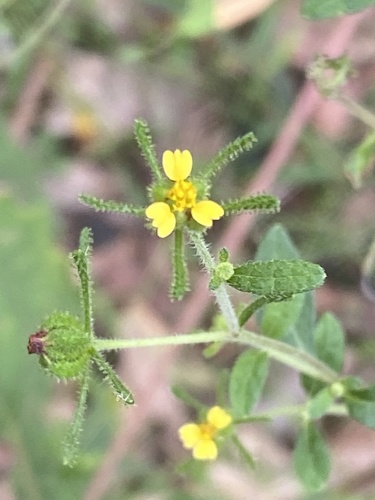
Sigesbeckia, Genus, orientalis, Species,
- Genus & species
eastern St Paul's-wort
SunFull Sun – Part Shade
WaterMedium
Overview
Sigesbeckia orientalis is an erect annual herb 30-100 cm (12-39 in) tall, with branched, softly hairy stems. The leaves are opposite, triangular to ovate, 4-12 cm (1.6-4.7 in) long, with toothed margins and a tapering base. Small yellow flower heads about 1 cm (0.4 in) across are carried in open branched clusters at the stem tips. Each head is backed by spreading, narrow bracts tipped with stalked glands that exude a sticky secretion, and these bracts close around the ripe seeds and cling to fur and clothing to aid dispersal. The plant flowers from summer into autumn and completes its life cycle in a single season, dying after setting seed. It grows on disturbed ground, roadsides, creek banks, and pasture across a wide climatic range and is treated as a weed in many farming areas. The foliage has been used in traditional herbal medicine in parts of Asia. Plants set abundant seed and spread quickly on bare moist soil, while competition from established vegetation limits where it can take hold.
Native Range
Widely distributed through Australia, Asia, and Africa, and naturalised in other warm regions. It grows on disturbed ground, roadsides, pastures, and creek banks.Suggested Uses
Grown occasionally in herbal and ethnobotanical collections for its traditional medicinal use. Otherwise treated as a weed of pasture, crops, and disturbed land. Seldom planted as an ornamental.How to Identify
Appearance
Size & Dimensions
Height1' - 3'3"
Width/Spread8" - 1'4"
Bloom Information
Detailed Descriptions
Foliage Description
greenGrowing Conditions
Sun Requirements
Requires 5-10 hours of direct sunlight daily
• Full Sun: 6+ hours of direct sunlight
• Partial Shade: 3-6 hours of direct sunlight
• Full Shade: Less than 3 hours of direct sunlight
Water & Climate
Water Needs
Care & Maintenance
Care Guide
Grows in full sun to light shade on most moderately fertile soils with steady moisture. It germinates on bare, disturbed ground in spring and grows rapidly through the warm season. No feeding or special care is needed, as the plant grows readily on neglected sites. Dry soil shortens its life and reduces size. It self-seeds freely, so clearing spent plants before the seed ripens reduces spread. Frost ends the growing season.Pruning
No pruning is required for this annual. Clearing flowering stems before the seed sets limits self-seeding. Whole plants can be pulled once they begin to die back in autumn.Toxicity: Not assessed
UnknownPlanting Guide
Planting Methods & Timing
Planting Method
direct sow
Direct Sow Timing
spring, once soil has warmed