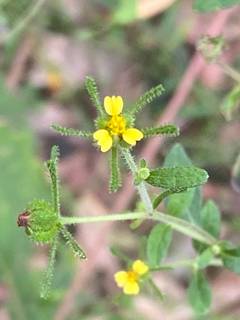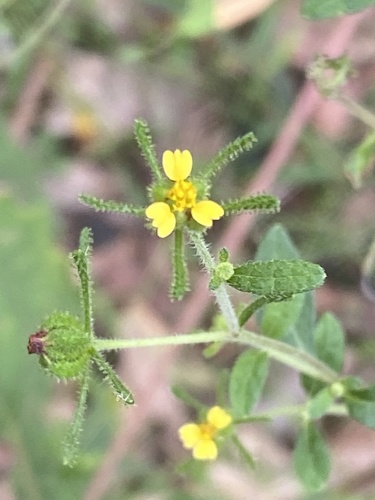
Sigesbeckia, Genus, spp., Multiple species,
- Genus
- Multiple species
St. Paul's wort
Tropical and subtropical Asia, Africa, the Americas, and the Pacific
SunFull Sun – Part Shade
WaterMedium
Overview
Sigesbeckia is a genus of annual herbs in the daisy family, with about eight species distributed across tropical and warm-temperate regions worldwide. Plants form erect, branched stems 12-48 inches (30-120 cm) tall, often covered in glandular hairs. Leaves are opposite, triangular to oval, 1.5-6 inches (4-15 cm) long, with toothed margins and tapering bases. Small yellow flower heads, 0.2-0.4 inch (5-10 mm) across, combine short ray florets with a central disc and sit above spreading, club-shaped bracts tipped with sticky glands. Flowering occurs through summer and fall. The bracts secrete a sticky substance that causes the small dry seeds to cling to fur and clothing, aiding dispersal. As an annual, the plant grows, flowers, and dies within one season, relying on seed to return. It self-sows readily and behaves as a weed of fields, roadsides, and waste ground in warm climates. Several species are used in traditional herbal medicine.
Native Range
Sigesbeckia species are native to tropical and subtropical regions of Asia, Africa, the Americas, and the Pacific, with S. orientalis ranging widely across the Old World tropics. They grow in open, disturbed habitats such as fields, roadsides, clearings, and stream banks, generally on moist, fertile soils at low to middle elevations.Suggested Uses
Rarely grown ornamentally, Sigesbeckia appears in herb collections and ethnobotanical gardens, where several species are cultivated for medicinal use. The weedy habit and clinging seeds leave it unsuited to mixed borders. It is more often managed as a weed of fields and disturbed ground.How to Identify
Appearance
Size & Dimensions
Height1' - 4'
Width/Spread8" - 1'6"
Bloom Information
Flowering runs through summer and into fall, typically July through October in temperate areas and over a longer span in the tropics. Each head blooms briefly, but a plant produces heads over several weeks as it branches. Sticky seed heads follow and persist into late autumn.
Detailed Descriptions
Foliage Description
greenGrowing Conditions
Sun Requirements
Requires 6-10 hours of direct sunlight daily
• Full Sun: 6+ hours of direct sunlight
• Partial Shade: 3-6 hours of direct sunlight
• Full Shade: Less than 3 hours of direct sunlight
Water & Climate
Water Needs
Care & Maintenance
Care Guide
Sigesbeckia grows in full sun to part shade on moist, fertile soils and tolerates a range of conditions as a weedy annual. It is raised from seed sown after the soil warms and germinates within one to two weeks. Growth is rapid, and plants self-sow heavily where seed heads ripen. Drought slows growth and shortens the flowering period. Few pests or diseases affect it. Seedlings are removed before flowering to limit spread in cultivated ground.Pruning
No formal pruning is practiced. Cutting plants back before the sticky seed heads form reduces self-sowing and the spread of clinging seed. Spent plants die after fruiting and are cleared at the end of the season.Toxicity: Not assessed
UnknownPlanting Guide
Planting Methods & Timing
Planting Method
direct sow
Plant Spacing
12 inches