Shepherdia, Genus, canadensis, Species,
- Genus & species
russet buffaloberry
Overview
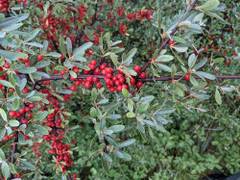
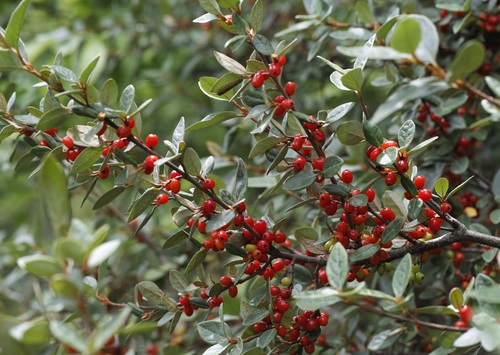
Shepherdia canadensis is a deciduous shrub reaching 3-12 feet (1-4 m) tall and 4-8 feet (1.2-2.4 m) wide with an upright, multi-stemmed habit. Leaves are opposite, oval to elliptic, 1-2 inches (2.5-5 cm) long, dark green above and densely covered below with silvery and rust-brown scales that give the underside a russet appearance. Twigs and buds are also covered in similar scales, creating a metallic sheen on new growth. Plants are dioecious; small yellowish flowers without petals appear before or with the leaves from April through June, with male and female flowers on separate plants. Female plants produce 0.25 inch (6 mm) ovoid drupes that ripen from green to bright red, orange, or yellow in July and August. Fruit contains saponins that make it bitter and foamy when crushed in water, though it is consumed by bears, grouse, and other wildlife. Roots host nitrogen-fixing actinomycete bacteria (Frankia spp.), allowing the shrub to colonize nutrient-poor soils. Growth rate is slow to moderate, gaining 6-12 inches (15-30 cm) per year. Plants live 30-60 years in the wild. Suckers can form colonies on disturbed ground.
Native Range
Native to North America from Alaska and the Yukon east to Newfoundland and south through the Rocky Mountains to New Mexico, the upper Midwest to Ohio, and the northern Appalachians to West Virginia. Found in dry to moist open woods, rocky slopes, gravel bars, and disturbed sites from sea level to 11,000 feet (3,400 m) elevation.Suggested Uses
Used in restoration plantings, wildlife habitat plantings, and dry slope stabilization. Spaced 6-8 feet (1.8-2.4 m) apart for screens or 4-6 feet (1.2-1.8 m) for naturalized groupings. Tolerates drought and lean soils, suiting unirrigated rural and naturalized sites; saponin content of berries limits use as a culinary fruit shrub.How to Identify
Appearance
Size & Dimensions
Height3' - 12'
Width/Spread4' - 8'
Bloom Information
Yellowish, petalless flowers appear from April through June, opening before or with the emerging leaves. Bloom lasts 2-3 weeks at any given site, with timing earliest in low-elevation Pacific Northwest populations and latest in high-elevation or far-northern populations. Female plants only set fruit when a male plant grows within 100 feet (30 m) for wind pollination.
Detailed Descriptions
Foliage Description
dark green above, silvery and russet beneathGrowing Conditions
Sun Requirements
Requires 6-10 hours of direct sunlight daily
• Full Sun: 6+ hours of direct sunlight
• Partial Shade: 3-6 hours of direct sunlight
• Full Shade: Less than 3 hours of direct sunlight
Care & Maintenance
Care Guide
Plant container-grown stock in spring or fall in well-drained sandy or rocky soil with neutral to slightly alkaline pH. Water weekly during the first growing season; established plants tolerate extended drought of 4-8 weeks without irrigation. Plants fix atmospheric nitrogen through root nodules and require no fertilizer; in fertile soils they may grow more slowly than in lean soils because the symbiosis is reduced. Powdery mildew develops on foliage in shade and humid conditions. Fruit production requires at least one male shrub for every five to seven female shrubs within 100 feet (30 m) for wind pollination. Suckers may form colonies in moist soil and can be removed by cutting at the base or by lifting young shoots in spring.Pruning
Prune in late winter or early spring before bud break to remove dead, damaged, or crossing stems. Renewal pruning by removing one-third of the oldest stems at ground level rejuvenates older shrubs. Heavy summer pruning removes developing fruit and produces vigorous watersprouts.Pruning Schedule
Prune: February–March
winterearly spring