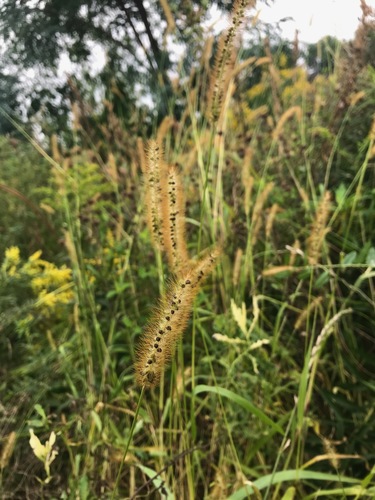
Setaria, Genus, spp., Multiple species,
- Genus
- Multiple species
foxtails and bristlegrasses
Tropical and warm-temperate Eurasia and Africa, naturalized worldwide
SunFull Sun – Part Shade
Overview
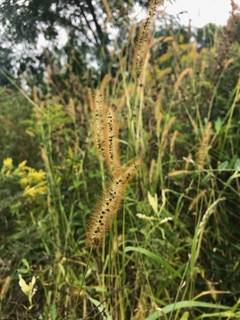
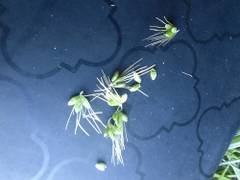
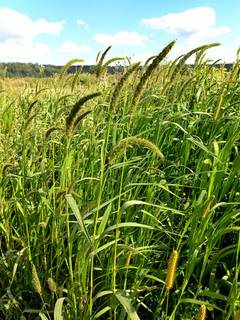
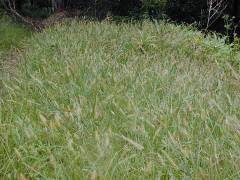
Setaria is a genus of roughly 100 species of annual and perennial grasses in the family Poaceae, distributed through tropical and warm-temperate regions worldwide. Plants form tufts or clumps 1 to 6 feet (30 to 180 cm) tall, with flat, lance-shaped leaf blades 4 to 12 inches (10 to 30 cm) long and 0.2 to 1 inch (5 to 25 mm) wide. The genus is named for its dense, cylindrical flowering spikes, in which each tiny grass floret is subtended by one to several stiff bristles, giving the seed head a soft, brush-like outline 1 to 8 inches (2.5 to 20 cm) long. Spikes emerge green and ripen to tan or yellow-brown from summer into autumn. The genus includes the cultivated grain S. italica, the broad-leaved ornamental S. palmifolia, and several widespread agricultural weeds such as S. viridis and S. pumila. Most species self-sow heavily and can spread into cultivated ground and disturbed soil. The bristled seed heads can work into the fur, ears, and paws of animals.
Native Range
Setaria is native across the warm-temperate and tropical zones of Eurasia and Africa, with its greatest diversity in the Old World tropics. Several species, including S. viridis and S. pumila, are now naturalized on every inhabited continent, while a few such as S. parviflora are native to the Americas.Suggested Uses
Ornamental species such as S. palmifolia are grown for their broad pleated blades and arching seed heads in borders and large containers. The cultivated grain S. italica is grown as a cereal and as birdseed. Seed heads of many species feed finches and other seed-eating birds.How to Identify
Appearance
Size & Dimensions
Height1' - 6'
Width/Spread6" - 2'
Bloom Information
Flowering spikes emerge from midsummer through autumn, typically July to October in temperate climates. Each spike persists for several weeks as it ripens from green to tan. In frost-free regions the perennial species can flower over a longer season.
Detailed Descriptions
Flower Description
green ripening to tan or yellow-brownFoliage Description
greenGrowing Conditions
Sun Requirements
Requires 6-8 hours of direct sunlight daily
• Full Sun: 6+ hours of direct sunlight
• Partial Shade: 3-6 hours of direct sunlight
• Full Shade: Less than 3 hours of direct sunlight
Water & Climate
Water Needs
Drought Tolerance
Drought tolerant when established
Care & Maintenance
Care Guide
Most Setaria grow in full sun on a wide range of soils at pH 5.5 to 7.5 and tolerate drought once established. The annual species germinate when soil warms above 65 F (18 C) and complete their cycle in a single season. Plants take poor, compacted, and disturbed soils that many grasses will not, which is part of why several species spread as weeds. Supplemental water speeds growth but is rarely required. Removing seed heads before they ripen limits self-sowing. The perennial species are hardy only in frost-free to mild climates.Pruning
Cut ornamental Setaria to near ground level in late winter before new growth begins. Shearing developing seed heads prevents self-sown seedlings in beds and borders. Annual species die with the first hard frost and can be pulled once spent.Pruning Schedule
Prune: February–March
winter
Toxicity
Non-toxicPlanting Guide
Planting Methods & Timing
Planting Method
direct sow
Direct Sow Timing
Late spring, after the last frost when soil warms above 65 F (18 C)
Days to Maturity
60–90 days
Plant Spacing
6 inches