Senegalia, Genus, greggii, Species,
- Genus & species
catclaw acacia
Southwestern United States and northern Mexico
Overview
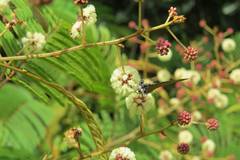
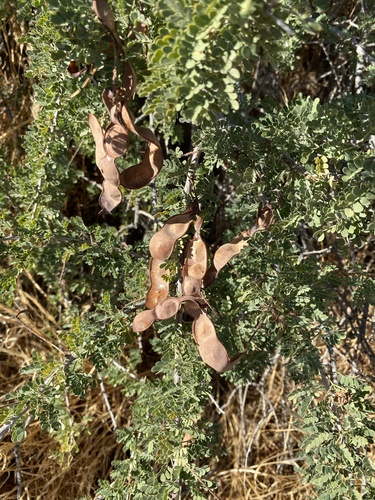
Senegalia greggii is a deciduous, spiny shrub or small tree in the legume family (Fabaceae), reaching 6-25 feet (1.8-7.5 m) tall, often multi-stemmed and thicket-forming. The branches bear short, stout, curved prickles like a cat's claw, the feature behind the common name and a strong deterrent to passersby. The small, gray-green leaves are twice-compound (bipinnate), with tiny leaflets that fold in heat and drought. From late spring into summer it produces dense, creamy-yellow, fragrant flower spikes 1-2.5 inches (2.5-6 cm) long that draw many bees. The fruit is a flat, twisted, papery seed pod 2-5 inches (5-13 cm) long that curls as it dries. Deeply rooted and slow-growing, it survives long desert droughts and drops its leaves in cold or dry spells. The catclaw prickles snag skin, clothing, and animals, which limits where it can be placed. S. greggii grows along desert washes, canyons, and slopes where roots reach deep moisture.
Native Range
Native to the southwestern United States and northern Mexico, Senegalia greggii occurs across the Sonoran, Mojave, and Chihuahuan Deserts from California and Nevada east to Texas and south into Mexico. It grows along desert washes, arroyos, canyon bottoms, and rocky slopes, usually where roots can reach subsurface water.Suggested Uses
Used in desert and xeriscape gardens, native restoration, and as a small specimen or thorny barrier and screen in hot, dry regions. The deep roots and drought tolerance suit unirrigated and naturalized desert plantings. The fragrant flowers feed bees, and the seeds and cover support desert wildlife.How to Identify
Appearance
Size & Dimensions
Height6' - 25'
Width/Spread6' - 20'
Bloom Information
Detailed Descriptions
Foliage Description
gray-greenGrowing Conditions
Sun Requirements
Requires 6-12 hours of direct sunlight daily
• Full Sun: 6+ hours of direct sunlight
• Partial Shade: 3-6 hours of direct sunlight
• Full Shade: Less than 3 hours of direct sunlight
Care & Maintenance
Care Guide
Grows in full sun on sandy, gravelly, or rocky well-drained desert soils across a neutral to alkaline pH around 7.0-8.5. It is deeply rooted, highly drought-tolerant, and needs no irrigation once established; standing water and heavy, poorly drained soil are not tolerated. It withstands intense heat and drops its leaves in drought or cold to conserve moisture. Growth is slow, and plants are long-lived. Spacing accounts for the wide, hooked prickles that catch anything brushing past. Cold below the mid-teens Fahrenheit damages young plants.Pruning
Pruning is done in late winter while dormant to lift the canopy, shape a small tree, or remove dead wood. The hooked prickles make pruning slow and protective handling necessary. Removed branches root poorly and are cleared away.Pruning Schedule
Prune: January–February
winter