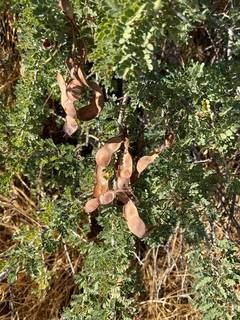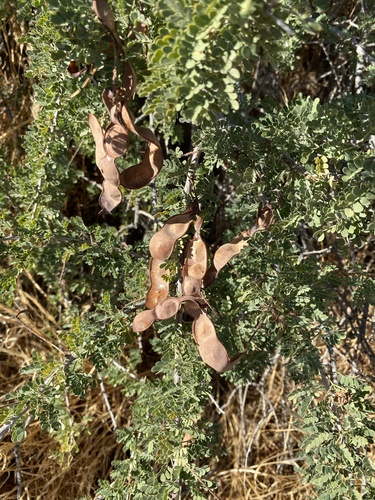
Senegalia, Genus, spp., Multiple species,
- Genus
- Multiple species
Hook-thorns
Tropical and subtropical Africa, Asia, and the Americas
Overview
Senegalia is a genus of about 200 species of trees, shrubs, and woody climbers in the legume family (Fabaceae), formerly included in a broadly defined Acacia. Plants range from low shrubs to trees 50 feet (15 m) tall and are armed with scattered, often hooked prickles along the stems rather than the paired straight spines of related genera. The leaves are bipinnate, divided into many small leaflets that give a feathery outline. Flowers are tiny and crowded into rounded heads or cylindrical spikes 0.4-2.5 inches (1-6 cm) long, in cream, white, pale yellow, or occasionally pink, and are followed by flat or twisted legume pods. Senegalia is widespread across the tropics and subtropics of Africa, Asia, and the Americas, in savanna, dry woodland, thornscrub, and forest margins, often on poor soils. Several species are used commercially, including S. senegal, the source of gum arabic, and S. catechu, used for catechu dye and tannin. Most species are frost-tender, and the recurved prickles catch on skin and clothing, the main drawback near paths.
Native Range
Native across the tropics and subtropics of Africa, Asia, and the Americas, with many species in Africa and a number in the drier parts of the Americas, including the southwestern United States. Plants grow in savanna, dry woodland, thornscrub, and forest edges, usually in full sun on well-drained soils.Suggested Uses
Used as drought-tolerant shade, screen, and barrier plantings in warm, dry climates, and for soil stabilization and nitrogen enrichment on poor ground. The thorny species form stock-proof hedges, while S. senegal is grown in plantations for gum arabic. Smaller species suit native and wildlife gardens, where the flowers feed pollinators.How to Identify
Appearance
Size & Dimensions
Height3' - 50'
Width/Spread6' - 30'
Bloom Information
Flowering is usually in spring and summer, often triggered by rains in seasonally dry climates, so timing varies with locality. The fluffy cream to yellow flower clusters appear over several weeks and are visited by bees and other insects. Flat or coiled seed pods follow and ripen later in the season.
Detailed Descriptions
Flower Description
cream, white, or pale yellowFoliage Description
green, featheryGrowing Conditions
Sun Requirements
Requires 6-12 hours of direct sunlight daily
• Full Sun: 6+ hours of direct sunlight
• Partial Shade: 3-6 hours of direct sunlight
• Full Shade: Less than 3 hours of direct sunlight