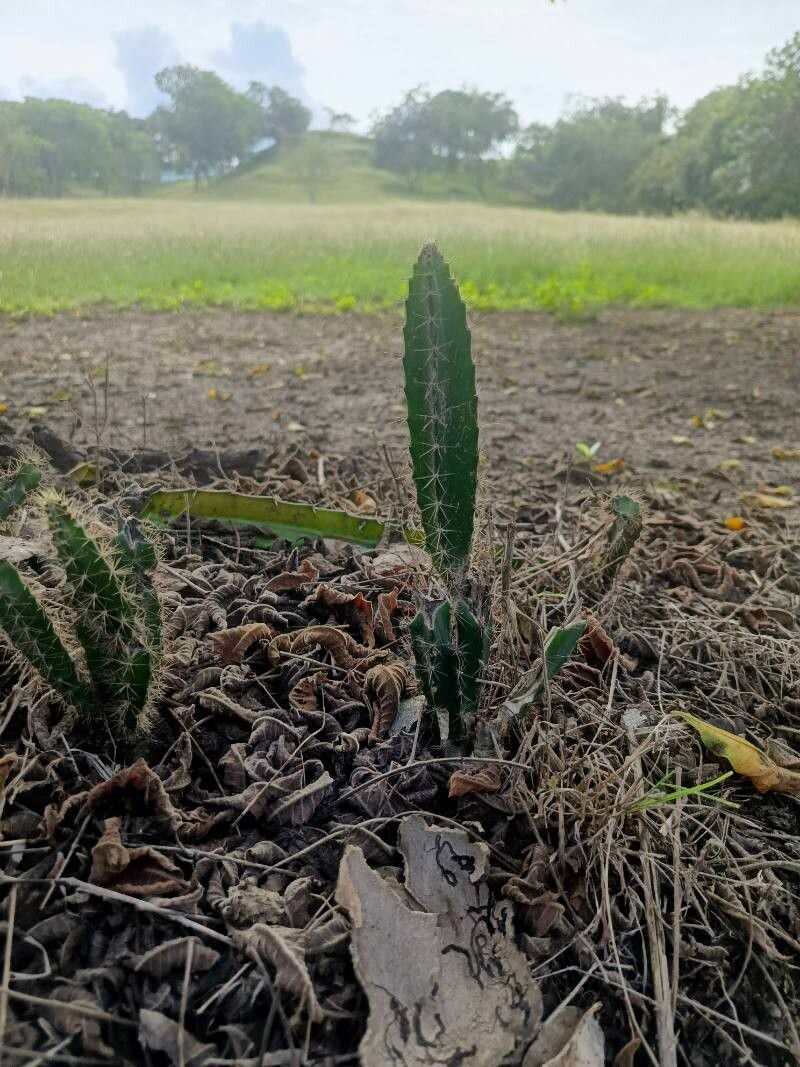
Selenicereus, Genus, spp., Multiple species,
- Genus
- Multiple species
moonlight cactuses
Overview
Selenicereus is a genus of about 30 species of climbing and sprawling cacti in the family Cactaceae, native to the tropical Americas from Mexico and the Caribbean through Central America to northern South America. Most species are epiphytic or lithophytic, scrambling over trees and rocks by means of long, slender, three- to many-angled or ribbed green stems 0.4-3 in (1-8 cm) thick that cling and climb using aerial roots. The stems bear small areoles with short spines along the ribs. The genus is grown above all for its very large, funnel-shaped nocturnal flowers, which open for a single night, measure 6-14 in (15-35 cm) across, and are usually white or cream with golden outer petals and a strong sweet scent. The flowers are pollinated by moths and bats and are followed in some species by fleshy, often spiny or scaly fruits; the dragon fruit or pitaya of commerce comes from S. undatus and its relatives. The genus is frost-tender and grows as a tropical climber outdoors only in warm regions, and as a greenhouse or house plant elsewhere. Plants can climb many metres into host trees over time.
Native Range
The genus is native to the tropical Americas, ranging from Mexico, Florida, and the Caribbean through Central America to Colombia, Venezuela, and beyond. Several species, including S. undatus, are now cultivated worldwide for dragon fruit.Suggested Uses
Selenicereus is grown on trees, walls, trellises, and in hanging baskets in tropical gardens and conservatories, and S. undatus is grown on posts and frames for dragon fruit. Plants are given a sturdy support and 3-6 ft (0.9-1.8 m) of spread. The night flowers are grown as a feature for evening viewing.How to Identify
Appearance
Size & Dimensions
Height5' - 30'
Width/Spread2' - 6'
Bloom Information
Selenicereus flowers in late spring and summer, with each enormous flower opening at dusk, lasting a single night, and wilting by the following morning. A plant may open several flowers over a season, sometimes many on one night. The night-opening blooms release a strong sweet scent to attract moths and bats.
Detailed Descriptions
Flower Description
white to cream with golden outer petalsFoliage Description
greenGrowing Conditions
Sun Requirements
Requires 4-8 hours of direct sunlight daily
• Full Sun: 6+ hours of direct sunlight
• Partial Shade: 3-6 hours of direct sunlight
• Full Shade: Less than 3 hours of direct sunlight
Care & Maintenance
Care Guide
Grow Selenicereus in bright light with shade from the hottest sun, in a free-draining, gritty, organic cactus mix with a pH of 6.0-7.0. As an epiphyte the genus needs sharp drainage and air around the roots and rots in heavy, wet soil. Water regularly through the warm growing season and reduce watering in winter to encourage flowering. A tree, trellis, or wall lets the climbing stems scramble over and root into a support. The genus is frost-tender and is kept above 50 F (10 C), grown indoors or under glass in cool climates. Feed monthly in summer with a balanced or cactus fertiliser.Pruning
Selenicereus is pruned mainly to control its vigorous, sprawling stems and to keep plants within their support. Stem sections are cut at a joint at any time in the warm season and root easily as cuttings. Removing the oldest stems keeps growth manageable and air moving through the plant.Pruning Schedule
Prune: June–July
summer
Container Growing
Suitable for container growing
Minimum container size: 5 gallons
