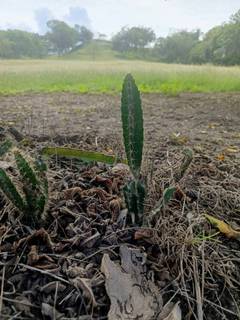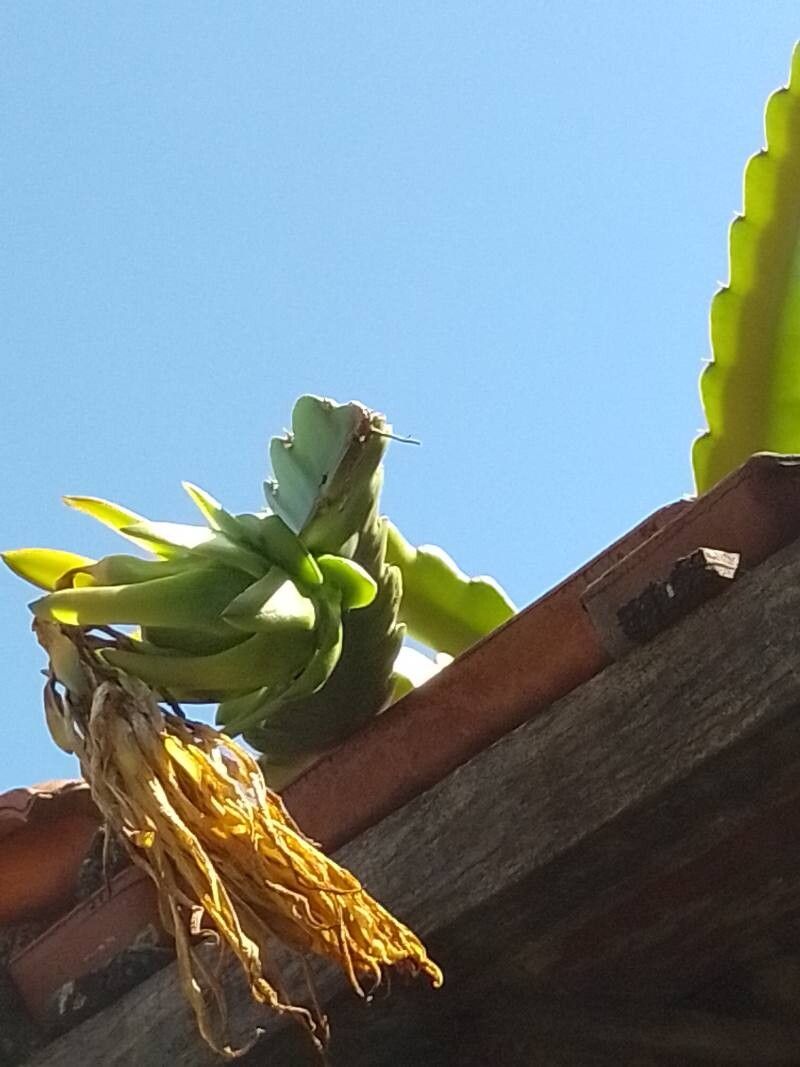
Selenicereus, Genus, undatus, Species,
- Genus & species
dragon fruit
Mexico and Central America (species)
Overview
Selenicereus undatus is the white-fleshed dragon fruit, growing as a climbing succulent cactus that reaches 240–600 inches (600–1500 cm) on supports by clinging with adventitious aerial roots. Stems are triangular in cross-section, 1.5–3 inches (4–8 cm) wide, deep green, jointed into segments 12–24 inches (30–60 cm) long with sparse short spines along the ribs. Night-blooming flowers 8–12 inches (20–30 cm) long are funnel-shaped, white with cream interiors, and fragrant on a single night in mid- to late summer. Fruits are oblong, 4–6 inches (10–15 cm) long, magenta-pink-skinned with leafy bracts and white flesh studded with small black seeds; flavor is mildly sweet and watermelon-like. Self-incompatible in most clones — fruit set requires cross-pollination from a separate genotype, often hand-pollinated at night with a brush. Bats and night-flying moths pollinate wild populations. Hardy zones 10–11; foliage damage below 32°F (0°C) and stem death below 28°F (−2°C). Native to Mexico and Central America. Drought-tolerant — succulent stems store water during dry periods. Container culture at 10–15 gallons (40–60 liters) on a 60-inch (150 cm) support post or trellis. Yields 30–60 pounds (14–27 kg) of fruit per established plant in tropical zones across 4–6 fruiting cycles per season.
Native Range
The species Selenicereus undatus is native to Mexico and Central America, where it grows in tropical dry forest and seasonally moist scrubland, climbing through trees and over rocks. Naturalized and cultivated throughout tropical and subtropical regions worldwide.Suggested Uses
Grown on trellis or pergola supports in zones 10–11 in full sun. Container culture with indoor or greenhouse winter storage in colder zones. Fruit is non-toxic and consumed fresh, in smoothies, or processed for juice.How to Identify
Appearance
Size & Dimensions
Height20' - 50'
Width/Spread5' - 10'
Bloom Information
Blooms June through October on mature stems in zones 10–11. Night-blooming white flowers open at dusk and close by mid-morning, lasting a single night each. Fragrant with a vanilla-floral aroma. Multiple flowering cycles produce 4–6 fruit cycles per season under tropical conditions.
Detailed Descriptions
Flower Description
White with cream interior, night-bloomingFoliage Description
Stems are deep green; leafless succulent triangular jointed segmentsGrowing Conditions
Sun Requirements
Requires 6-10 hours of direct sunlight daily
• Full Sun: 6+ hours of direct sunlight
• Partial Shade: 3-6 hours of direct sunlight
• Full Shade: Less than 3 hours of direct sunlight
Care & Maintenance
Care Guide
Full sun in cooler subtropical climates; bright filtered shade in tropical full-sun positions to limit stem scald. Climb on a sturdy 60–96 inch (150–240 cm) post or trellis. Water moderately during the growing season; reduce watering in winter and during dormancy. Hardy zones 10–11 with stem damage below 28°F (−2°C). Self-incompatible in most cultivars — pair two genotypes for fruit set. Container culture at 10–15 gallons (40–60 liters) with overwintering above 50°F (10°C) in cold climates.Pruning
Prune in late winter or after fruiting in fall. Remove damaged or crossing stems and shorten lateral branches to encourage compact branching near the trellis top. Cuttings root readily — segments dried for 7–10 days before planting strike roots in 30–60 days.Pruning Schedule
Prune: February–March & October
winterfall
Container Growing
Suitable for container growing
Minimum container size: 10 gallons