Sasa, Genus, palmata, Species,
- Genus & species
Broadleaf bamboo
Japan (Hokkaido and northern Honshu) and Sakhalin
Overview
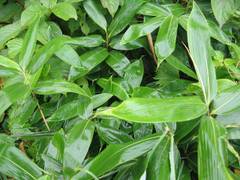
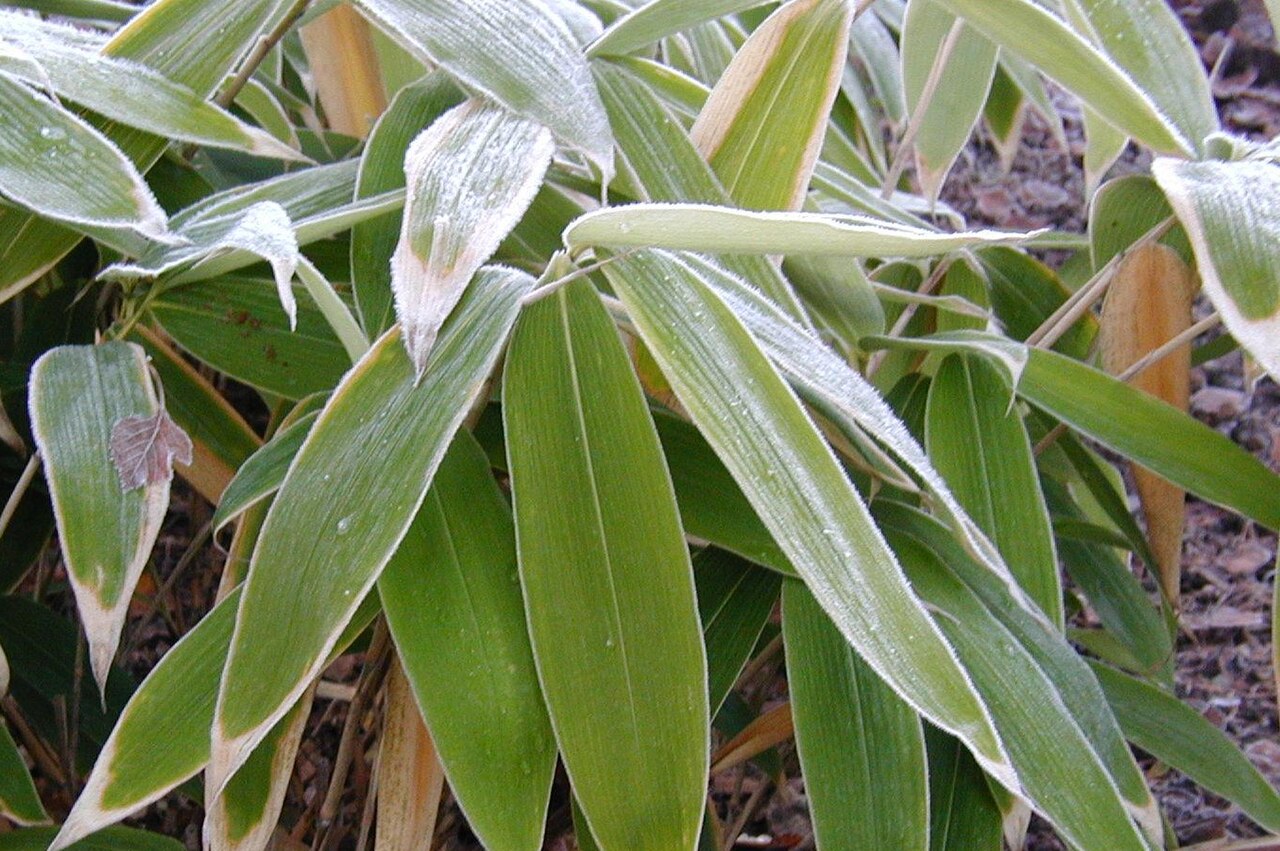
Sasa palmata is an evergreen running bamboo that forms dense thickets 4–8 feet (1.2–2.4 m) tall, occasionally reaching 10 feet (3 m). Culms are green and 0.2–0.5 inch (5–13 mm) in diameter. Leaves are 6–15 inches (15–38 cm) long and 2–4 inches (5–10 cm) wide, arranged in a palmate cluster of 5–9 leaves at the culm tips. Leaf margins dry out and bleach to straw-white in winter, leaving a pale border around each leaf from December until new leaves emerge in late spring. Underground rhizomes expand colonies by 1–3 feet (30–90 cm) per year. Plants rarely flower; flowering occurs at intervals of several decades and is followed by dieback of the flowering culms. Winter leaf-margin damage is more pronounced in exposed, windy sites, and colonies spread beyond the planting area without rhizome barriers or regular edge cutting. Leaves scorch in hot afternoon sun and dry soil. Hardy in USDA zones 6–9.
Native Range
Native to Japan (Hokkaido and northern Honshu) and Sakhalin. Grows in forest understory and on open mountain slopes, often forming dense stands.Suggested Uses
Grown as ground cover on shaded slopes and in woodland gardens, and in large containers with rhizomes confined. Used in Japanese-style gardens, spaced 3–4 feet (90–120 cm) apart. Planted on banks where the rhizome mat binds soil.How to Identify
Appearance
Size & Dimensions
Height4' - 8'
Width/Spread3' - 10'
Bloom Information
Flowering is rare and follows cycles of several decades. Flowers are small spikelets held in panicles at the culm tips and are wind-pollinated. Flowering culms die after seed set.
Detailed Descriptions
Foliage Description
Dark green above, paler beneath, margins straw-white in winterGrowing Conditions
Sun Requirements
Requires 2-4 hours of direct sunlight daily
• Full Sun: 6+ hours of direct sunlight
• Partial Shade: 3-6 hours of direct sunlight
• Full Shade: Less than 3 hours of direct sunlight
Care & Maintenance
Care Guide
Grows in moist, well-drained, humus-rich soil in part shade to full shade; leaves scorch in hot afternoon sun. Newly planted divisions need 1 inch (2.5 cm) of water weekly in the first growing season, and established colonies tolerate short dry periods. Running rhizomes spread beyond the planting site, and barriers 24–30 inches (60–75 cm) deep restrict lateral movement. Annual edge cutting with a spade severs rhizomes at the colony margin. Winter wind and low humidity increase leaf-margin browning. Few pests or diseases affect established plants.Pruning
Mowing or cutting culms to ground level in late winter removes leaves with bleached margins and stimulates new culms in spring. Culms regrow to a height of 4–8 feet (1.2–2.4 m) by midsummer. Dead or damaged culms are cut at ground level at any time of year.Pruning Schedule
Prune: February–March
winterearly spring
Container Growing
Suitable for container growing