Sarracenia, Genus, flava, Species,
- Genus & species
yellow pitcher plant
Southeastern United States coastal plain
Overview
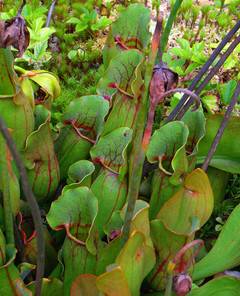
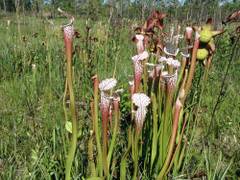
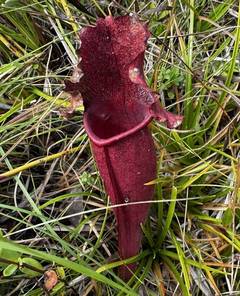
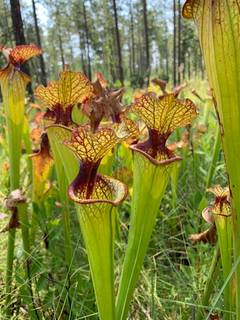
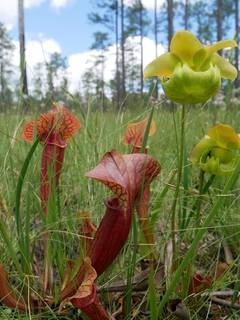
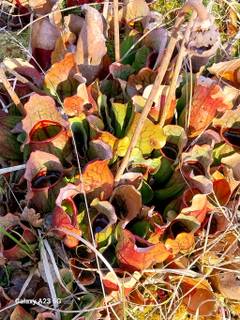
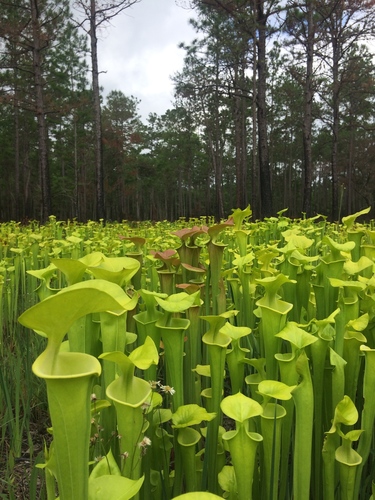
Sarracenia flava, the yellow pitcher plant, is a carnivorous perennial of the southeastern United States that traps insects in tall, tubular leaves. From a stout underground rhizome it produces erect yellow-green pitchers 18–36 inches (45–90 cm) tall, each topped by a rounded lid, or hood, that arches over the opening; many forms show red veining or a deep red blotch in the throat. In early spring, before the main pitchers expand, the plant raises nodding yellow flowers 2–3 inches (5–7.5 cm) across on separate stalks, each with five petals and a faint musky scent. The pitchers secrete nectar at the rim to draw insects, which slip on the waxy inner surface and fall into a pool of digestive enzymes and downward-pointing hairs that block escape; the trapped prey supplies nitrogen the plant cannot pull from its nutrient-poor soil. It grows in open, sunny bogs, wet pine savannas, and seepage slopes with permanently moist, acidic, sandy-peaty ground. In winter the pitchers brown and the plant rests in dormancy, sending up fresh growth each spring. Drainage of its wetland habitat has reduced wild populations across its range.
Native Range
Sarracenia flava is native to the coastal plain of the southeastern United States, from southeastern Virginia south through the Carolinas and Georgia to the Florida Panhandle and west into southern Alabama. It grows in acidic bogs, wet pine savannas, and seepage wetlands.Suggested Uses
Grown in bog gardens, water-garden margins, and containers without drainage holes that hold acidic, waterlogged media. It suits collections of carnivorous plants and sunny wetland plantings, though its need for permanently wet, mineral-free soil makes it unsuited to ordinary borders.How to Identify
Appearance
Size & Dimensions
Height1'6" - 3'
Width/Spread1' - 2'
Bloom Information
Yellow flowers open in early spring, generally March through May, ahead of or alongside the first tall pitchers. Each flower lasts one to two weeks, nodding on its stalk until the petals drop. Tall pitcher production follows through spring and summer, with shorter non-trapping leaves formed late in the season.
Detailed Descriptions
Foliage Description
Yellow-green with red venationGrowing Conditions
Sun Requirements
Requires 6-12 hours of direct sunlight daily
• Full Sun: 6+ hours of direct sunlight
• Partial Shade: 3-6 hours of direct sunlight
• Full Shade: Less than 3 hours of direct sunlight
Care & Maintenance
Care Guide
Grows in full sun and permanently wet, acidic soil of sand and peat at a pH of about 3.5–5.0, with the roots standing in or just above water through the growing season. It is watered with rainwater or distilled water, because the dissolved minerals in tap water injure the roots. Hardy in zones 6–9, it needs a cool winter dormancy of three to four months when growth stops and the pitchers die back. Fertilizer added to the soil damages the plant, which instead draws nutrients from trapped insects. Bright light keeps the pitchers colored and upright, while shade produces weak, floppy growth.Pruning
Dead pitchers can be trimmed at the base in late winter before new growth emerges. Removing browned foliage tidies the clump but is not required for plant health. The spent flower stalk can be cut once the petals fall, unless seed is wanted.Container Growing
Suitable for container growing
Minimum container size: 1 gallons