Image 1 of 7
1 / 7
© Nicholas A. Tonelli from Pennsylvania, USA, some rights reserved (CC-BY) · Wikimedia Commons
Sarracenia, Genus, spp., Multiple species,
- Genus
- Multiple species
north American pitcher plants
Overview
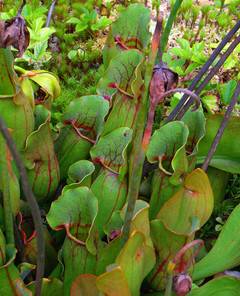
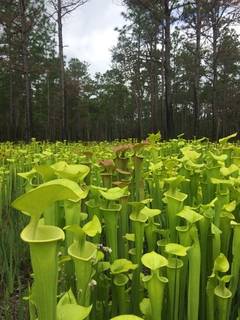
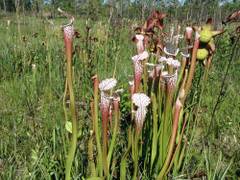
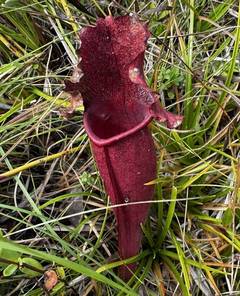
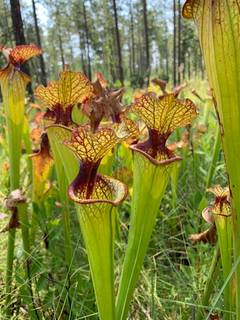
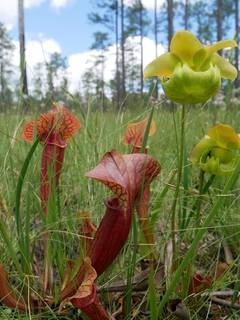
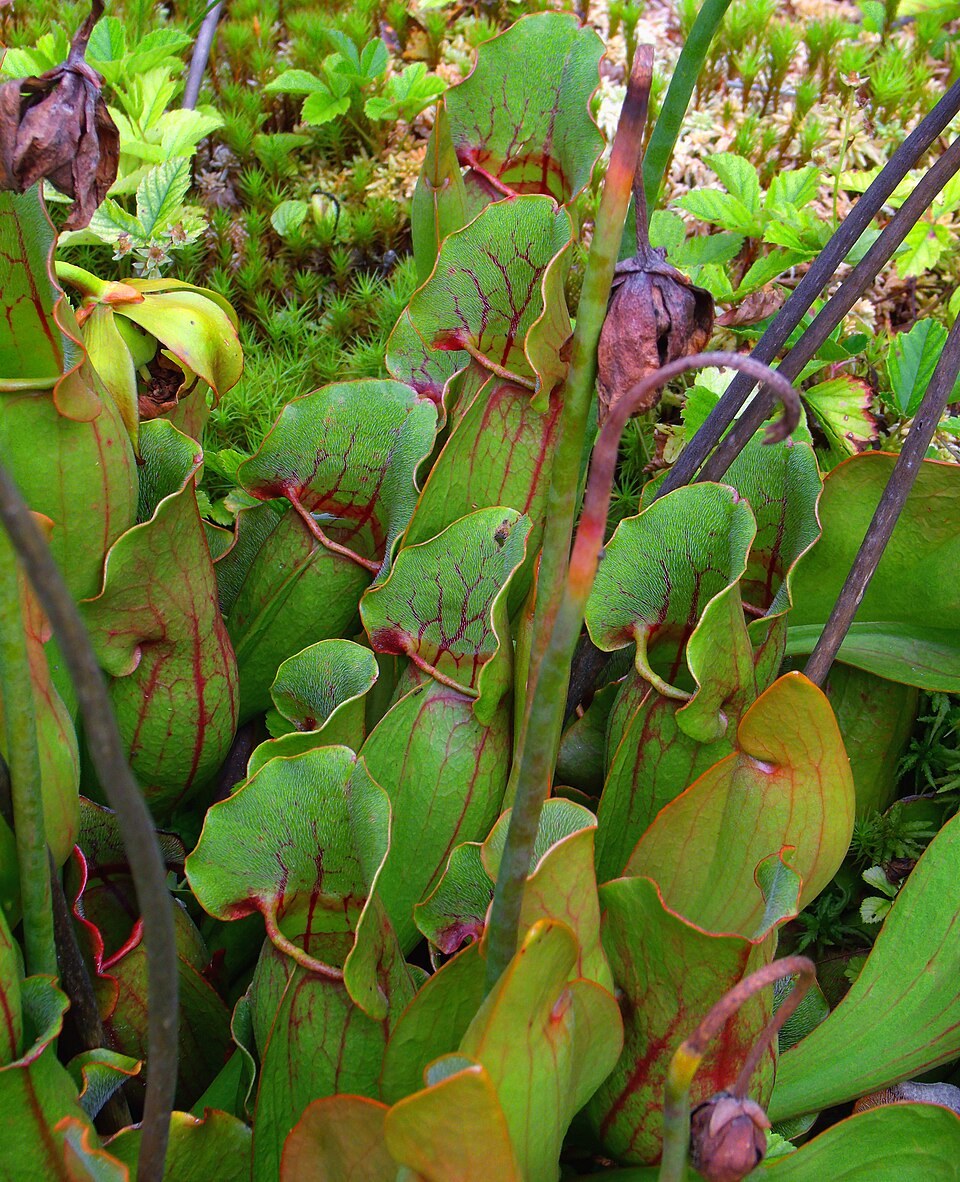
Sarracenia is a genus of about eight to eleven carnivorous perennials in the family Sarraceniaceae, native to bogs and wet savannas of eastern North America. The leaves are modified into hollow, upright or sprawling pitchers 6 inches to 3 ft (15–90 cm) tall that hold rainwater and digestive fluid, trapping and dissolving insects to supplement the poor soils the plants grow in. Pitcher color ranges from green to yellow-green, often netted or flushed with red, white, and maroon, with a hood that shades the opening. In spring, before or with the new pitchers, single nodding flowers 2–4 inches (5–10 cm) across rise on leafless stalks in red, maroon, yellow, or pink, with an umbrella-shaped style. S. purpurea, the hardiest and northernmost species, reaches Canada, while S. leucophylla and S. flava form the tall southern pitchers. The genus needs constant moisture, acidic low-nutrient soil, and full sun, and declines fast in ordinary potting mix, tap water, or fertilizer. Several species are threatened by wetland drainage and collection in the wild.
Native Range
Sarracenia is native to eastern North America, with the greatest diversity on the Gulf and Atlantic coastal plain of the southeastern United States. S. purpurea ranges north through the eastern states into Canada. All grow in sunny, permanently wet bogs, seeps, and pine savannas on acidic, nutrient-poor ground.Suggested Uses
Sarracenia is grown in bog gardens, pond margins, and permanently wet containers without drainage holes, and in greenhouse collections. Plants are set 8–12 inches (20–30 cm) apart in open, sunny bog beds. In suitable climates they are used in naturalistic wetland and conservation plantings alongside other bog perennials.How to Identify
Appearance
Size & Dimensions
Height6" - 3'
Width/Spread1' - 2'
Bloom Information
Sarracenia flowers in early to mid spring, usually March to May, often just before or alongside the first pitchers of the season. Each nodding flower lasts one to two weeks, releasing a faint scent. The bloom is followed by a rounded seed capsule that ripens over summer.
Detailed Descriptions
Flower Description
red, maroon, yellow, or pinkFoliage Description
green, netted or flushed with red, white, and maroonGrowing Conditions
Sun Requirements
Requires 6-12 hours of direct sunlight daily
• Full Sun: 6+ hours of direct sunlight
• Partial Shade: 3-6 hours of direct sunlight
• Full Shade: Less than 3 hours of direct sunlight
Care & Maintenance
Care Guide
Sarracenia grows in full sun and constantly wet, acidic, low-nutrient soil, typically a mix of sphagnum peat and sand at a pH of 3.5–5.0. Plants stand in rainwater or distilled water year-round, as tap water and fertilizer quickly kill them. A cold winter dormancy is needed, with most species hardy in their native range and S. purpurea tolerating hard freezes. Pitchers catch their own insect prey, so no feeding is required or wanted. Strong light keeps the pitcher colors deep and the traps upright, while shade makes them floppy and green. Propagation is by seed after cold stratification or by division of the rhizome in late winter.Pruning
Sarracenia is tidied by trimming dead or browned pitchers at the end of winter, before new growth starts. Old flower stalks are removed once the seed capsule is collected or has shed. The rhizome is divided at the same late-winter clean-up to multiply plants.Container Growing
Suitable for container growing
Minimum container size: 1 gallons