Sarcandra, Genus, glabra, Species,
- Genus & species
Senryo
Japan, China, Taiwan, and southeastern Asia to India
Overview
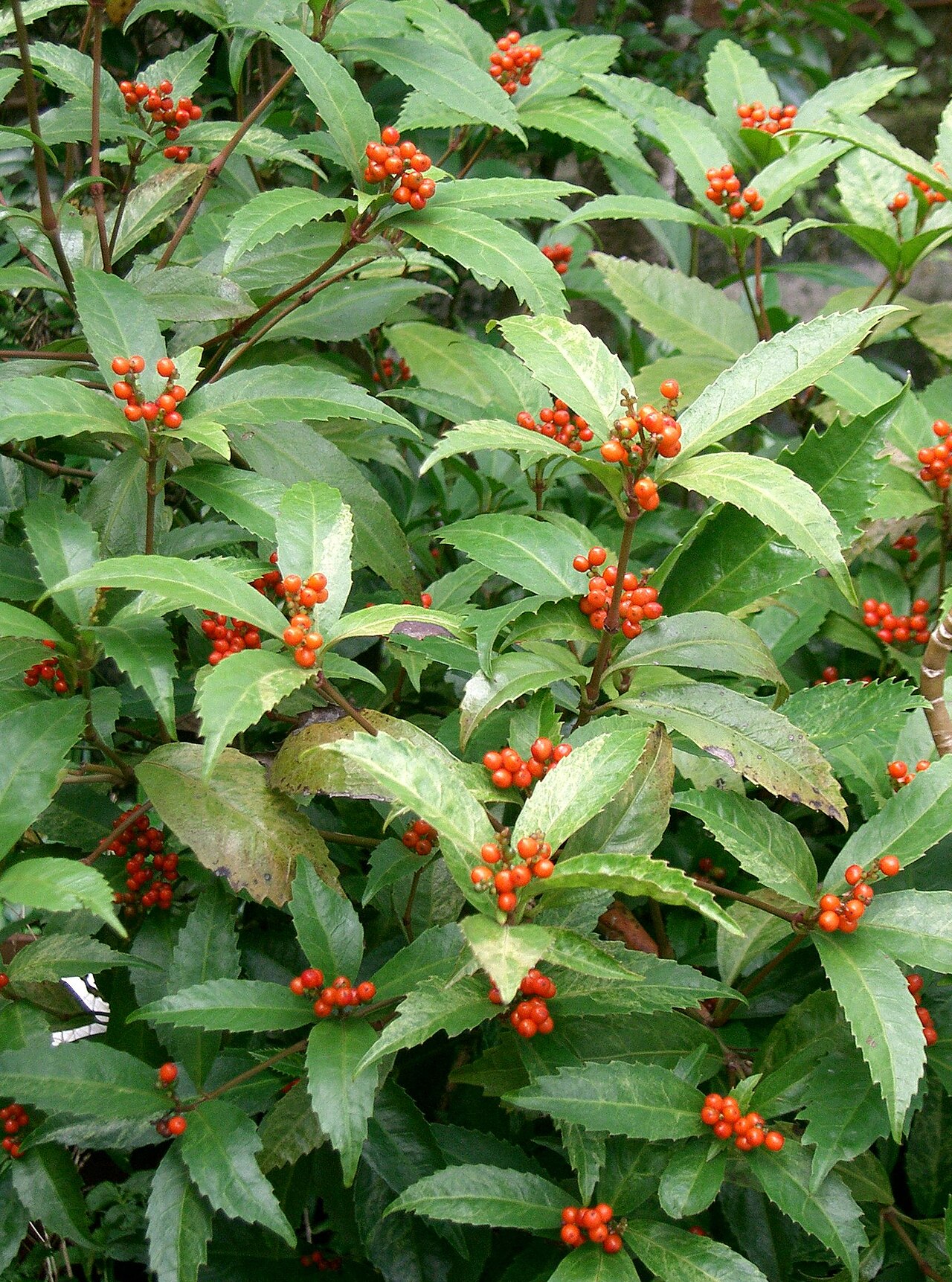
Sarcandra glabra is an evergreen, sparsely branched shrub in the family Chloranthaceae, native to Japan, China, Taiwan, and southeastern Asia to India. Plants reach 2–4 feet (0.6–1.2 m) tall and 2–4 feet (0.6–1.2 m) wide, with erect, green, jointed stems that swell at the nodes. Leaves are opposite, elliptic to ovate-lance-shaped, 2–6 inches (5–15 cm) long, leathery, and glossy dark green, with toothed margins tipped with small glands. Flowers are tiny, greenish yellow, and lack petals and sepals; they are held in terminal spikes in June and July. Fruit is a round, bright red drupe 0.2–0.3 inch (5–7 mm) across that ripens in autumn and persists on the stems through winter. Plants are hardy in USDA zones 7–9. Growth is slow, and leaves scorch in direct sun and in cold, drying winter wind. Fruiting stems are used in New Year decorations in Japan.
Native Range
Native to Japan (from southern Honshu southward), China, Taiwan, and southeastern Asia to India, where it grows in the understory of evergreen broadleaf forests. Grown in shaded temperate and subtropical gardens outside its native range.Suggested Uses
Used as an understory shrub in shaded gardens, woodland borders, and containers, spaced 2–3 feet (0.6–0.9 m) apart. Fruiting stems are cut for winter arrangements and New Year decoration in Japan. Slow growth and limited cold hardiness restrict use to zones 7–9.How to Identify
Appearance
Size & Dimensions
Height2' - 4'
Width/Spread2' - 4'
Bloom Information
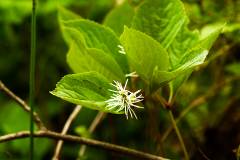
Flowers open in June and July in terminal spikes. Individual flowers are 0.1 inch (3 mm) across and consist of a single stamen and ovary without petals. Fruit ripens in autumn and remains on the stems into February. Flowering is inconspicuous compared with the fruit display.
Detailed Descriptions
Foliage Description
Glossy dark greenGrowing Conditions
Sun Requirements
Tolerates up to 4 hours of direct sunlight daily
• Full Sun: 6+ hours of direct sunlight
• Partial Shade: 3-6 hours of direct sunlight
• Full Shade: Less than 3 hours of direct sunlight
Care & Maintenance
Care Guide
Growth is steadiest in part to full shade in moist, well-drained, acidic to neutral soil of pH 5.5–7.0 that is high in organic matter. Leaves scorch and yellow in direct afternoon sun. Water is applied at 1 inch (2.5 cm) per week during the first two growing seasons and during dry periods afterward. Cold hardiness is USDA zones 7–9, and stems die back in hard frost and regrow from the base. A 2–3 inch (5–8 cm) layer of organic mulch conserves soil moisture.Pruning
Little pruning is required. Frost-damaged or dead stems are removed at ground level in spring, and old stems are cut to the base every 3–4 years to renew growth. Fruiting stems are cut for indoor use in winter. Plants regrow from the base after hard pruning.Pruning Schedule
Prune: March–April
early spring
Container Growing
Suitable for container growing
Minimum container size: 3 gallons