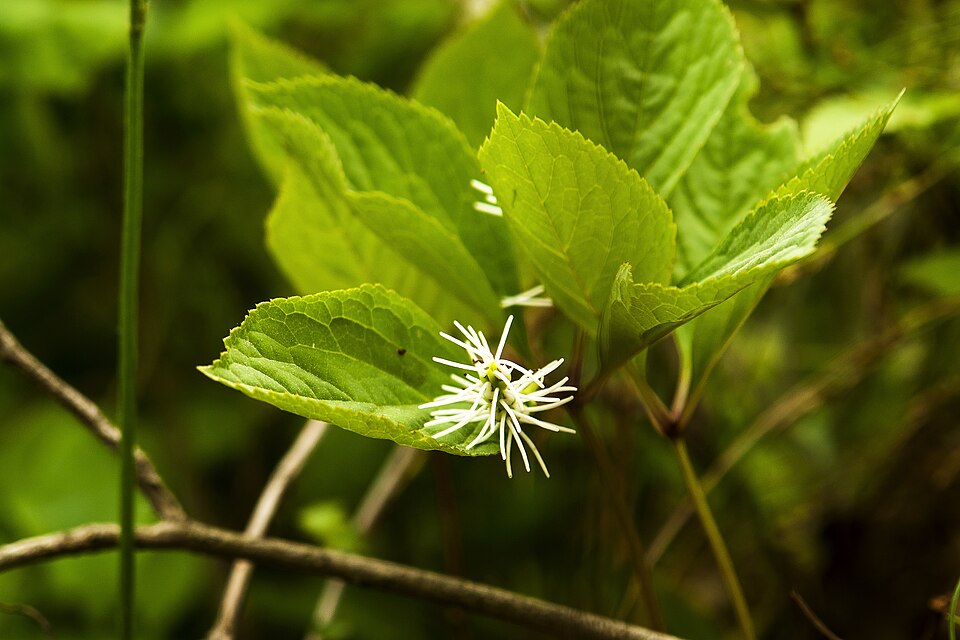
Chloranthus, Genus, fortunei, Species,
- Genus & species
Overview
Chloranthus fortunei is a rhizomatous herbaceous perennial reaching 12-18 inches (30-45 cm) tall and spreading slowly to form colonies 12-24 inches (30-60 cm) wide. Each stem carries four leaves clustered toward the tip in two closely spaced opposite pairs that appear as a single whorl. Leaves are obovate to elliptic, 3-5 inches (8-13 cm) long, glossy dark green, with serrated margins. Terminal inflorescences rise above the foliage in mid- to late spring as branched spikes 2-4 inches (5-10 cm) long. Individual flowers lack petals and sepals; each consists of three white stamens with fused filaments, giving the spike a feathery white appearance. The flowers carry a sweet fragrance. Foliage emerges in spring and dies back to the ground after the first hard frost. Growth is slow; a single plant takes 3-4 years to form a colony 18 inches (45 cm) across. Foliage browns at the leaf margins in sites exposed to afternoon sun or prolonged drought.
Native Range
Native to eastern and central China, where it grows in shaded deciduous and mixed woodland and along forest streams at low to middle elevations.Suggested Uses
Grown in shaded woodland gardens and shade borders, spaced 12-18 inches (30-45 cm) apart. Combines with ferns, hostas, and other shade perennials in moist sites. Used for underplanting beneath deciduous trees and shrubs.How to Identify
Appearance
Size & Dimensions
Height1' - 1'6"
Width/Spread1' - 2'
Bloom Information
Blooms in mid- to late spring, typically April through May depending on region. Individual spikes remain in flower for 2-3 weeks. In cooler climates flowering may extend into early June.
Detailed Descriptions
Foliage Description
Glossy dark greenGrowing Conditions
Sun Requirements
Tolerates up to 4 hours of direct sunlight daily
• Full Sun: 6+ hours of direct sunlight
• Partial Shade: 3-6 hours of direct sunlight
• Full Shade: Less than 3 hours of direct sunlight
Care & Maintenance
Care Guide
Grows in partial to full shade in humus-rich, consistently moist but well-drained soil. Regular watering through the first growing season supports establishment; established plants tolerate short dry spells, though foliage browns at the margins during prolonged drought. A 1-2 inch (2.5-5 cm) autumn layer of leaf mould or compost helps retain soil moisture. Foliage dies back after hard frost and re-emerges the following spring. Slugs and snails feed on emerging shoots in damp conditions. No serious diseases are typical.Pruning
Cut spent foliage to ground level in late autumn after frost, or in early spring before new shoots emerge. No other pruning is needed. Faded flower spikes can be removed, though the plant does not self-seed aggressively.Pruning Schedule
Prune: March & November
fallearly spring
Container Growing
Suitable for container growing
Minimum container size: 2 gallons