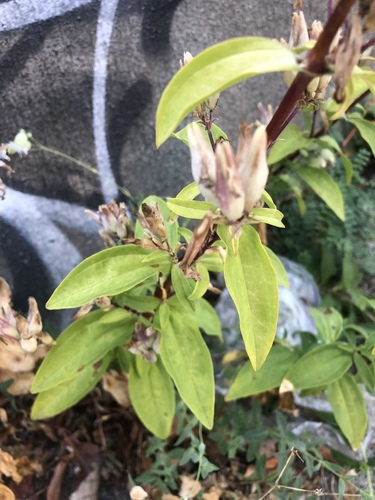
Saponaria, Genus, officinalis, Species,
- Genus & species
common soapwort
Overview
Saponaria officinalis is a rhizomatous perennial of the pink family native to Europe and western Asia, growing 12-36 inches (30-90 cm) tall on upright, leafy stems. The smooth, oval leaves are 2-4 inches (5-10 cm) long with three prominent veins, set in opposite pairs. From midsummer into autumn it bears clusters of five-petaled flowers about 1 inch (2.5 cm) across, pale pink to white, that are fragrant in the evening and draw moths and long-tongued bees. The flowers are sometimes double in cultivated forms. S. officinalis spreads by creeping rhizomes into broad colonies and self-sows, so it can move well beyond where it is planted. It grows on roadsides, stream banks, railway embankments, and waste ground on most soils, and tolerates drought and poor fertility. The leaves and roots contain saponins, compounds that foam in water and were long used as a gentle soap for washing cloth and skin. Those same saponins make the plant mildly toxic if eaten, and it can irritate skin in sensitive people. It has naturalized widely across North America.
Native Range
Saponaria officinalis is native to Europe and western Asia. It grows on roadsides, riverbanks, embankments, and disturbed ground, and has naturalized across much of North America, often near old homesteads where it was once grown.Suggested Uses
Saponaria officinalis is grown in cottage gardens, wildflower plantings, and rough banks where its spreading habit is wanted. Its evening fragrance suits plantings near paths and seating. Historically it was grown as a source of mild plant soap for washing delicate textiles.How to Identify
Appearance
Size & Dimensions
Height1' - 3'
Width/Spread1' - 2'
Bloom Information
Flowering runs from midsummer into early autumn, roughly July to September. The pale pink to white flowers open in clusters and are most fragrant in the evening, drawing night-flying moths. Bloom continues over several weeks until frost in mild regions.
Detailed Descriptions
Flower Description
pale pink to whiteFoliage Description
greenGrowing Conditions
Sun Requirements
Requires 4-10 hours of direct sunlight daily
• Full Sun: 6+ hours of direct sunlight
• Partial Shade: 3-6 hours of direct sunlight
• Full Shade: Less than 3 hours of direct sunlight
Care & Maintenance
Care Guide
Grow Saponaria officinalis in full sun to part shade on almost any well-drained soil; it tolerates drought, poor fertility, and roadside conditions. It spreads aggressively by rhizome and self-seed, so confining the roots or removing seed heads keeps it from overrunning a bed. Cutting plants back after the first bloom tidies the floppy stems and can prompt a second flush. Rich soil and shade make growth lank and increase flopping. The plant is largely free of pests and diseases. Division in spring or autumn both renews and controls the spreading clumps.Pruning
Cutting the stems back by about half after the first flush of bloom limits flopping and can bring a second flowering. Spent flower heads are removed to reduce self-seeding. Stems are cut to the ground after frost.Container Growing
Suitable for container growing
Minimum container size: 3 gallons