Sapindus, Genus, drummondii, Species,
- Genus & species
western soapberry
South-central United States and northern Mexico
Overview
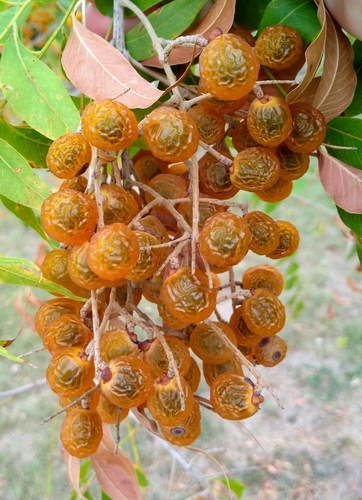
Sapindus drummondii is a deciduous tree 25-50 feet (7.5-15 m) tall with a rounded crown of pinnately compound leaves and clusters of translucent yellow fruit. Each leaf is 5-12 inches (13-30 cm) long, divided into 8-18 lance-shaped, often curved leaflets 1.5-3 inches (4-7.5 cm) long that turn golden yellow in fall. Small creamy-white flowers open in branched panicles 6-10 inches (15-25 cm) long in late spring and early summer. The fruit follows as round, translucent amber-yellow berries about 0.5 inch (1.3 cm) wide that hang on through winter, each holding a single hard black seed. The pulp is rich in saponins and lathers in water, the source of the common name, and is toxic if eaten. Bark is gray and breaks into reddish scaly plates. The tree spreads by root suckers, often forming thickets, and grows along streams, fencerows, and rocky slopes in the southern Great Plains and Southwest. It tolerates heat, drought, and alkaline soils. One trade-off is the suckering habit and the litter of toxic fruit, which limit its use near patios and play areas.
Native Range
Native to the south-central and southwestern United States and northern Mexico, from Missouri and Kansas south through Texas to Arizona. It grows along streams, fencerows, canyon edges, and rocky limestone slopes.Suggested Uses
Used as a drought-tolerant shade and street tree in hot, dry regions, and in native and xeriscape plantings. It is grown for fall color and winter fruit, set back from paving and foot traffic.How to Identify
Appearance
Size & Dimensions
Height25' - 50'
Width/Spread20' - 40'
Bloom Information
Detailed Descriptions
Foliage Description
Green, golden yellow in fallGrowing Conditions
Sun Requirements
Requires 6-12 hours of direct sunlight daily
• Full Sun: 6+ hours of direct sunlight
• Partial Shade: 3-6 hours of direct sunlight
• Full Shade: Less than 3 hours of direct sunlight
Care & Maintenance
Care Guide
Grows in full sun on a wide range of soils, including dry, rocky, sandy, clay, and alkaline ground, at pH 6.0-8.5, and tolerates heat and extended drought once established. It needs no irrigation in zones 6-9 and accepts occasional water without harm. The tree suckers from the roots, so thickets form unless the suckers are cut. Saponins in the fruit pulp make it foam in water and toxic to people and livestock if eaten. It is deep-rooted, wind-firm, and largely free of serious pests.Pruning
Pruning is done in winter while the tree is dormant to shape the crown and raise the canopy. Root suckers are cut or mown to keep the tree from forming a thicket. Dead wood is removed as it appears.Pruning Schedule
Prune: January–February
winter