Santolina, Genus, rosmarinifolia, Species,
- Genus & species
green lavender cotton
Southern Europe — the western Mediterranean basin (Spain, Portugal, southern France, Italy); dry rocky calcareous Mediterranean hillsides, scrub, and garrigue habitats.
Overview
Santolina rosmarinifolia (synonym Santolina virens) is the green-leaved relative of the more commonly grown silver-gray Santolina chamaecyparissus, an evergreen Mediterranean subshrub in the daisy family (Asteraceae) that grows 18-24 inches (45-60 cm) tall and 24-36 inches (60-90 cm) wide as a rounded dense evergreen mound. The species name 'rosmarinifolia' is Latin for 'rosemary-leaved' and references the narrow finely-divided needle-like aromatic leaves that resemble rosemary in texture and arrangement; the visual similarity to rosemary (Salvia rosmarinus, formerly Rosmarinus officinalis, in the unrelated mint family Lamiaceae) is a case of convergent evolution where two unrelated Mediterranean species evolved similar small narrow drought-adapted leaf forms in response to the same dry-summer Mediterranean climate. Bright yellow button-shaped composite flower heads 0.5 inch (1.3 cm) across on slender wiry stems appear above the foliage mound from June through July across a 4-week active flowering window, with the flower heads being miniature versions of the typical Asteraceae composite architecture (although in Santolina the ray florets are absent and only the disc florets remain, producing the rayless button shape rather than the daisy form of related Asteraceae genera like Rudbeckia and Echinacea). The strongly aromatic foliage releases a pungent herbal scent when brushed, crushed, or pruned — sometimes described as camphor-like, curry-like, or chamomile-like — that deters deer and rabbit browsing as effectively as the aromatic chemistry of unrelated mint-family genera. The aromatic chemistry is itself an interesting evolutionary point: aromatic essential-oil chemistry has evolved separately in multiple unrelated plant families (Lamiaceae, Apiaceae, Asteraceae, Lauraceae) in response to herbivore pressure and Mediterranean-climate water-stress conditions, with the chemistry serving a defensive role in each lineage and the biochemical pathways being genuinely different across the families. The bright green foliage color of S. rosmarinifolia gives a green-leaved alternative to the silver-gray S. chamaecyparissus for gardeners who want santolina's clippable subshrub form without the silver-gray color; the two species share the same Mediterranean drought tolerance and the same tight clippable habit. Santolina has been used in formal European garden design since the 16th century for knot gardens, parterres, and low hedging, with the species' dense rounded form responding well to shearing into geometric shapes. Sharp drainage and lean alkaline soil are essential for long-term success: the species rots in wet, rich, or acidic conditions, and the principal cultivation losses come from improper substrate rather than from pest or disease pressure. Cutting back by one-third in early spring before new growth maintains dense growth and prevents the woody crown center from opening up across multiple seasons.
Native Range
Santolina rosmarinifolia is native to the western Mediterranean basin of southern Europe, with a range concentrated in Spain, Portugal, southern France, and Italy across the dry rocky calcareous Mediterranean hillside, scrub, and garrigue habitats that the species evolved with. The species' physiological adaptation to dry-summer conditions, sharp drainage, and alkaline rocky substrate carries through into garden cultivation across temperate climates, with the species performing reliably in zones 6-10 where summer climate matches the Mediterranean origin. The species was introduced to formal European garden cultivation in the 16th century during the Renaissance period when Mediterranean herbs and aromatic subshrubs entered the European formal-garden tradition through Italian and French knot-garden and parterre design.Suggested Uses
Used in knot gardens and formal parterres (the species' principal historical landscape application since the 16th century), in low formal hedging, in Mediterranean-style gardens, in xeric drought-tolerant borders, in herb gardens and sensory gardens, and in container plantings of 5 gallons (19 liters) or larger. The species is the bright green alternative to silver santolina (S. chamaecyparissus) in formal-garden plantings where the gardener wants the same clippable Mediterranean-subshrub form in a different foliage color. The clippable rounded form responds well to shearing into geometric shapes (spheres, low cones, rounded mounds) for formal and topiary applications. The strong aromatic foliage suits sensory gardens, herb gardens, and any planting position where brushing the foliage releases the herbal scent — pathway edges, seating-area borders, and entrance-walk plantings position the species where the scent reaches people walking past.How to Identify
Appearance
Size & Dimensions
Height1'6" - 2'
Width/Spread2' - 3'
Bloom Information
Bright yellow button-shaped composite flower heads 0.5 inch (1.3 cm) across open on slender wiry stems above the foliage mound from June through July across a 4-week active flowering window. The flower heads are rayless composite heads (only disc florets, no surrounding ray florets) that produce a button shape rather than the daisy shape of ray-flower-bearing Asteraceae genera. Pollination is by bees, hoverflies, and other small insect pollinators that work the open disc florets, and the flowers attract beneficial insects to the surrounding garden as a secondary pollinator-support role beyond the species' principal foliage-and-form ornamental contribution.
Detailed Descriptions
Flower Description
Bright yellow button-shaped composite flower heads 0.5 inch (1.3 cm) across on slender wiry stems above the foliage mound, with the flower heads being miniature versions of the typical Asteraceae composite architecture and the bright yellow color giving the species its garden flowering displayFoliage Description
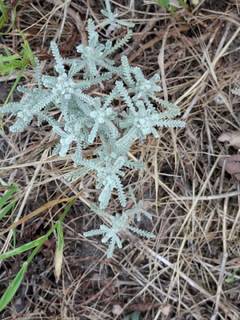
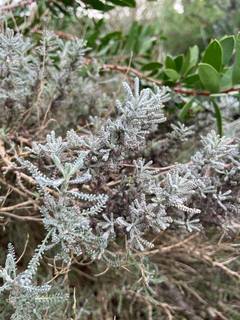
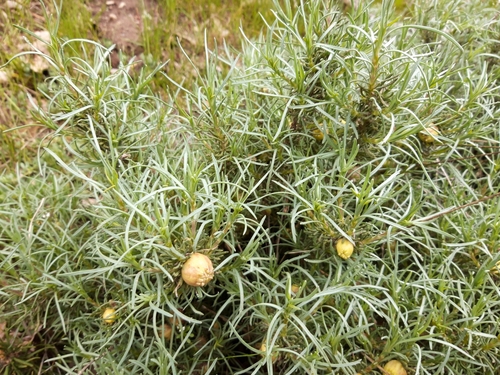
Bright green; narrow finely-divided needle-like aromatic evergreen leaves resembling rosemary in texture and arrangement (the species name 'rosmarinifolia' is Latin for 'rosemary-leaved' and references the leaf form), with the bright green color separating this species from the silver-gray foliage of the more commonly grown Santolina chamaecyparissusGrowing Conditions
Sun Requirements
Requires 6-10 hours of direct sunlight daily
• Full Sun: 6+ hours of direct sunlight
• Partial Shade: 3-6 hours of direct sunlight
• Full Shade: Less than 3 hours of direct sunlight
Care & Maintenance
Care Guide
Plant in full sun with at least 6 hours of direct light. Sharply drained lean alkaline soil at pH 6.0-8.5 supports the species; the species' Mediterranean dry-rocky-calcareous-substrate native habitat reflects a strong physiological preference for sharp drainage and alkaline-to-neutral substrate, and the species rots in wet, rich, or acidic conditions where most cultivation losses occur. Fertilization is omitted because the species is adapted to lean rocky Mediterranean substrates and over-fertilization produces leggy weak growth. Watering is during establishment only because the species is strongly drought-tolerant once the woody crown root system develops; supplemental irrigation in established plantings causes more harm than benefit. Cutting back by one-third in early spring (March-April) before new growth maintains dense compact growth and prevents the woody crown center from opening up and producing a leggy donut-shaped form across multiple seasons. Light shearing after bloom (July-August) removes the spent flower stems and encourages a tight rounded form; this post-bloom shearing also cuts back the wiry flower stems that otherwise project above the foliage mound. The species is not suited to wet-bottom positions, heavy clay, acidic substrate, or shaded positions where the foliage thins and the plant becomes leggy.Pruning
Cut back by one-third in early spring (March-April) before new growth emerges from the woody crown — the annual spring cutback is the principal maintenance for the species and prevents the woody crown center from opening up across multiple seasons. Light shearing after bloom (July-August) removes spent flower stems and maintains the tight rounded form. Avoid cutting into bare woody stems below the foliage line because the species does not reliably resprout from bare wood.Pruning Schedule
Prune: March–April & August
early springsummer
Container Growing
Suitable for container growing
Minimum container size: 5 gallons