Samolus, Genus, repens, Species,
- Genus & species
sea primrose
Coastal southern Australia, New Zealand, South America
Overview
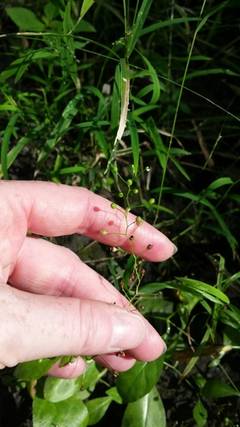
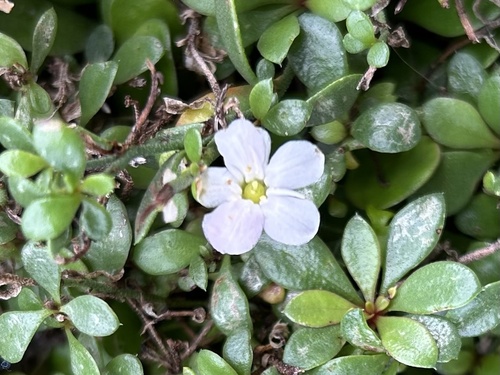
Samolus repens is a low, creeping perennial herb in the primrose family, forming spreading mats 2-6 inches (5-15 cm) tall and 1-2 feet (30-60 cm) across. Stems trail along the ground and root at the nodes. Leaves are small, fleshy, and spoon-shaped to oblong, 0.2-0.8 inch (5-20 mm) long, in rosettes and along the stems. Small five-petalled flowers about 0.2-0.3 inch (5-8 mm) across, white and sometimes flushed pink, appear singly or in few-flowered clusters over a long season. Flowering occurs mainly in spring and summer. Flowers are followed by small rounded capsules holding many tiny seeds. Growth is moderate, and the mat spreads by rooting stems. The plant is restricted to moist, saline ground and does not persist in dry or non-saline garden soils.
Native Range
Native to coastal southern Australia, New Zealand, and parts of South America. Grows in salt marshes, estuarine flats, the edges of coastal lagoons, and damp saline depressions, tolerating regular tidal inundation and salt spray.Suggested Uses
Grown as a groundcover at pond and bog margins, in coastal and saline rain gardens, and in saltmarsh restoration, spaced 8-12 inches (20-30 cm) apart. The salt and flooding tolerance suit tidal and brackish sites where other groundcovers fail. Its need for constant moisture limits its use in conventional dry borders.How to Identify
Appearance
Size & Dimensions
Height2" - 6"
Width/Spread1' - 2'
Bloom Information
Flowers over a long season, mainly spring through summer, from September to March in southern Australia. The small white flowers open a few at a time. Flowering continues while soil moisture and warmth last. Bloom is sparse in shaded or drying sites.
Detailed Descriptions
Foliage Description
greenGrowing Conditions
Sun Requirements
Requires 6-12 hours of direct sunlight daily
• Full Sun: 6+ hours of direct sunlight
• Partial Shade: 3-6 hours of direct sunlight
• Full Shade: Less than 3 hours of direct sunlight
Care & Maintenance
Care Guide
Grows in constantly moist to wet, saline or brackish soil in full sun, tolerating salt, tidal flooding, and waterlogging that few other plants withstand. It needs reliable moisture and does not survive dry conditions. In gardens it suits the wet margins of ponds, bog beds, and coastal rain gardens. Few pests or diseases affect it. The creeping stems root as they spread, slowly enlarging the mat. It declines in non-saline, free-draining beds.Pruning
Little pruning is needed. Trim back spreading stems to contain the mat within its space. Removing old, tired growth in late winter encourages fresh shoots. Rooted stem pieces can be lifted and replanted to fill gaps.Pruning Schedule
Prune: August
winter
Container Growing
Suitable for container growing
Minimum container size: 2 gallons