Samolus, Genus, parviflorus, Species,
- Genus & species
seaside brookweed
Overview
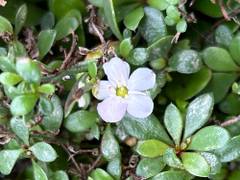
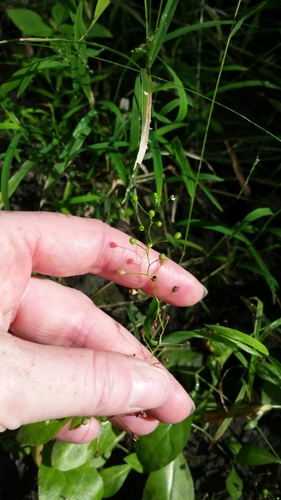
Samolus parviflorus is a herbaceous perennial of wet ground reaching 4-16 inches (10-40 cm) tall, with a basal rosette and erect, branched flowering stems. Leaves are smooth, spoon-shaped to oval, 0.5-2.5 inches (1.3-6 cm) long, bright green, and arranged both in the rosette and alternately up the stems. Small white flowers, each about 0.1 inch (2-3 mm) across with five lobes, are carried in open, branched clusters from late spring through summer; a tiny leaf-like bract sits partway along each flower stalk. Rounded capsules follow, splitting at the top to release numerous small seeds. The plant grows in shallow water and on saturated soil and spreads by seed. It stays low and inconspicuous, and the thin foliage wilts quickly if the soil dries. Growth continues through the warm season in steady moisture and full sun to part shade.
Native Range
Native to North America across much of the United States, southern Canada, and into Mexico and Central America. Grows in wet, open habitats including stream and pond margins, seeps, ditches, marshes, and brackish shorelines, on muddy or saturated soils.Suggested Uses
Used at the margins of ponds, rain gardens, and bog gardens, and in restored wetlands, spaced 6-12 inches (15-30 cm) apart or allowed to seed in. Suited to shallow-water container plantings kept constantly wet. The small size and need for steady moisture limit its use in ordinary borders.How to Identify
Appearance
Size & Dimensions
Height4" - 1'4"
Width/Spread4" - 10"
Bloom Information
Detailed Descriptions
Foliage Description
Bright greenGrowing Conditions
Sun Requirements
Requires 4-8 hours of direct sunlight daily
• Full Sun: 6+ hours of direct sunlight
• Partial Shade: 3-6 hours of direct sunlight
• Full Shade: Less than 3 hours of direct sunlight
Care & Maintenance
Care Guide
Grow in full sun to part shade in consistently wet to saturated soil, including shallow standing water at pond and stream edges. Water to keep the soil from drying, since the shallow roots and thin leaves wilt rapidly in dry conditions. The plant self-seeds in bare, wet mud and forms small colonies. No fertilizer is needed in mucky, fertile soils. In cold-winter areas the top growth dies back and returns from the rootstock or from seed in spring.Pruning
No routine pruning is needed. Spent flowering stems can be cut after seed sets to tidy the planting. Crowded colonies can be thinned in spring to control spread.Pruning Schedule
Prune: March
early spring
Container Growing
Suitable for container growing
Minimum container size: 2 gallons