Sairocarpus, Genus, nuttallianus, Species,
- Genus & species
Nuttall's snapdragon
California and southwestern United States
SunFull Sun
Overview
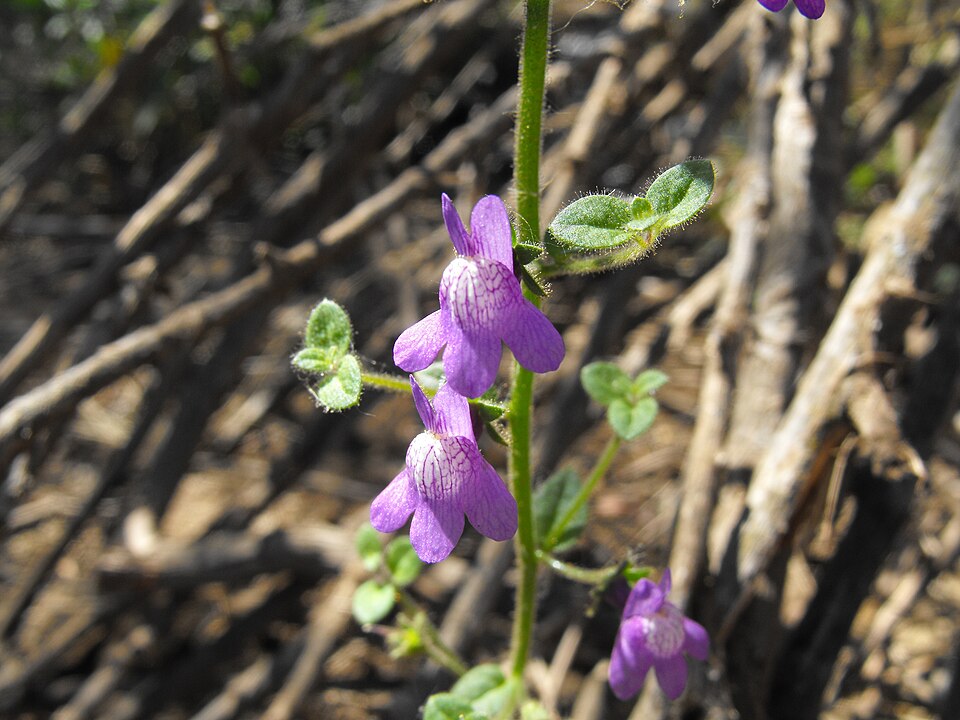
Sairocarpus nuttallianus is an annual herb with slender, weak stems 8-32 inches (20-80 cm) long that lean on surrounding vegetation or sprawl across the ground. Leaves are oval to lance-shaped, 0.5-1.5 inches (1.3-4 cm) long, green, and covered in short glandular hairs that make the foliage sticky to the touch. Flowers are two-lipped and snapdragon-like, 0.3-0.5 inch (8-13 mm) long, violet to blue-purple with a paler or white throat, borne singly in the leaf axils along the upper stems. The stems and flower stalks are also glandular-hairy. Plants germinate after winter rains, flower in spring, and set small seed capsules before dying as soils dry in early summer. Growth is rapid but lax, the thin stems often supported by neighboring plants. After flowering, rounded capsules split to release numerous small seeds. As a winter annual of disturbed and burned ground, it appears in abundance after fire and fades as competing vegetation closes in. It does not tolerate summer moisture and completes its cycle within a few months.
Native Range
Native to California and the southwestern United States into northern Baja California and Arizona. Grows on dry slopes, washes, chaparral, and disturbed or recently burned ground below about 5,000 feet (1,500 m).Suggested Uses
Used in California native plant gardens, post-fire restoration, and informal wildflower plantings on dry, disturbed soils. Suited to unirrigated banks and slopes where it self-sows among other annuals. Established from broadcast seed rather than spaced plants.How to Identify
Appearance
Size & Dimensions
Height8" - 2'8"
Width/Spread8" - 1'4"
Bloom Information
Flowers from March through May, sometimes into June at higher elevations or after late rains. Plants flower more heavily in the season following a fire. Bloom duration depends on soil moisture and ends as soils dry.
Detailed Descriptions
Flower Description
Violet to blue-purpleFoliage Description
GreenGrowing Conditions
Sun Requirements
Requires 6-8 hours of direct sunlight daily
• Full Sun: 6+ hours of direct sunlight
• Partial Shade: 3-6 hours of direct sunlight
• Full Shade: Less than 3 hours of direct sunlight
Water & Climate
Water Needs
Drought Tolerance
Drought tolerant when established
Care & Maintenance
Care Guide
Grown from seed sown in fall on open, well-drained soil; germination follows winter rains and improves on recently disturbed or burned ground. Plants need spring moisture and tolerate drying as they set seed. Summer irrigation shortens the life cycle and encourages rot. The lax stems lean on nearby plants and need no staking. Seed disperses from splitting capsules, and stands reappear where soil is disturbed. Aphids occasionally gather on the sticky stem tips.Pruning
No pruning is required. Plants can be left in place to seed or removed once dry. Clearing fruiting stems before capsules open reduces self-sowing in cultivated areas.Toxicity: Not assessed
UnknownPlanting Guide
Planting Methods & Timing
Planting Method
direct sow
Direct Sow Timing
Fall