Overview
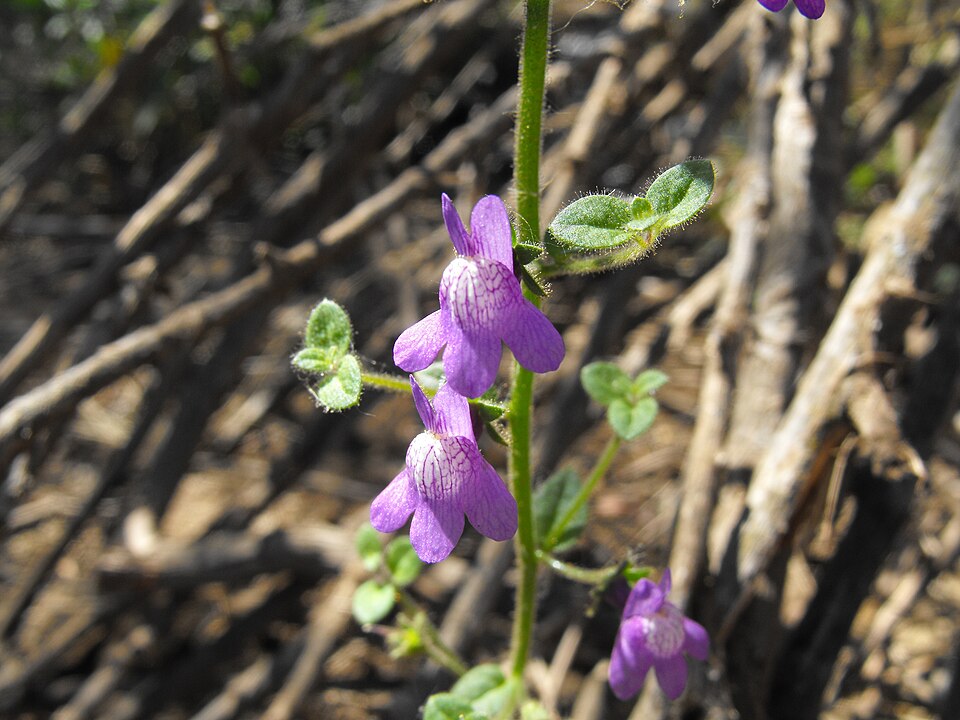
Sairocarpus is a genus of annual and short-lived perennial herbs in the family Plantaginaceae, native to western North America and Mexico. The genus comprises the New World snapdragons, segregated from the Old World Antirrhinum, and includes around a dozen species. Plants are slender, erect to sprawling herbs 4 in to 3 ft (10-90 cm) tall, often somewhat sticky-hairy, with narrow leaves 0.4-2 in (1-5 cm) long. The two-lipped, pouched flowers are 0.3-0.8 in (8-20 mm) long in white, pink, lavender, or purple, carried in loose spikes or singly in the leaf axils from spring into summer. Many species grow on dry, open, rocky or sandy ground, including chaparral, desert edges, and disturbed slopes, and several appear in abundance after fire. They tolerate heat and drought but are short-lived, often completing their cycle in a single season. The small dry capsules release numerous tiny seeds.
Native Range
Sairocarpus is native to western North America, from California and the southwestern United States into northern and central Mexico. Species grow in chaparral, desert margins, rocky slopes, and disturbed ground, often appearing after fire.Suggested Uses
Grown in native, rock, and dry-climate gardens, and in wildflower and restoration plantings on lean soils. The flowers draw bees and hummingbirds, and self-sown seedlings maintain informal drifts.How to Identify
Appearance
Size & Dimensions
Height4" - 3'
Width/Spread4" - 1'6"
Bloom Information
Detailed Descriptions
Flower Description
white, pink, lavender, or purpleFoliage Description
greenGrowing Conditions
Sun Requirements
Requires 6-10 hours of direct sunlight daily
• Full Sun: 6+ hours of direct sunlight
• Partial Shade: 3-6 hours of direct sunlight
• Full Shade: Less than 3 hours of direct sunlight
Water & Climate
Water Needs
Drought Tolerance
Drought tolerant when established
Care & Maintenance
Care Guide
Sairocarpus grows in full sun on dry, sharply drained sandy, gravelly, or rocky soils of low fertility. A soil pH near 6.0-7.5 is suitable. The genus tolerates heat and drought and suits lean, open ground, but it is short-lived and many species behave as annuals, relying on self-sown seed to return. Wet, rich, or shaded sites cause weak, floppy growth. Watering is needed only to establish seedlings and during severe drought. Plants often self-seed where the soil is left open.Pruning
Little pruning is needed on these short-lived plants. Spent flower spikes can be removed to tidy growth, or left to ripen and self-sow for the next season.Container Growing
Suitable for container growing
Minimum container size: 2 gallons
Toxicity
Non-toxicPlanting Guide
Planting Methods & Timing
Planting Method
direct sow
Direct Sow Timing
early spring
Days to Maturity
60–90 days
Plant Spacing
8 inches
