Sabatia, Genus, angularis, Species,
- Genus & species
Rosepink
Overview
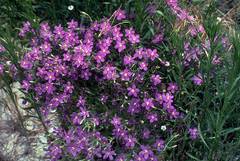
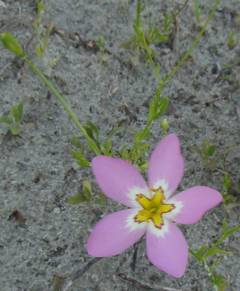
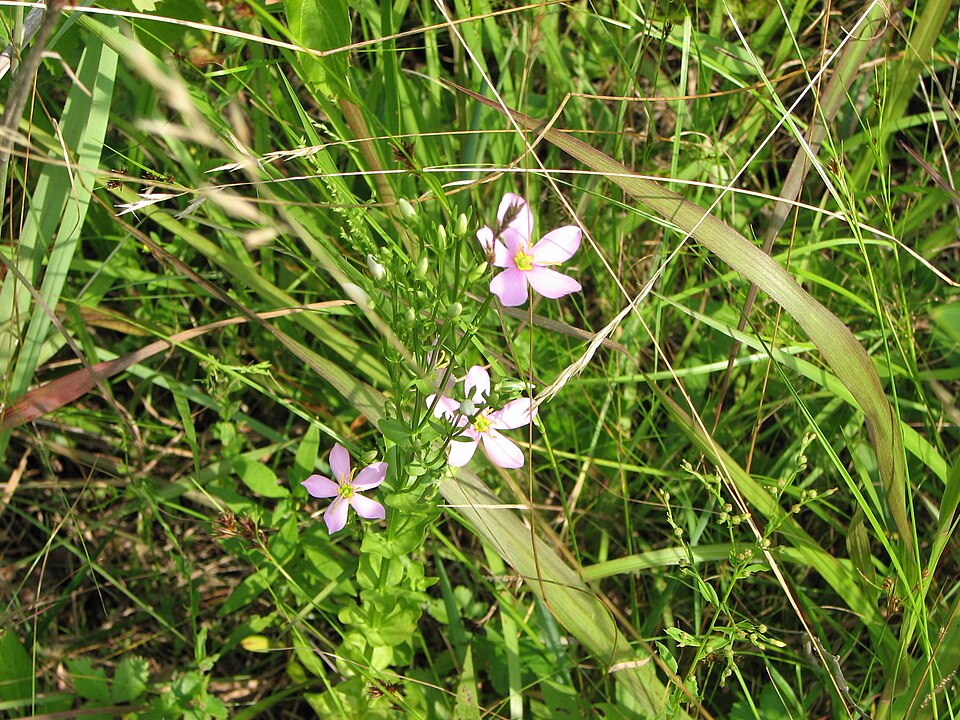
Sabatia angularis is a biennial herb growing 1-3 feet (30-90 cm) tall, forming a low rosette in its first year and a branched, flowering stem in its second. The erect stems are distinctly four-angled with narrow wings along the edges, carrying opposite, ovate leaves 0.75-1.5 inch (2-4 cm) long that clasp the stem at the base. Flowers are 1-1.5 inch (2.5-4 cm) across with five rose-pink petals, occasionally white, surrounding a yellow-green, red-edged star at the center. Blooms appear in branched clusters at the stem tips through midsummer and carry a faint sweet scent. The fruit is a small capsule holding numerous tiny seeds. After flowering and setting seed, the plant dies, completing its two-year cycle. It grows in moist meadows, prairies, open woods, and roadside ditches, and depends on fresh seed each year to maintain a stand. Dry soil and dense shade reduce flowering and seedling survival.
Native Range
Sabatia angularis is native to the central and eastern United States, from New York and Ontario west to Kansas and south to Florida and Texas. It grows in moist prairies, meadows, open woodlands, and disturbed roadsides.Suggested Uses
Planted in meadow gardens, native plant beds, and naturalized moist borders. It combines with ornamental grasses and other summer prairie wildflowers. The flowers supply nectar for bees and butterflies.How to Identify
Appearance
Size & Dimensions
Height1' - 3'
Width/Spread10" - 1'6"
Bloom Information
Flowers open from early to late summer, generally June to August, on second-year plants. The branched clusters bloom in succession over four to six weeks. Each flower lasts several days, and the faint fragrance is strongest in warm midday sun.
Detailed Descriptions
Foliage Description
greenGrowing Conditions
Sun Requirements
Requires 6-10 hours of direct sunlight daily
• Full Sun: 6+ hours of direct sunlight
• Partial Shade: 3-6 hours of direct sunlight
• Full Shade: Less than 3 hours of direct sunlight
Care & Maintenance
Care Guide
Grow Sabatia angularis in full sun to part shade in moist, average to sandy soil. It tolerates a pH from 5.5 to 7.0 and needs steady moisture during the growing season. As a biennial it sets a leafy rosette the first year and flowers the second, then dies, so fresh seed sown each year maintains a continuous stand. The seed needs light to germinate and is surface-sown rather than buried. The plant transplants poorly because of its taproot and is usually started in its final position. Dense competition and dry soil thin out seedlings.Pruning
No pruning is needed. Removing spent flowering stems before the seed drops reduces self-sowing, while leaving them allows the stand to renew. Cut stems can be left standing through winter for seed dispersal.Toxicity
Non-toxicPlanting Guide
Planting Methods & Timing
Planting Method
direct sow
Plant Spacing
12 inches