Loropetalum, Genus, chinense, Species, var., Variety, rubrum, Variety,
- Genus & species
- Variety
ruby loropetalum
Overview
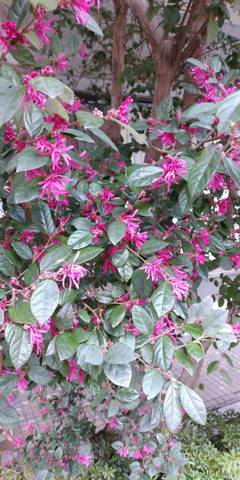
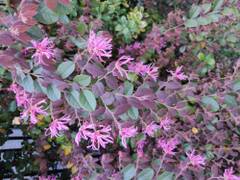
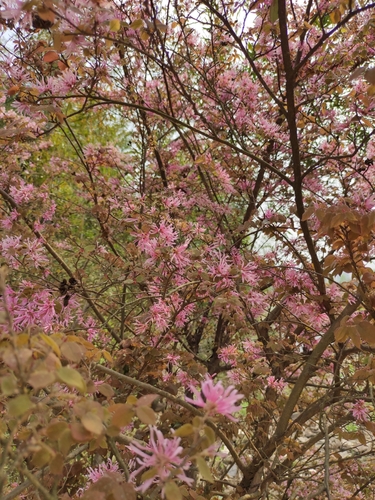
Loropetalum chinense var. rubrum is a medium to large evergreen shrub reaching 72-180 inches (180-450 cm) tall and 72-120 inches (180-300 cm) wide; mature specimens may grow into small trees in zones 9-10. Stems are upright with horizontal layered branching, eventually arching outward at maturity. Leaves are ovate to elliptical, 1.5-3 inches (4-7.5 cm) long; new growth emerges burgundy-red, with mature foliage holding burgundy-purple in cool weather and shifting toward burgundy-green in summer heat. Flowers form in clusters of 3-7 along the stems; each flower carries 4 strap-like petals 0.5-1 inch (1.3-2.5 cm) long in pink to magenta-red. Spring bloom occurs March through April with smaller secondary flushes through summer and fall in zones 8-10. Plants are evergreen in zones 7-10; tip dieback may occur below 5°F (-15°C). Foliage shows the deepest color in 6+ hours of direct sun and during cool weather; summer foliage is more green-tinted in shade. Powdery mildew and root rot occur in poorly drained or shaded sites. Growth produces 12-24 inches (30-60 cm) of new stem per season; plants reach mature size in 5-8 years. Lifespan 25-50 years in suitable sites.
Native Range
Loropetalum chinense var. rubrum is native to broad-leaved evergreen forests of southern China, the form arising from natural populations separate from the white-flowered species type. The variety occurs at 300-3,300 feet (100-1,000 m) elevation in moist, well-drained acidic soils.Suggested Uses
Used as a medium to large shrub in foundation plantings, mixed borders, and screening hedges at 6-8 foot (1.8-2.4 m) spacing. Limbed-up specimens grow as small specimen trees in zones 8-10 with 8-12 foot (2.4-3.6 m) spacing. Containers of at least 15 gallons (57 L) hold young plants for 3-5 years, after which root spread requires landscape planting.How to Identify
Appearance
Size & Dimensions
Height6' - 15'
Width/Spread6' - 10'
Bloom Information
Main bloom occurs March through April in zones 7-9, with peak flowering in late March. Smaller bloom flushes occur sporadically through summer and fall in zones 8-10, with reduced flower numbers; in zones 9-10, sporadic blooms may continue into November. Individual flower clusters last 7-14 days; main bloom period totals 4-6 weeks.
Detailed Descriptions
Flower Description
Pink to magenta-redFoliage Description
Burgundy-purple in cool weather, shifting toward burgundy-green in summer heat; new growth burgundy-redGrowing Conditions
Sun Requirements
Requires 4-8 hours of direct sunlight daily
• Full Sun: 6+ hours of direct sunlight
• Partial Shade: 3-6 hours of direct sunlight
• Full Shade: Less than 3 hours of direct sunlight
Care & Maintenance
Care Guide
Water 1 inch (2.5 cm) weekly through the first two growing seasons; established plants tolerate 3-4 weeks without rain in zones 7-10. Apply 2-3 inches (5-7.5 cm) of acidic mulch (pine bark, pine needles) annually to maintain soil pH. Plants tolerate full sun to part shade; foliage color is deepest in 6+ hours of direct sun, with green-tinted purple tones in shade. Soil pH 4.5-6.5 with good drainage is required; chlorosis develops on alkaline soils above pH 7.0. In zones 6-7, tip dieback occurs at temperatures below 0°F (-18°C); regrowth from the base typically follows in spring. Lifespan 25-50 years in suitable sites with acidic soil and drainage.Pruning
Prune after spring bloom finishes in late April or May, removing dead, damaged, or crossing stems and shaping the plant. Selective pruning of long shoots maintains a layered tiered habit; heavy shearing removes the natural form and the next bloom flush. Plants tolerate hard rejuvenation pruning to 12-18 inches (30-45 cm) above ground in early spring; flowering returns the following year on regrowth. Limbing up the lower 2-3 feet (60-90 cm) of trunk converts a multi-stemmed shrub into a small specimen tree.Pruning Schedule
Prune: April–May
late spring
Container Growing
Suitable for container growing
Minimum container size: 15 gallons