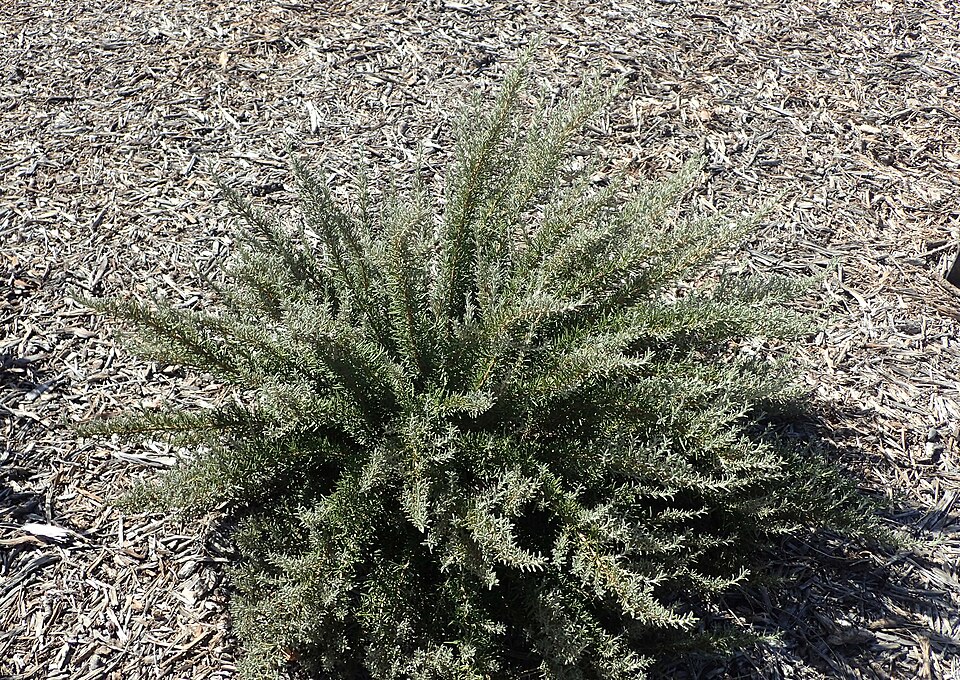
Rosmarinus, Genus, officinalis, Species, 'Tuscan Blue', Cultivar,
- Genus & species
- Cultivar
Tuscan blue rosemary
Mediterranean (southern Europe, North Africa); 'Tuscan Blue' of Italian garden origin; deep violet-blue flowers, zone 8 hardiness
Overview
Rosmarinus officinalis 'Tuscan Blue' (reclassified as Salvia rosmarinus 'Tuscan Blue') is an evergreen shrub reaching 4-6 feet (1.2-1.8 m) tall with a spread of 3-5 feet (0.9-1.5 m) and a vigorous, upright, broadly columnar habit. Narrow, needle-like, aromatic leaves 1-1.5 inches (2.5-4 cm) long are dark green above and silvery-white beneath, broader and more deeply colored than those of 'Arp' or 'Blue Spires'. Small, two-lipped deep violet-blue flowers appear in leaf axils February-April with sporadic summer rebloom — a deeper tone than the medium-blue flowers of 'Blue Spires' or the pale-blue flowers of 'Arp'. Growth rate is fast. Hardy to USDA zone 8, less cold-tolerant than 'Arp' or 'Hill Hardy' (zone 6) or 'Blue Spires' (zone 7); this reflects the cultivar's origin in warmer Italian climates. Foliage carries a strong flavor used in Italian cooking. In USDA zones 6-7, overwintering requires container culture moved indoors or a sheltered microclimate.
Native Range
Rosmarinus officinalis is native to the Mediterranean region — southern Europe and North Africa — in dry, rocky, calcareous soils. 'Tuscan Blue' traces to Italian garden selections.Suggested Uses
Used as a hedge, specimen, or in Mediterranean-style plantings at 3-4 foot (0.9-1.2 m) spacing, or in containers (5-gallon minimum) that can be moved indoors for winter in cold climates. Zone 8 hardiness restricts in-ground use to mild-winter regions such as USDA zones 8-10. In USDA zones 6-7, container culture with winter indoor placement is the practical method. Heavy clay and low, wet spots remain unsuitable.How to Identify
Appearance
Size & Dimensions
Height4' - 6'
Width/Spread3' - 5'
Bloom Information
Small two-lipped deep violet-blue flowers appear in leaf axils February-April with sporadic summer rebloom. Bloom duration runs roughly 8 weeks at peak. Flowers are visited by bees. Foliage carries a strong camphor-pine aromatic scent year-round.
Detailed Descriptions
Flower Description
Deep violet-blue two-lipped flowers in leaf axils, Feb-Apr with sporadic summer rebloomFoliage Description
Dark green above, silvery-white beneath; broader needle-like 1-1.5 inches; aromatic; evergreenGrowing Conditions
Sun Requirements
Requires 6-10 hours of direct sunlight daily
• Full Sun: 6+ hours of direct sunlight
• Partial Shade: 3-6 hours of direct sunlight
• Full Shade: Less than 3 hours of direct sunlight
Care & Maintenance
Care Guide
Plant in full sun (6-10 hours direct sun) in well-drained, lean soil at pH 6.0-8.0 including sandy, loamy, chalky, or rocky types. Hardy to USDA zone 8 only; winter temperatures below 10°F (-12°C) cause dieback. Sharp drainage matters more than cold tolerance in warm climates; wet winter soils cause root rot. Drought tolerant once established. Growth reaches 4-6 feet within 3-4 years. Foliage tips are harvested year-round for culinary use.Pruning
Light pruning is done after flowering in April-May. The vigorous habit accepts shaping or light hedging, but cuts into old leafless wood fail to resprout. Tips are harvested regularly through the season for culinary use.Pruning Schedule
Prune: April–May
late spring
Container Growing
Suitable for container growing
Minimum container size: 5 gallons