Image 1 of 16
1 / 16
Plant Reference
Rodgersia, Genus,
- Genus
rodgersia
China, Korea, Japan (mountain forests and stream margins)
Overview
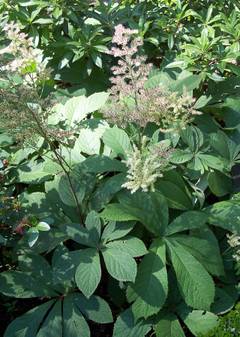
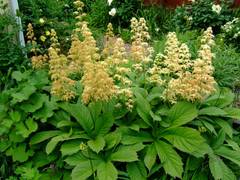
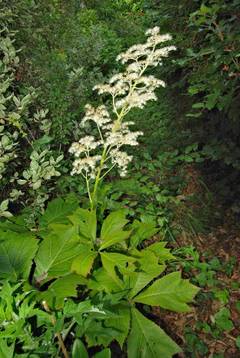
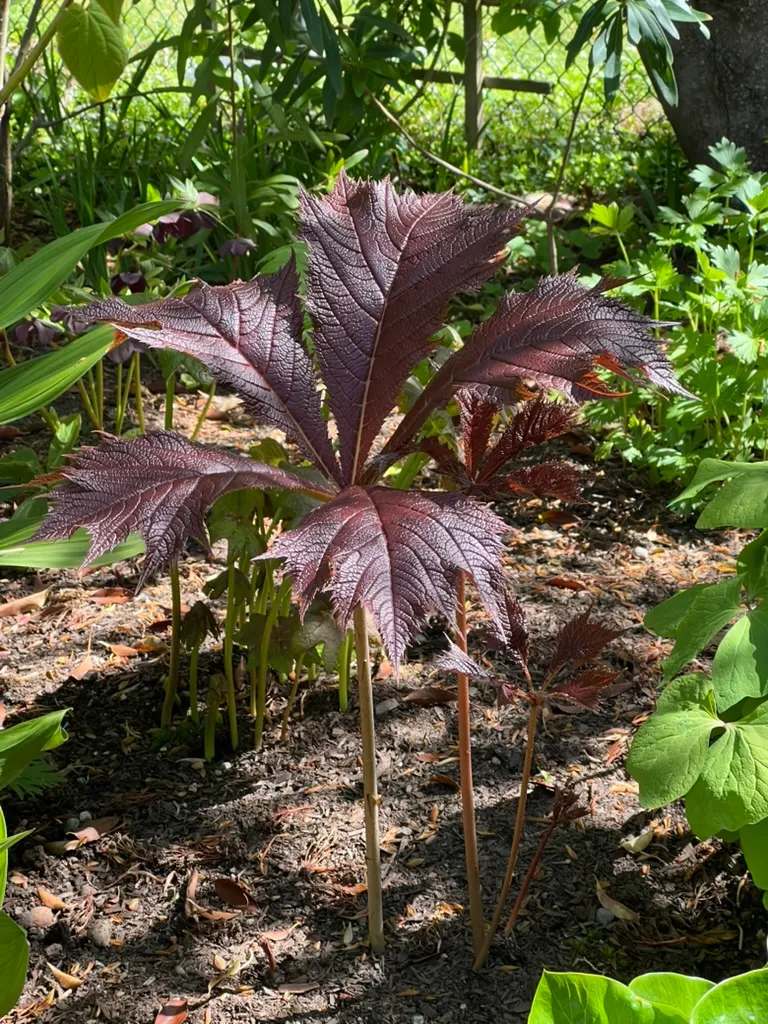
Rodgersia is a genus of approximately 6 species of large-leaved rhizomatous perennials in the saxifrage family (Saxifragaceae), growing 36–60 inches (90–150 cm) tall and wide. Large compound leaves 12–24 inches (30–60 cm) in two forms: palmate (horse-chestnut-like) in R. aesculifolia and R. podophylla, and pinnate (elderberry-like) in R. pinnata and R. sambucifolia. Tall plume-like flower panicles 12–18 inches (30–45 cm) in white, pink, or red in early to midsummer. The emerging spring foliage is often bronze-tinted, maturing to dark green through summer, and returning to bronze-copper tones in fall. Named after U.S. Navy Admiral John Rodgers (1812–1882), who led the expedition during which R. podophylla was collected in Japan. Requires consistently moist to wet soil — the large leaf surfaces have high transpiration rates, and the foliage scorches and collapses in drought or full sun exposure. Stream margins, pond edges, and boggy borders are suited sites. Late spring frost can damage the emerging foliage — the new leaves are frost-tender even though the rootstock is hardy to zone 4. Partial shade to full shade. Spreads by thick rhizomes to form colonies. Slug damage on the large leaves. Non-toxic. Deer-resistant. Zones 4–8. This entry represents the genus. Growth rate is moderate.
Native Range
Native to China, Korea, and Japan, growing in mountain forests, stream margins, and moist meadows at moderate to high elevations.Suggested Uses
Grown at stream margins, pond edges, and boggy borders in zones 4–8. The large compound foliage and the flower plumes are the seasonal features. Companion to Gunnera, Ligularia, and Astilbe at water features. Consistently moist soil required. Non-toxic. Deer-resistant.How to Identify
Appearance
Size & Dimensions
Height3' - 5'
Width/Spread3' - 5'
Bloom Information
Early to midsummer (June–July), lasting 3–4 weeks. White, pink, or red flower plumes 12–18 inches (30–45 cm). The large compound foliage — not the flowers — is the primary season-long feature.
Detailed Descriptions
Flower Description
White, pink, or red; in tall plume-like panicles 12-18 inches (30-45 cm)Foliage Description
Dark green to bronze-green, large compound leaves 12-24 inches (30-60 cm); palmate (R. aesculifolia, R. podophylla) or pinnate (R. pinnata, R. sambucifolia)Growing Conditions
Sun Requirements
Requires 2-5 hours of direct sunlight daily
• Full Sun: 6+ hours of direct sunlight
• Partial Shade: 3-6 hours of direct sunlight
• Full Shade: Less than 3 hours of direct sunlight
Care & Maintenance
Care Guide
Partial shade to full shade. Consistently moist to wet soil required — stream margins, pond edges, boggy borders. Late spring frost damages emerging foliage. Slug damage on large leaves. Spreads by thick rhizomes. Non-toxic. Deer-resistant. Zones 4–8.Pruning
Remove spent flower stalks after bloom. Cut dead foliage to the ground in late autumn or early spring. No division needed unless congested.Pruning Schedule
Prune: March & November
fallearly spring