Rodgersia, Genus, podophylla, Species,
- Genus & species
bronzeleaf rodgersia
Japan and Korea (moist mountain woodlands, stream banks, and meadows at 2000-6500 ft elevation; podophylla = foot-like leaf; the most vigorous and widest-spreading rodgersia; jagged leaflet tips; rhizomatous spreading)
Overview
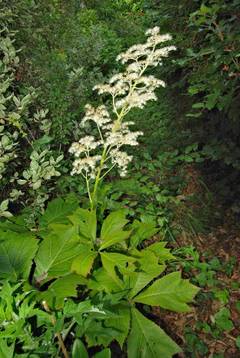
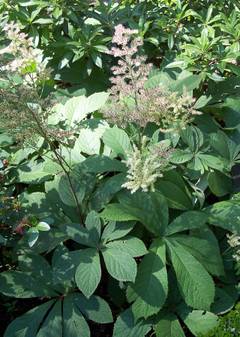
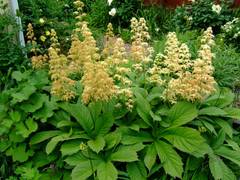
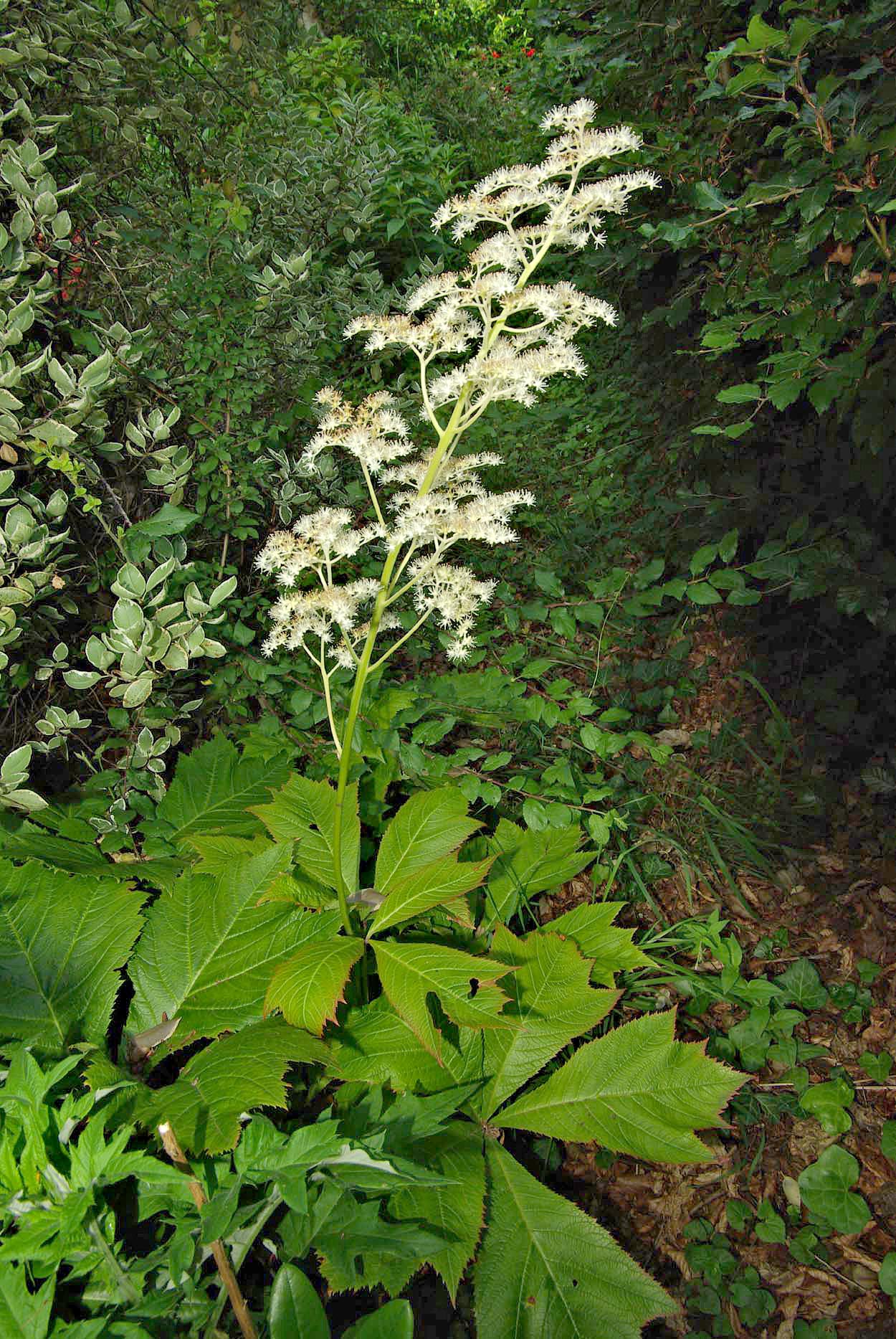
Rodgersia podophylla is a herbaceous perennial in the saxifrage family (Saxifragaceae) reaching 3–5 feet (0.9–1.5 m) tall with a spread of 3–5 feet (0.9–1.5 m), carrying a bold clump-forming spreading habit — the species runs as the most vigorous and the widest-spreading rodgersia across the genus. The palmately compound leaves carry 5 leaflets each 6–12 inches (15–30 cm) long with deeply jagged irregularly toothed leaflet tips (the species epithet podophylla translates as foot-like leaf) — leaflet tips run more deeply cut and more irregular than R. aesculifolia carries. Foliage emerges in bronze-green tones during spring leaf flush, matures to dark green tones across the summer growing season, and turns coppery-bronze to reddish-bronze tones in autumn — the autumn coloration runs as the most persistent autumn color across the genus. Tall flower panicles 10–14 inches (25–35 cm) long carry small creamy-white flowers above the foliage canopy during June and July. Growth rate runs moderate. Hardy to zone 5. Native to Japan and Korea. Rhizomatous spreading character builds large colonies in consistently moist garden conditions.
Native Range
Rodgersia podophylla is native to Japan and Korea, where wild populations grow in moist mountain woodlands, stream banks, and meadows at 2,000–6,500 feet (600–2,000 m) elevation across high-rainfall montane environments.Suggested Uses
Grown at streamside, pond margin, or large moist woodland garden plantings at 3–4 foot (0.9–1.2 m) spacing. The species runs as the most vigorous rodgersia and builds large colonies across consistently moist garden conditions. Bold jagged-tipped palmate foliage carries primary structural interest across the growing season. Coppery-bronze autumn coloration extends ornamental value into late season. Rhizome spread may exceed the planting boundary in consistently moist garden conditions, which makes the species unsuitable for small garden plantings or for sites where colony spread must be controlled. Dry conditions, hot full-sun positions, small garden footprints, and sites without consistent moisture are all unsuitable given the cultural profile.How to Identify
Appearance
Size & Dimensions
Height3' - 5'
Width/Spread3' - 5'
Bloom Information
Tall flower panicles 10–14 inches (25–35 cm) long rise above the foliage canopy carrying small creamy-white flowers across the June to July bloom window across a 3- to 4-week flowering period. Spent flower plumes persist as brown seed heads through autumn into winter, which carries dried structural interest into the dormant season.
Detailed Descriptions
Flower Description
Creamy-white small flowers in tall panicles 10-14 inches long rising above the foliage during June to JulyFoliage Description
Bronze-green during spring leaf flush, dark green across summer, coppery-bronze to reddish-bronze in autumn; palmately compound leaves with 5 leaflets each 6-12 inches long carrying deeply jagged irregularly toothed leaflet tipsGrowing Conditions
Sun Requirements
Requires 2-5 hours of direct sunlight daily
• Full Sun: 6+ hours of direct sunlight
• Partial Shade: 3-6 hours of direct sunlight
• Full Shade: Less than 3 hours of direct sunlight
Care & Maintenance
Care Guide
Grows in partial shade to full shade in consistently moist to wet humus-rich soil at pH 5.5–7.0 across loam, peat, and clay substrates. Hardy to zone 5. The species runs as the most vigorous rodgersia across the genus — rhizomatous spreading builds large colonies in consistently moist garden conditions where soil moisture supports the rhizome network across the growing season. Drought tolerance runs low — the species does not accommodate dry sites without consistent irrigation support. Hot full-sun positions cause leaf scorch across the canopy. Heavy mulching with leaf mold or composted organic matter maintains cool moist root-zone conditions across the summer growing season.Pruning
Spent flower stems are removed after the bloom phase ends, or are left standing across autumn into winter for dried structural interest in the dormant garden. Dead foliage is cut back across the late winter window before spring leaf emergence. Rhizome spread that exceeds the desired planting footprint is removed by lifting and dividing the rhizome at the perimeter of the colony — division also runs as the standard propagation method for the species across the dormant season.Pruning Schedule
Prune: February–March
early spring