Rivina, Genus, spp., Multiple species,
- Genus
- Multiple species
bloodberry
Warm Americas (southern US to Argentina)
Overview
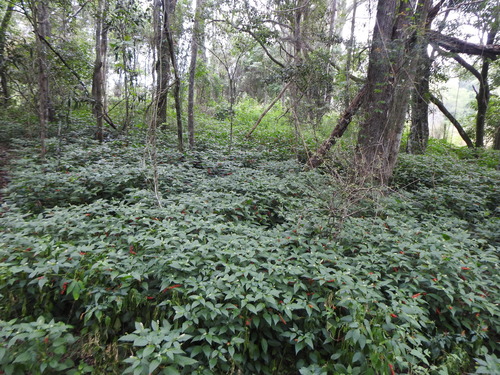
Rivina is a small genus in the family Petiveriaceae, most often treated as the single species R. humilis, known as bloodberry or rougeplant. Native to the warmer Americas from the southern United States to Argentina, it is a soft-stemmed perennial herb or subshrub growing 1-4 ft (0.3-1.2 m) tall. The thin, oval to heart-shaped leaves are 1-4 in (2.5-10 cm) long on slender stems, forming an open, sprawling clump. Slender racemes carry many small flowers in white, pink, or greenish tones, opening more or less year-round in frost-free climates. Each flower is followed by a glossy berry that ripens bright red, occasionally orange or yellow, and flowers and fruit are often present together. The plant grows in shaded understorey, hammocks, and disturbed ground, self-seeds readily, and can naturalize beyond plantings. Top growth is cut down by frost but resprouts from the base in mild regions. The berries contain compounds that can cause digestive upset if eaten.
Native Range
Rivina humilis is native to the southern United States, Mexico, the Caribbean, and Central and South America to Argentina. It grows in shaded woodland, hammocks, thickets, and disturbed ground in warm climates.Suggested Uses
Grown as a shade groundcover and understorey filler in tropical and subtropical gardens, and in containers or as a houseplant in cooler regions. The persistent red berries draw fruit-eating birds.How to Identify
Appearance
Size & Dimensions
Height1' - 4'
Width/Spread1' - 3'
Bloom Information
Flowering continues much of the year in frost-free climates, peaking in the warm months, and runs spring to autumn where winters are cool. Small white to pink flowers and ripe red berries appear together along the racemes over a long season.
Detailed Descriptions
Flower Description
white to pinkFoliage Description
greenGrowing Conditions
Sun Requirements
Requires 1-5 hours of direct sunlight daily
• Full Sun: 6+ hours of direct sunlight
• Partial Shade: 3-6 hours of direct sunlight
• Full Shade: Less than 3 hours of direct sunlight
Care & Maintenance
Care Guide
Rivina grows in part to full shade on moist, humus-rich, well-drained soils, and tolerates a range from sandy to loamy ground. A soil pH near 6.0-7.5 is suitable. Established plants tolerate short dry spells but are most vigorous with steady moisture and warmth. Frost cuts the top growth, which resprouts from the base where the ground does not freeze. The plant self-seeds and spreads, and in some warm regions it is treated as a weed. Few pests trouble it beyond occasional leaf-chewing insects.Pruning
Cut back leggy or frost-damaged stems to the base to renew compact growth. Removing spent racemes before the berries ripen reduces self-seeding where spread is not wanted.Pruning Schedule
Prune: March
early spring
Container Growing
Suitable for container growing
Minimum container size: 2 gallons
