Ricinus, Genus, communis, Species,
- Genus & species
castor bean
Northeastern Africa and the Middle East
Overview
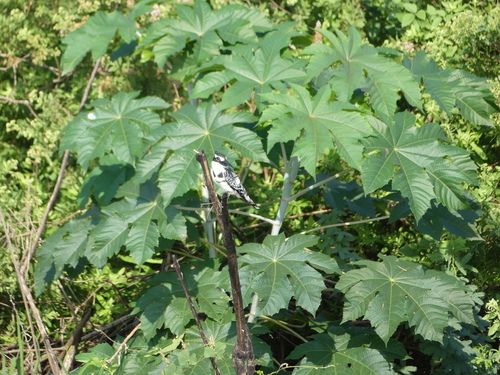
Ricinus communis, the castor bean, is a fast-growing tender perennial in the spurge family, usually grown as an annual where winters are cold, reaching 3-15 feet (1-4.5 m) in a single season and becoming a woody, tree-like shrub 20-40 feet (6-12 m) tall in frost-free climates. The large, glossy, palmate leaves are 1-3 feet (30-90 cm) wide, divided into 5-11 pointed, toothed lobes, often flushed bronze, red, or purple in coloured forms. From summer into autumn it bears upright spikes with greenish-yellow male flowers below and red female flowers above, followed by soft-spined, rounded seed capsules about 1 inch (2.5 cm) across. Each capsule holds three glossy, mottled, bean-like seeds. The plant grows quickly from seed, forming a bold, coarse-leaved clump within a few months. All parts are poisonous, and the seeds contain ricin, an extremely potent toxin, with even a few chewed seeds capable of being fatal to people and animals. It is native to tropical Africa and naturalized in warm regions worldwide.
Native Range
Native to northeastern Africa and the Middle East, and possibly tropical Asia, where it grows as a perennial shrub or small tree. It has naturalized across the tropics and subtropics and in warm parts of the Americas. It is grown worldwide as an ornamental and as an oilseed crop for castor oil.Suggested Uses
Grown as a bold foliage accent in summer borders, large containers, and tropical-style plantings, where its size fills space quickly. Red-leaved forms are used for contrast among green foliage. Because of the poisonous seeds, it is kept out of gardens used by young children.How to Identify
Appearance
Size & Dimensions
Height3' - 15'
Width/Spread3' - 6'
Bloom Information
Flowers from midsummer into autumn, with male and female blooms on the same upright spike, the red female flowers above the yellowish male ones. The flowers are wind-pollinated and have no petals or scent. Seed capsules ripen through autumn and split to scatter the seeds.
Detailed Descriptions
Foliage Description
green to bronze-redGrowing Conditions
Sun Requirements
Requires 6-12 hours of direct sunlight daily
• Full Sun: 6+ hours of direct sunlight
• Partial Shade: 3-6 hours of direct sunlight
• Full Shade: Less than 3 hours of direct sunlight
Water & Climate
Water Needs
Care & Maintenance
Care Guide
Grows in full sun in moist, fertile, well-drained soil with plenty of warmth, putting on height fast through summer. Seed is sown after the last frost, or started indoors a few weeks earlier in cool climates, soaked first to speed germination. It needs steady water and feeding to reach full size and is killed by frost where it is grown as an annual. Staking helps in windy sites because the large leaves catch wind. Spider mites and seedling damping-off are the main problems. The seeds are highly poisonous and pose a serious risk if eaten by people or animals.Pruning
No routine pruning is needed. Lower leaves can be removed as they yellow to show the stem. Removing the spent flower spikes before seeds form reduces both self-seeding and the hazard of poisonous seeds dropping.Container Growing
Suitable for container growing
Minimum container size: 10 gallons
Toxicity Warning
Toxic to pets and humansPlanting Guide
Planting Methods & Timing
Planting Method
both
Indoor Start
6 weeks before last frost
Direct Sow Timing
After last frost
Plant Spacing
36 inches