Ricinocarpos, Genus, pinifolius, Species,
- Genus & species
wedding bush
Overview
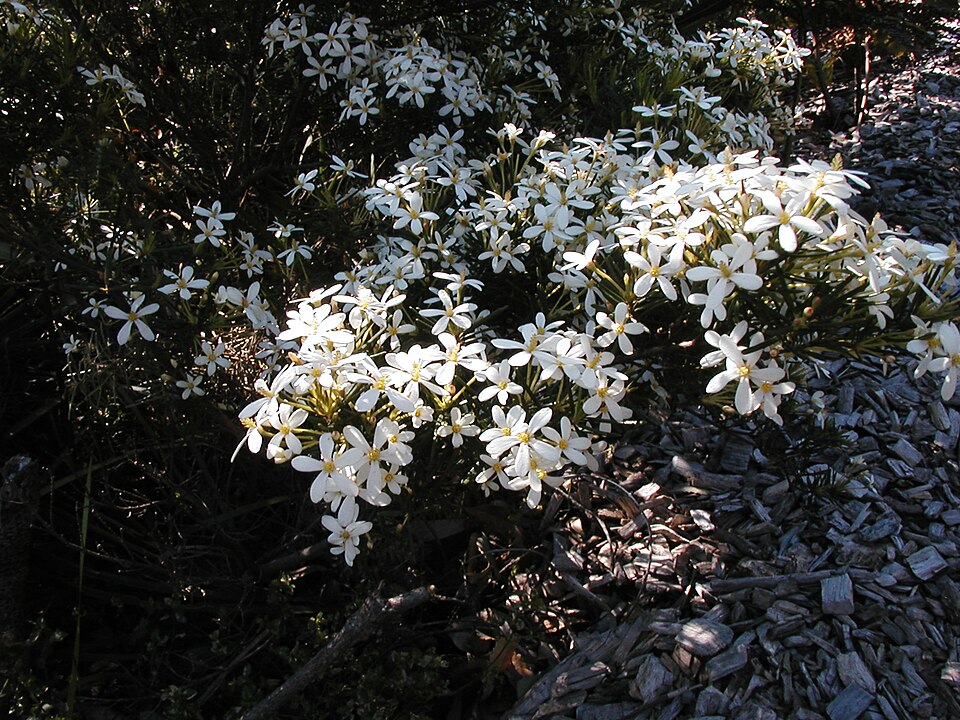
Ricinocarpos pinifolius, the wedding bush, is an evergreen shrub in the family Euphorbiaceae native to coastal eastern Australia. It forms an upright, rounded bush 3-7 feet (1-2 m) tall and 3-5 feet (1-1.5 m) wide, with slender, needle-like green leaves 0.5-1.5 inches (1-4 cm) long that give it a soft, pine-like look. In spring the branch tips are covered with white, five-petalled star flowers about 0.6-1 inch (15-25 mm) across; male and female flowers grow on the same plant, with several smaller male flowers surrounding a single larger female. The massed white bloom against the dark foliage is the source of the common name. Rounded, warty capsules follow and split to release seeds. The species grows in coastal heath, scrub, and open forest on sandy, freely draining soils, tolerating salt wind and dry spells once established. It can be short-lived and is slow to reshoot from old wood, and it declines in heavy, wet, or rich soils.
Native Range
Ricinocarpos pinifolius is native to coastal eastern Australia, from Queensland through New South Wales into eastern Victoria. It grows in coastal heath, scrub, and sandy open forest, on freely draining sandy soils near the sea.Suggested Uses
Grown in coastal and native gardens as a feature shrub, low screen, or habitat plant for native bees, and used in revegetation of sandy ground. Suited to seaside and dry, sunny sites with sharp drainage. Spaced 3-5 feet (0.9-1.5 m) apart in mixed plantings.How to Identify
Appearance
Size & Dimensions
Height3' - 7'
Width/Spread3' - 5'
Bloom Information
Detailed Descriptions
Foliage Description
green, needle-likeGrowing Conditions
Sun Requirements
Requires 6-10 hours of direct sunlight daily
• Full Sun: 6+ hours of direct sunlight
• Partial Shade: 3-6 hours of direct sunlight
• Full Shade: Less than 3 hours of direct sunlight
Care & Maintenance
Care Guide
Grows in full sun to light shade on freely draining sandy or loamy soils that are neutral to acidic, and tolerates coastal salt wind. Established plants withstand dry spells but decline in rich or waterlogged ground, so sharp drainage and low fertility suit it. Regular water through the first one to two years settles the roots, after which occasional deep soakings suffice. Low-phosphorus native fertilizer in early spring supports growth. The shrub can be short-lived, and plants are often replaced from cuttings or seedlings as they age. A position with air movement reduces fungal problems on the dense foliage.Pruning
Light tip pruning immediately after flowering keeps the shrub bushy and compact. Cutting into bare old wood often fails to reshoot, so trimming stays in green growth. Pruning is usually done in late spring once the main flush of bloom fades.Pruning Schedule
Prune: November–December
late spring
Container Growing
Suitable for container growing
Minimum container size: 5 gallons