Rhizophora, Genus, stylosa, Species,
- Genus & species
spotted mangrove
Indo-West Pacific (northern and eastern Australia)
Overview
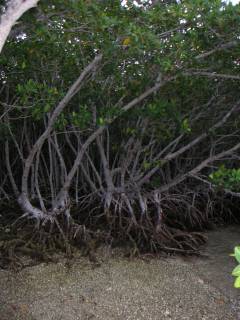
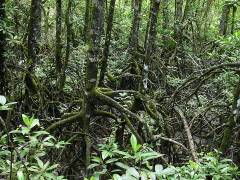
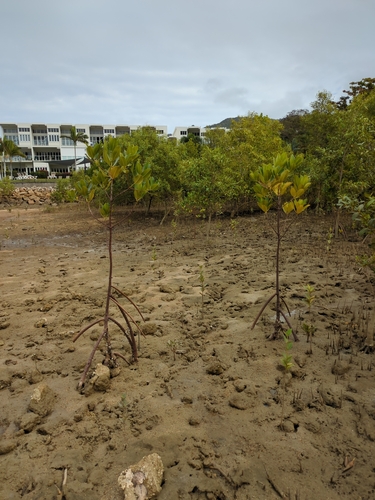
Rhizophora stylosa is an evergreen mangrove tree in the Rhizophoraceae reaching 13-33 feet (4-10 m) tall, occasionally taller, supported by arching stilt roots that spread from the trunk and lower branches into the mud. Leaves are leathery, elliptic, 2.5-5 inches (6-13 cm) long, glossy dark green above and paler with scattered dark spots beneath. Small pale yellow to cream flowers with four narrow petals open in small clusters, each with a long style. The species is viviparous: the seed germinates while still attached to the tree, forming a pencil-shaped propagule 8-16 inches (20-40 cm) long that drops and roots in the mud. Growth is slow to moderate in the intertidal zone. The stilt roots trap sediment and dissipate wave energy, stabilising shorelines. The tree grows in saline, waterlogged, oxygen-poor mud and excludes most salt at the roots. It is restricted to tropical and subtropical tidal coasts and estuaries.
Native Range
Native to tropical and subtropical coasts of the Indo-West Pacific, including northern and eastern Australia from Western Australia across the north to New South Wales, and extending to South-East Asia and the western Pacific islands. Grows in the intertidal zone of sheltered estuaries, tidal creeks, and coastal mudflats.Suggested Uses
Grows in coastal restoration, shoreline stabilisation, and mangrove rehabilitation projects in tropical and subtropical estuaries. The stilt-root thickets shelter fish, crabs, and prawns and trap sediment. Not suited to ordinary garden cultivation because it requires tidal saltwater conditions.How to Identify
Appearance
Size & Dimensions
Height13' - 33'
Width/Spread10' - 20'
Colors
Bloom Information
Flowers through much of the warmer half of the year, mainly spring to autumn, with cream to pale yellow flowers in small clusters. Flowering and propagule development overlap, so flowers, developing fruit, and mature hanging propagules can occur together. Propagules mature and drop mostly in the warmer months.
Detailed Descriptions
Flower Description
Cream to pale yellowFoliage Description
Dark greenGrowing Conditions
Sun Requirements
Requires 6-12 hours of direct sunlight daily
• Full Sun: 6+ hours of direct sunlight
• Partial Shade: 3-6 hours of direct sunlight
• Full Shade: Less than 3 hours of direct sunlight