Rhizophora, Genus, spp., Multiple species,
- Genus
- Multiple species
true mangroves
Tropical and subtropical coasts worldwide
Overview
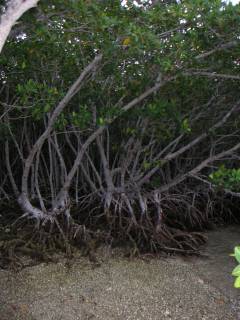
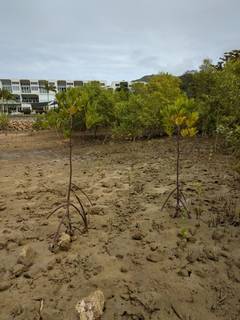
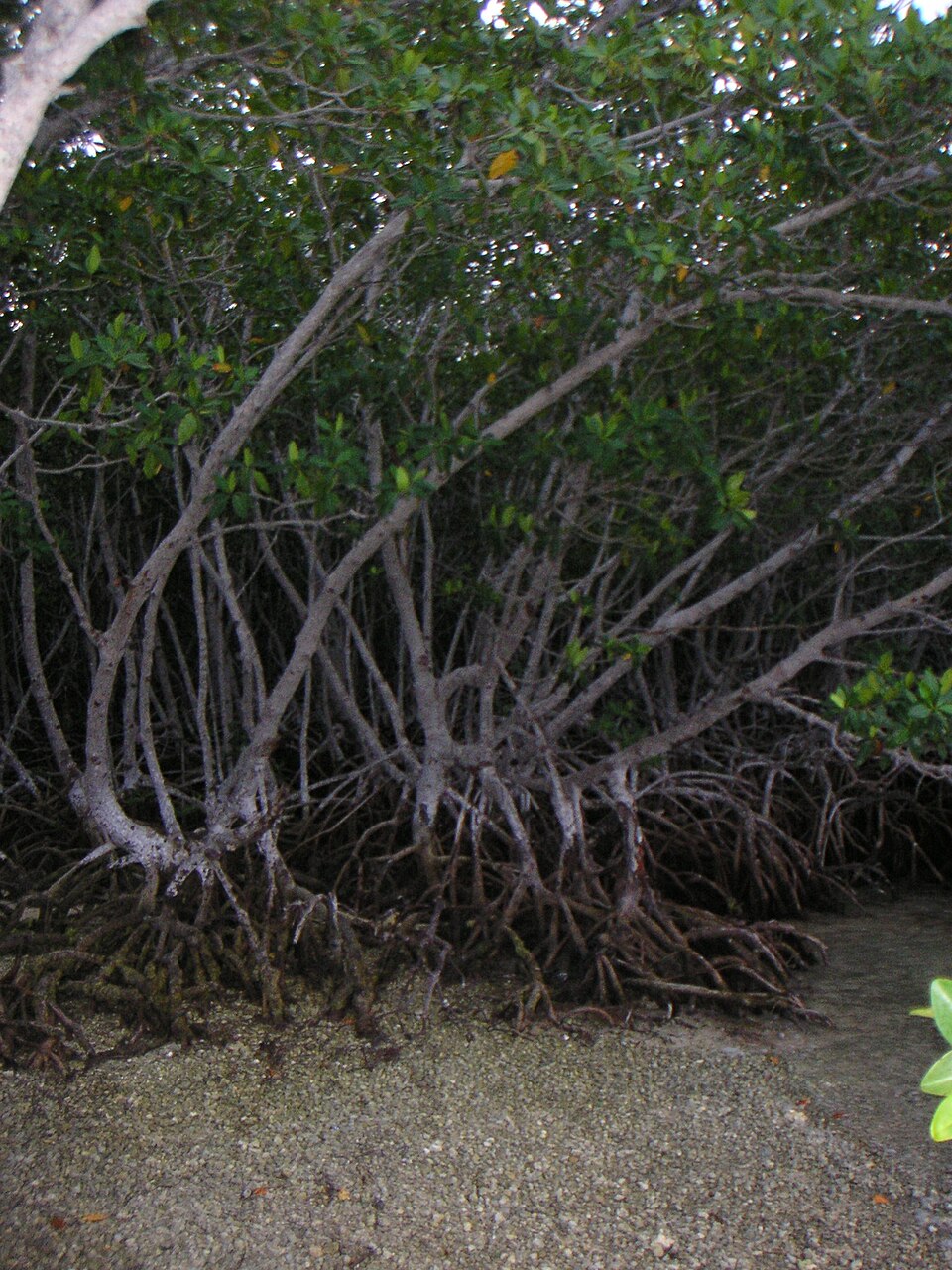
Rhizophora is a genus of about eight to nine species of evergreen mangrove trees and shrubs in the family Rhizophoraceae, known as the true or red mangroves. They grow along sheltered tropical and subtropical coasts, lining estuaries, tidal creeks, and lagoons in soft, waterlogged, salty mud. Mature trees reach 15 to 100 feet (5 to 30 m) tall depending on species and site, supported by arching stilt or prop roots that rise from the trunk and lower branches into the mud. The thick, leathery, elliptic leaves are 3 to 7 inches (8 to 18 cm) long, dark green above and paler beneath. Small, pale yellow to cream four-petalled flowers are followed by viviparous seeds: each germinates while still attached to the parent, forming a long, cigar-shaped propagule up to 12 inches (30 cm) long that drops and roots in the mud or floats to new ground. Red mangroves stabilise shorelines, build land by trapping sediment, and shelter fish, crabs, and birds. They are confined to frost-free coasts and are killed by hard freezes, and their salt-excluding roots require regular tidal flushing.
Native Range
Rhizophora occurs on tropical and subtropical coastlines worldwide. Species line the shores of the Americas, West Africa, the Indo-Pacific, Southeast Asia, and northern Australia. In North America the red mangrove, R. mangle, fringes the coasts of Florida, the Gulf of Mexico, and the Caribbean.Suggested Uses
Red mangroves are used in coastal restoration, shoreline stabilisation, and erosion control across the tropics, and they underpin estuarine fisheries by sheltering young fish and shellfish. In aquaculture and large marine aquariums they are grown to filter nutrients from the water. They are unsuited to conventional gardens away from tidal salt water.How to Identify
Appearance
Size & Dimensions
Height15' - 100'
Width/Spread10' - 30'
Bloom Information
Flowering occurs through much of the year in the wet tropics, with peaks that vary by region and species. In Florida, R. mangle flowers mainly from spring through summer. The pale flowers are followed over many months by the long hanging propagules, so flowers and developing seedlings often appear together.
Detailed Descriptions
Flower Description
Pale yellow to creamFoliage Description
Dark greenGrowing Conditions
Sun Requirements
Requires 8-12 hours of direct sunlight daily
• Full Sun: 6+ hours of direct sunlight
• Partial Shade: 3-6 hours of direct sunlight
• Full Shade: Less than 3 hours of direct sunlight