Rhapis, Genus, spp., Multiple species,
- Genus
- Multiple species
Overview
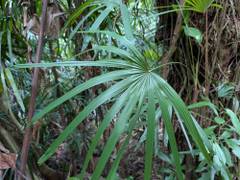
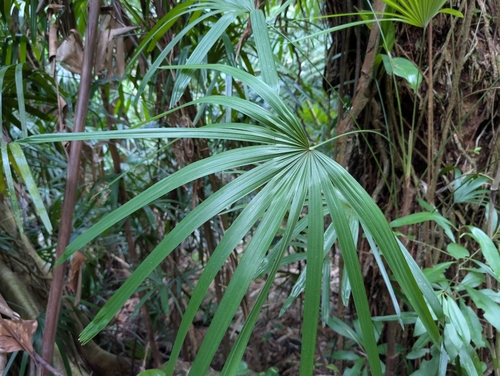
Rhapis is a genus of about ten clustering fan palms in the family Arecaceae, native to southern China and Southeast Asia, with Rhapis excelsa and Rhapis humilis the most familiar in cultivation. Plants spread by underground runners into dense clumps of slender, upright canes 3-15 feet (0.9-4.5 m) tall and 0.4-1.2 inch (1-3 cm) thick, the canes wrapped in a coarse brown fiber. Each cane carries a crown of palmate leaves divided to the base into 3-10 stiff, blunt-tipped segments, deep green and glossy, 6-12 inches (15-30 cm) long. Small yellowish flowers appear in branched clusters among the leaves, usually with male and female flowers on separate plants, followed on female plants by small fleshy fruits. Growth is slow, with clumps widening gradually by suckering. The palms tolerate low light, indoor air, and a range of soils, but cold below about 20 F (-7 C) damages the foliage. Leaf tips brown in dry air, hard water, or excess fertilizer. Variegated and dwarf forms of Rhapis excelsa are grown as collector and container plants.
Native Range
Rhapis is native to southern China, Taiwan, and parts of Southeast Asia, where the plants grow as understory palms in subtropical and tropical forest. Rhapis excelsa is known mainly from cultivation and is uncommon in the wild, while other species occur in shaded, humid woodland on well-drained slopes.Suggested Uses
Grown as an understory and screening palm in shaded subtropical gardens and widely kept as a container and indoor plant, set 2-4 feet (0.6-1.2 m) apart in the ground. The slow, suckering clumps suit large pots, atriums, and low-light interiors. Dwarf and variegated forms are grown as specimen container plants.How to Identify
Appearance
Size & Dimensions
Height3' - 15'
Width/Spread3' - 8'
Bloom Information
Flowering is irregular in cultivation and most likely in spring to summer in warm conditions. Branched clusters of small yellowish flowers form among the leaves, usually with male and female flowers on separate plants. Female plants set small fleshy fruits where both sexes are present.
Detailed Descriptions
Foliage Description
deep greenGrowing Conditions
Sun Requirements
Requires 1-5 hours of direct sunlight daily
• Full Sun: 6+ hours of direct sunlight
• Partial Shade: 3-6 hours of direct sunlight
• Full Shade: Less than 3 hours of direct sunlight
Care & Maintenance
Care Guide
Plants grow in part to full shade on moist, well-drained soil and adapt to low indoor light, though brighter shade gives fuller growth. Water to keep the soil evenly moist but not waterlogged, letting the top inch dry between waterings indoors. Leaf tips brown from dry air, fluoride or salts in water, and over-feeding, so soft water and light feeding reduce damage. The palms withstand temperatures down to about 20 F (-7 C); colder air burns the leaves. Spider mites and scale appear on indoor plants in dry conditions. Clumps are divided in spring to start new plants or limit spread.Pruning
Cut away dead or browned leaves and spent flower stalks at the base. Whole canes that die back can be removed at ground level, since new canes arise from the spreading base. No routine pruning is needed beyond removing tired growth.Container Growing
Suitable for container growing
Minimum container size: 5 gallons