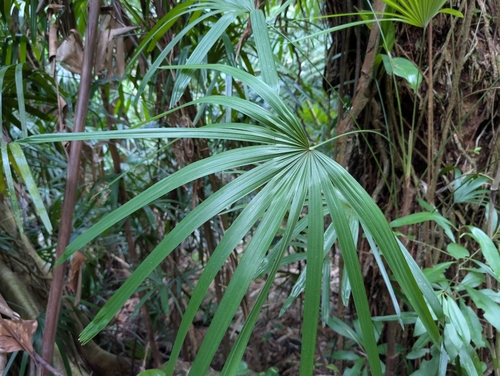
Rhapis, Genus, excelsa, Species,
- Genus & species
lady palm tree
Overview
Rhapis excelsa is a clumping fan palm growing 60-144 inches (150-360 cm) tall and 36-72 inches (90-180 cm) wide, forming dense colonies of slender bamboo-like canes from a spreading underground rhizome. Each cane is 0.5-0.8 inch (12-20 mm) thick, covered with persistent dark brown fibrous leaf bases. Leaves are palmate, divided into 5-12 dark green segments, each segment 8-12 inches (20-30 cm) long with a square-cut tip. The species is dioecious — separate male and female plants — but flowers and fruit are uncommon in cultivation. Native to southern China and Vietnam, where R. excelsa grows in subtropical understory forest. Performs in 25-90% shade indoors and outdoors; foliage scorches in direct full sun above 90°F (32°C). Tolerates a wide range of indoor humidity. Growth rate is slow — adds 6-8 inches (15-20 cm) of height per year. Cold-hardy to 22°F (−6°C) for brief periods with foliage damage; root-hardy to zone 9 in protected sites. Frost-sensitive — used as a long-lived indoor palm in zones 3-8 and a partial-shade outdoor palm in zones 9-11. Salt-tolerant. Mealybugs, scale, and spider mites infest plants in dry indoor conditions. Non-toxic to pets and humans. Container culture in pots of 7-15 gallons (26-57 liters); plants can remain in the same container for 5-10 years.
Native Range
R. excelsa is native to subtropical evergreen forest understory in southern China (Yunnan, Guangdong, Hainan) and Vietnam, where the species grows in shaded sites with consistent year-round humidity. The species has been cultivated for over 300 years in Japanese gardens and was an early imported palm in 19th-century European glasshouse collections.Suggested Uses
Grown as an indoor palm in 5-15 gallon (20-57 liter) containers in zones 3-8, and as a part-shade outdoor palm in zones 9-11. Used in interior hotel atria, office plantings, and shaded patio container compositions. Spaced 36-48 inches (90-120 cm) apart in landscape plantings to allow clump expansion.How to Identify
Appearance
Size & Dimensions
Height5' - 12'
Width/Spread3' - 6'
Bloom Information
Flowers and fruit uncommon in cultivation. The species is dioecious — separate male and female plants — and most cultivated specimens are female cuttings that do not produce viable seed without a male plant. Inconspicuous yellow flowers appear in summer in zones 9-11 on outdoor mature plants.
Detailed Descriptions
Foliage Description
Dark green, palmate, square-cut segmentsGrowing Conditions
Sun Requirements
Tolerates up to 4 hours of direct sunlight daily
• Full Sun: 6+ hours of direct sunlight
• Partial Shade: 3-6 hours of direct sunlight
• Full Shade: Less than 3 hours of direct sunlight
Care & Maintenance
Care Guide
The species performs in 25-90% shade — full direct sun above 90°F (32°C) scorches foliage to brown patches. Tolerates a wide soil pH range (5.5-7.5) but requires well-drained mix with consistent moisture. Watering when the top 1-2 inches (2.5-5 cm) of potting mix dries reduces root rot risk; the species is sensitive to fluoride and chlorine in tap water and develops leaf-tip necrosis after several months. Salt-tolerant — used in coastal landscapes in zones 9-11. Mealybugs, scale, and spider mites infest plants in dry indoor conditions over winter; humidity above 50% reduces mite pressure. Cold damage occurs below 22°F (−6°C); roots survive to zone 9.Pruning
Older outer canes can be cut at the base year-round to thin the clump and admit light to inner canes. Yellow or brown leaves can be removed at the petiole base. Spent inflorescences are cut at the base after fruit drop or once dried. The species does not regrow from a topped cane — pruning is for cane removal, not height reduction.Container Growing
Suitable for container growing
Minimum container size: 7 gallons