Image 1 of 2
1 / 2
Agnes Trekker (https://www.inaturalist.org/people/agnestrekker), no rights reserved (CC0) · Wikimedia Commons
Rehderodendron, Genus, spp., Multiple species,
- Genus
- Multiple species
Overview
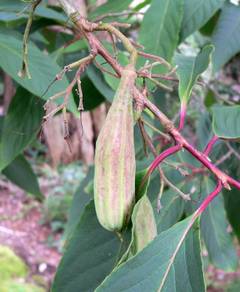
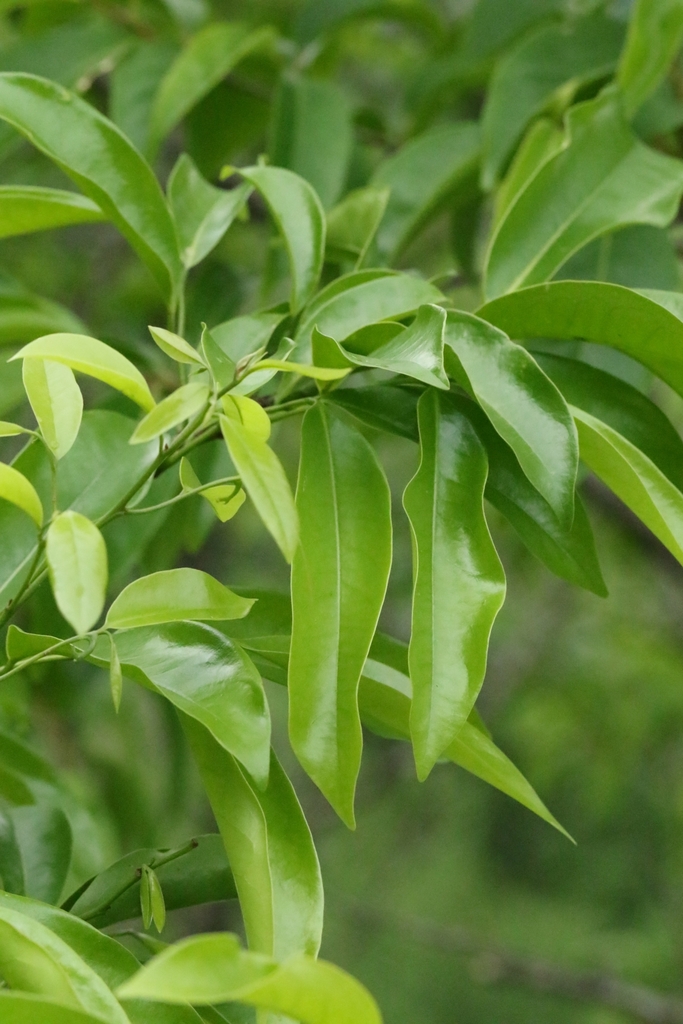
Rehderodendron is a genus of about five deciduous trees in the storax family (Styracaceae), native to southern China and northern Myanmar. The genus reaches 25-40 feet (7.5-12 m) tall and 15-25 feet (4.5-7.5 m) wide, forming an upright to rounded crown. Young shoots are reddish, and the bark is grey-brown with corky lenticels. The leaves are alternate, elliptic to oblong, 3-6 inches (8-15 cm) long, with finely toothed margins and a leathery texture, turning yellow to red before autumn drop. In mid-spring, just before or with the new leaves, the branches carry hanging clusters of white bell-shaped flowers about 0.75-1 inch (2-2.5 cm) across, each with a brush of yellow stamens. The flowers are followed by woody, spindle-shaped fruits 2-3 inches (5-7 cm) long, ribbed and reddish-brown, hanging through autumn and into winter. Growth is moderate where soil is deep and moist. The genus needs shelter from late frosts that damage the early flowers and soft new growth, and it grows poorly on dry, shallow, or alkaline soils.
Native Range
Native to southern and southwestern China and northern Myanmar. It grows in moist broadleaf mountain forests and along streamsides on acidic, well-drained soils, generally at 3,000-7,000 feet (900-2,100 m).Suggested Uses
Grown as a specimen in woodland gardens, large borders, and sheltered lawns where the spring flowers and woody fruit can be seen, spaced 15-20 feet (4.5-6 m) apart. It suits acid-soil gardens alongside rhododendrons, camellias, and other woodland shrubs. The persistent fruit adds interest after leaf fall.How to Identify
Appearance
Size & Dimensions
Height25' - 40'
Width/Spread15' - 25'
Bloom Information
Flowers open in mid-spring, roughly April to May, just before or with the emerging leaves, and last about 2-3 weeks. Bloom is earlier in mild gardens and can be cut short by late frosts in colder sites. The hanging white clusters are followed by woody fruit that ripens over summer.
Detailed Descriptions
Foliage Description
green, yellow to red in autumnGrowing Conditions
Sun Requirements
Requires 5-9 hours of direct sunlight daily
• Full Sun: 6+ hours of direct sunlight
• Partial Shade: 3-6 hours of direct sunlight
• Full Shade: Less than 3 hours of direct sunlight
Care & Maintenance
Care Guide
Grows in full sun to part shade in deep, moist, acidic to neutral, well-drained soil with a pH from 5.0 to 6.5. Regular moisture through the early years supports establishment; mature trees tolerate brief dry spells but grow poorly in dry or alkaline ground. Shelter from cold wind and late spring frost protects the early flowers and soft new shoots. Little feeding is needed in reasonable soil. Pests and diseases are few. A mulch over the root zone keeps the soil cool and moist.Pruning
Little pruning is needed beyond removing dead, damaged, or crossing branches in late winter while dormant. Light shaping when young establishes a single leader or a few main stems. Suckers and watersprouts can be removed as they appear.Pruning Schedule
Prune: February
winter