Ratibida, Genus, columnifera, Species,
- Genus & species
upright prairie coneflower
central North America (Great Plains)
Overview
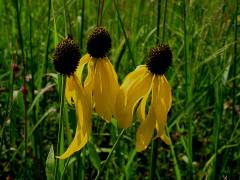
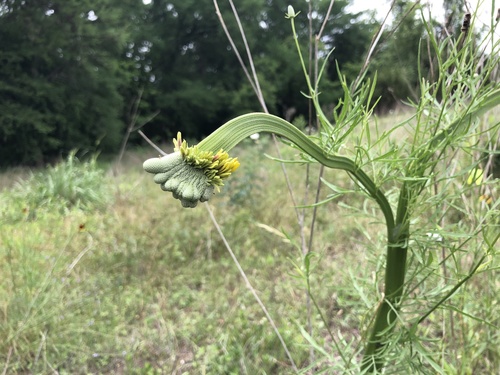
Ratibida columnifera is a clump-forming perennial in the aster family, reaching 12-36 inches (30-90 cm) tall and 9-18 inches (23-45 cm) wide. Stems are slender, branched, and covered with short stiff hairs, rising from a woody taproot. Leaves are grey-green, 2-6 inches (5-15 cm) long, and deeply divided into 5 to 13 narrow lobes. Each flower head carries a central column 0.5-1.5 inches (1.3-4 cm) tall, ringed at the base by 4 to 11 drooping ray florets in yellow, or in some plants mahogany-red or bicolored. The columnar disk turns brown as the seeds ripen and gives off a faint anise scent when bruised. Flowering runs from early summer into autumn, with individual plants blooming across several weeks. The taproot makes established plants drought tolerant but also difficult to move once mature. In moist or fertile soil the stems grow tall and may bend or flop. R. columnifera self-seeds readily and can spread beyond its original position in open ground. Bees and other pollinators visit the flowers during bloom, and seed-eating birds take the ripe seeds in autumn.
Native Range
Ratibida columnifera is native to central North America, from southern Canada through the Great Plains into northern Mexico. It grows in prairies, plains, roadsides, and disturbed open ground on well-drained soils.Suggested Uses
Used in prairie restorations, wildflower meadows, and low-water borders, spaced 12-18 inches (30-45 cm) apart. It combines with other prairie species such as Echinacea and Schizachyrium scoparium in naturalistic plantings. Cut stems last several days in arrangements.How to Identify
Appearance
Size & Dimensions
Height1' - 3'
Width/Spread9" - 1'6"
Bloom Information
Flowering occurs from June to September, peaking in mid-summer. Yellow or mahogany ray florets surround the central column, which lengthens and darkens as seeds mature. Spent heads persist into winter.
Detailed Descriptions
Flower Description
yellow to mahogany-redFoliage Description
grey-greenGrowing Conditions
Sun Requirements
Requires 6-12 hours of direct sunlight daily
• Full Sun: 6+ hours of direct sunlight
• Partial Shade: 3-6 hours of direct sunlight
• Full Shade: Less than 3 hours of direct sunlight
Care & Maintenance
Care Guide
Plants grow in full sun and well-drained soil of low to average fertility, tolerating sandy, rocky, and clay ground. Once established they withstand drought and need little supplemental water. Rich or consistently moist soil produces tall, weak stems that bend over. These are short-lived perennials, often persisting three to four years, but they self-seed to maintain a stand. No fertilizer is needed, and excess nitrogen reduces flowering. Hardy in USDA zones 3 to 9.Pruning
Stems can be cut back to basal foliage in late autumn or early spring. Seed heads left in place feed birds and allow self-seeding. Shearing after the first flush can prompt a smaller second flush of bloom in long seasons.Pruning Schedule
Prune: March & November
fallearly spring