Ratibida, Genus, spp., Multiple species,
- Genus
- Multiple species
Overview
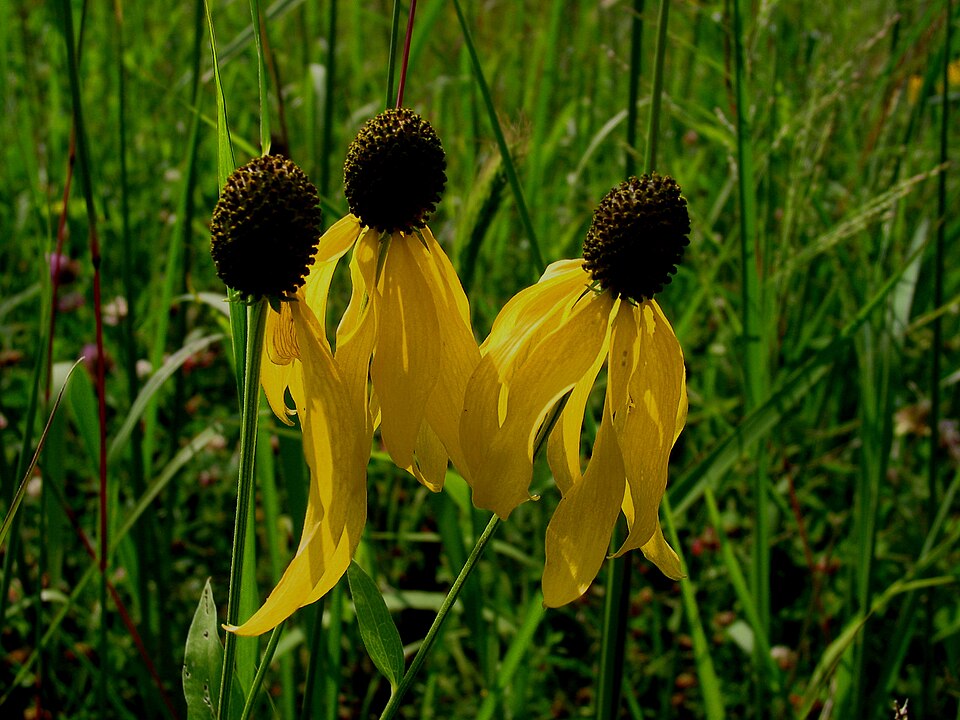
Ratibida is a genus of about seven perennial and short-lived herbaceous species in the family Asteraceae, native to North America, with Ratibida columnifera and Ratibida pinnata the most familiar species. Plants form upright clumps 1-5 feet (30-150 cm) tall from a taproot, with branched, ridged stems and rough, pinnately divided leaves 2-6 inches (5-15 cm) long. Flower heads are held singly on long stalks and have a raised central disc that lengthens into a column or cone 0.4-2 inches (1-5 cm) tall, surrounded by drooping ray florets 0.5-1.5 inch (1-4 cm) long. Ray color ranges from yellow to mahogany-red or bicolored, depending on species and form, while the disc darkens from gray-green to brown as it matures. Bloom runs through summer, and crushed seed heads of some species release a scent likened to anise. The dry cone holds many small seeds and persists into winter after the rays fall. Plants are drought-tolerant once established and may be short-lived but self-seed to renew stands. In rich soil or shade, stems grow tall and lean or flop.
Native Range
Ratibida is native to North America, ranging across the Great Plains and prairies from southern Canada through the central United States into Mexico. Plants grow in open grassland, plains, roadsides, and rocky slopes on well-drained soils, and several species tolerate poor, dry, calcareous ground.Suggested Uses
Grown in prairie and meadow plantings, wildflower gardens, and dry sunny borders, spaced 12-18 inches (30-45 cm) apart. The long-stalked heads are used in cut and dried arrangements. Self-seeding suits naturalistic settings but may spread into nearby beds.How to Identify
Appearance
Size & Dimensions
Height1' - 5'
Width/Spread1' - 2'
Bloom Information
Blooms through summer, generally June to September, with peak flowering in July and August. Bloom may start in late spring in southern areas and continue into early autumn where summers are mild. Individual heads last 2-3 weeks, and removing spent heads can extend flowering.
Detailed Descriptions
Flower Description
yellow to mahogany-redFoliage Description
gray-greenGrowing Conditions
Sun Requirements
Requires 6-10 hours of direct sunlight daily
• Full Sun: 6+ hours of direct sunlight
• Partial Shade: 3-6 hours of direct sunlight
• Full Shade: Less than 3 hours of direct sunlight
Care & Maintenance
Care Guide
Plants establish from seed or transplants in full sun on well-drained soil and need little water once rooted. Established plants tolerate drought, heat, and poor soils but rot in wet, heavy ground. In fertile soil or partial shade, stems stretch and may need support or flop. Self-seeding maintains stands as older plants fade after a few years. Few pests trouble the plants, though aphids may gather on stems and powdery mildew can appear in humid, crowded conditions. Cutting back after bloom limits self-seeding.Pruning
Cut stems to the ground in late fall or early spring after the seed heads fade. Deadhead through summer to prolong bloom and reduce self-seeding. Leaving some cones standing supplies seed for birds and self-sowing.Pruning Schedule
Prune: September–October
fall