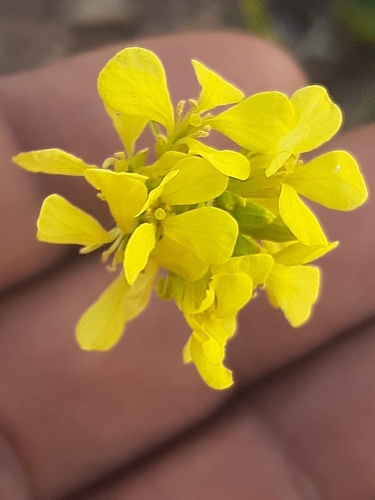
Rapistrum, Genus, rugosum, Species,
- Genus & species
annual bastard cabbage
Mediterranean, Europe, and western Asia
SunFull Sun
Overview
Rapistrum rugosum is an upright annual or sometimes biennial herb in the mustard family (Brassicaceae), growing 1-5 feet (30-150 cm) tall from a basal rosette. Young plants form a rosette of lobed, coarsely toothed leaves 4-8 inches (10-20 cm) long; the branched flowering stems carry smaller, narrower leaves. The stems and leaves are roughly hairy. Clusters of small four-petaled yellow flowers, each about 0.3 inch (6-8 mm) across, open at the branch tips from late winter into summer. The fruit is a two-jointed silique with a ribbed, beaked upper segment that breaks apart at maturity. A single plant produces thousands of seeds. In much of the southern and western United States R. rugosum is an aggressive invader of roadsides, fields, and rangeland, forming dense stands that crowd out native wildflowers and pasture. It germinates in fall or winter, blooms in spring, and dies by midsummer.
Native Range
Native to the Mediterranean region, Europe, and western Asia, Rapistrum rugosum has been introduced widely and is naturalized across the southern and western United States, especially Texas and California. It grows on roadsides, disturbed ground, fields, pastures, and overgrazed rangeland.Suggested Uses
It is not grown as an ornamental and has no landscape use in North America, where it is classed as an invasive weed. In its native Mediterranean range the young leaves have been eaten as a cooked green. Within gardens and managed land, effort centers on removing it before it sets seed.How to Identify
Appearance
Size & Dimensions
Height1' - 5'
Width/Spread1' - 3'
Bloom Information
Flowers open from late winter into summer, mainly February to June in mild regions. Bloom continues for several weeks as the branched stems extend. Bees and other small insects visit the flowers, though the plant also self-pollinates freely.
Detailed Descriptions
Foliage Description
greenGrowing Conditions
Sun Requirements
Requires 6-12 hours of direct sunlight daily
• Full Sun: 6+ hours of direct sunlight
• Partial Shade: 3-6 hours of direct sunlight
• Full Shade: Less than 3 hours of direct sunlight
Water & Climate
Water Needs
Drought Tolerance
Drought tolerant when established