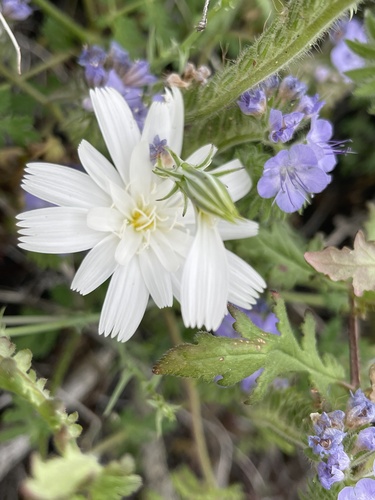
Rafinesquia, Genus, neomexicana, Species,
- Genus & species
desert chicory
Southwestern United States and northern Mexico deserts
Overview
Rafinesquia neomexicana is a winter-annual wildflower in the aster family, germinating after autumn and winter rains and flowering in spring before drying out. Plants stand 6-24 in (15-60 cm) tall on slender, hollow stems that exude milky sap when broken, often leaning on desert shrubs for support. The lower leaves are 2-6 in (5-15 cm) long and pinnately lobed with clasping bases, while upper leaves are smaller and narrower. Flower heads are 1-1.5 in (2.5-4 cm) across and composed entirely of strap-shaped ray florets, white on the upper surface with rose to purplish veins on the reverse. Each head opens in morning sun and closes by midday heat. Flowering runs from February to May, timed to soil moisture; in dry years plants stay small and set few heads. The fruit is a slender achene topped with a parachute of feathery white bristles (pappus) that carries the seed on wind. The species grows in sandy and gravelly desert soils, frequently sheltered beneath creosote bush and other shrubs. Because it completes its life cycle in a single season, it leaves no standing growth through summer and autumn. It resembles Rafinesquia californica, which has fewer purplish markings and occurs in chaparral rather than open desert.
Native Range
Rafinesquia neomexicana is native to the deserts of the southwestern United States and northern Mexico, including the Sonoran, Mojave, and Chihuahuan deserts. It grows on sandy flats, gravelly slopes, and washes, often among desert shrubs, from near sea level to about 5,000 ft (1,500 m).Suggested Uses
Rafinesquia neomexicana is used in desert wildflower seed mixes, native restoration, and low-water gardens for spring color. Its nectar and pollen draw native bees and other small insects. It suits naturalistic plantings among creosote bush, cacti, and other desert shrubs.How to Identify
Appearance
Size & Dimensions
Height6" - 2'
Width/Spread4" - 1'
Bloom Information
Flowering occurs from February to May, peaking in March and April after sufficient winter rain. Heads open in the cool of morning and close during midday heat. In drought years the bloom period is shorter and fewer heads form.
Detailed Descriptions
Flower Description
white with rose-purple veinsFoliage Description
green to gray-greenGrowing Conditions
Sun Requirements
Requires 6-12 hours of direct sunlight daily
• Full Sun: 6+ hours of direct sunlight
• Partial Shade: 3-6 hours of direct sunlight
• Full Shade: Less than 3 hours of direct sunlight
Water & Climate
Water Needs
Drought Tolerance
Drought tolerant when established
Care & Maintenance
Care Guide
Rafinesquia neomexicana grows in full sun on sandy or gravelly, sharply drained soil and needs no supplemental water beyond seasonal rainfall. As a desert winter annual, it is sown from seed in autumn to germinate with cool-season moisture. Plants tolerate poor, low-nutrient soils and decline in rich or wet ground. Frost tolerance is moderate, matching the mild desert winters of its range. The species self-sows where soil stays open and unmulched. No staking is needed, though plants lean on neighboring shrubs as they elongate.Pruning
Pruning is not part of growing this annual. Spent plants dry and die after seed set in late spring and can be cleared once the feathery seed has dispersed. Leaving some plants to shed seed maintains the stand from year to year.Toxicity
Non-toxicPlanting Guide
Planting Methods & Timing
Planting Method
direct sow
Direct Sow Timing
Fall (October-November)
Days to Maturity
90–150 days
Plant Spacing
8 inches
Companion Planting
Good Companions