Rafinesquia, Genus, spp., Multiple species,
- Genus
- Multiple species
Western and southwestern North America
SunFull Sun
Overview
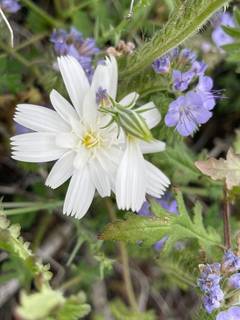
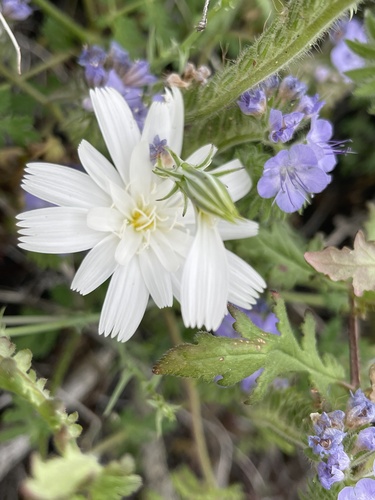
Rafinesquia is a genus of two annual herbs in the family Asteraceae, native to western North America: Rafinesquia californica and Rafinesquia neomexicana. Plants grow 8-60 inches (20-150 cm) tall from a slender taproot, with branching, hollow stems that exude milky sap when broken. The lower leaves are 2-8 inches (5-20 cm) long and pinnately lobed with toothed margins, while upper leaves are smaller and clasp the stem. Flower heads are 0.75-1.5 inch (2-4 cm) across and composed only of strap-shaped ray florets, white above and often marked with rose or purplish veins beneath, opening in the morning. Each head is followed by a cluster of dry one-seeded fruits tipped with a pappus of feathery bristles that carries the seed on the wind. Flowering occurs in spring, mainly March through June, after sufficient winter rain. Plants complete their life cycle in a single season and die after setting seed. Germination and size depend strongly on rainfall, and in dry years plants stay small and flower sparsely. Stems are weak and often scramble through neighboring desert shrubs for support.
Native Range
Rafinesquia californica ranges through California and adjacent Oregon, Nevada, Arizona, and Baja California, while Rafinesquia neomexicana occurs across the deserts of the southwestern United States and northern Mexico. Both grow in open desert scrub, chaparral, washes, and rocky slopes, often appearing in numbers after wet winters and frequently sheltered among shrubs.Suggested Uses
Grown in desert, dryland, and wildflower gardens and in seed mixes for naturalizing on sandy or rocky ground, sown at low density. The scrambling habit suits informal plantings among shrubs rather than tidy borders. Plants develop most fully after autumn sowing and winter rainfall.How to Identify
Appearance
Size & Dimensions
Height8" - 5'
Width/Spread6" - 1'6"
Bloom Information
Blooms in spring, mainly March through June, with timing and abundance set by winter and early spring rainfall. In years of low rain, flowering is brief and sparse, while wet winters bring larger plants and longer bloom. Heads open in the morning and close by midday in heat.
Detailed Descriptions
Flower Description
white with rose or purplish veinsFoliage Description
green to gray-greenGrowing Conditions
Sun Requirements
Requires 6-10 hours of direct sunlight daily
• Full Sun: 6+ hours of direct sunlight
• Partial Shade: 3-6 hours of direct sunlight
• Full Shade: Less than 3 hours of direct sunlight
Water & Climate
Water Needs
Drought Tolerance
Drought tolerant when established
Care & Maintenance
Care Guide
Plants grow from seed in autumn or winter where soils are sandy or rocky and fast-draining, in full sun. Seedlings develop through cool, moist months and flower as temperatures rise in spring. Supplemental water extends growth in cultivation, but waterlogged soil causes the roots to rot. The weak stems lean on nearby plants and may sprawl without support. Plants finish flowering and die by early summer, leaving seed for the next season. Aphids sometimes cluster on stems and developing heads.Pruning
No pruning is needed. Spent plants can be cleared after seed drop in early summer. Leaving some seed heads allows self-sowing for the following season.Toxicity
Non-toxicPlanting Guide
Planting Methods & Timing
Planting Method
direct sow
Direct Sow Timing
Sow in autumn to early winter in mild-winter regions