Racomitrium, Genus, lanuginosum, Species,
- Genus & species
woolly fringe-moss
Cool temperate, oceanic, and montane regions worldwide
SunFull Sun – Part Shade
Overview
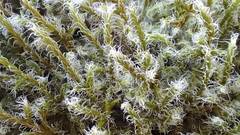
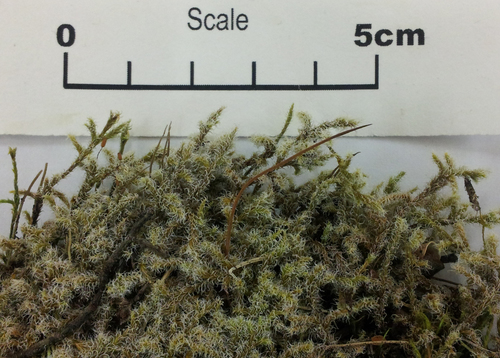
Racomitrium lanuginosum is a robust, hoary, grey-green moss that forms deep mats and wefts over exposed acidic rock, boulders, scree, moorland, and blanket bog. Its leaves end in long, white, toothed hair-points that catch the light and give whole colonies a frosted, woolly grey look, the source of the common name. Spreading, much-branched shoots build cushions and carpets 1-4 inches (2.5-10 cm) deep that can blanket large areas of ground and stone. As a moss it has no roots, flowers, or vascular tissue, taking up water over its surface and surviving long dry spells by drying out and reviving when wet. It withstands strong sun, wind, frost, and drought, conditions that exclude most other plants from open rock and high ground. It is a major component of montane and oceanic heath and is sensitive to nitrogen pollution, which can cause it to decline. It spreads by growth and fragments rather than quickly, slowly clothing bare acid surfaces. Its need for open, acid, lime-free ground limits where it grows.
Native Range
Racomitrium lanuginosum is widespread across cool temperate, oceanic, and montane regions of the Northern and Southern Hemispheres, including Europe, northern Asia, North America, and the southern continents. It grows on exposed acidic rock, scree, moorland, and blanket bog, often at altitude or in cool, wet climates. It is especially abundant in oceanic uplands.Suggested Uses
Grown on green roofs, rock gardens, gravel, and acid moorland plantings in cool, humid climates, where it forms drought-tolerant grey-green carpets. It clothes exposed acid rock and stony ground that challenge other plants. Its need for open, lime-free, cool conditions makes it unsuited to rich soil, deep shade, or hot, dry lowland sites.How to Identify
Appearance
Size & Dimensions
Height1" - 4"
Bloom Information
This moss reproduces by spores rather than flowers. Spore capsules are produced infrequently on short stalks among the shoots and ripen mainly in summer. Much of its spread is by growth and by detached fragments rather than by spores.
Detailed Descriptions
Foliage Description
Grey-green with white hair-pointsGrowing Conditions
Sun Requirements
Requires 6-12 hours of direct sunlight daily
• Full Sun: 6+ hours of direct sunlight
• Partial Shade: 3-6 hours of direct sunlight
• Full Shade: Less than 3 hours of direct sunlight
Water & Climate
Water Needs
Drought Tolerance
Drought tolerant when established