Purshia, Genus, tridentata, Species,
- Genus & species
antelope bitterbrush
Western North America (Great Basin and Rocky Mountains)
Overview
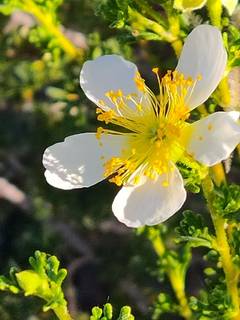
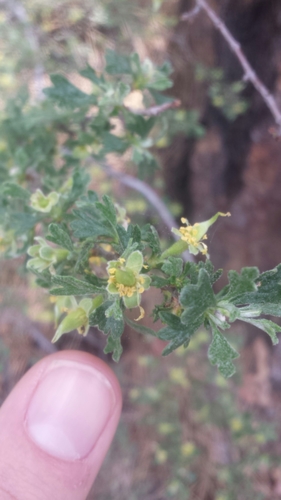
Purshia tridentata is a deciduous shrub of western North American shrub-steppe, growing 3-8 feet (0.9-2.4 m) tall and 3-6 feet (0.9-1.8 m) wide with an upright to spreading branch framework. The small wedge-shaped leaves are 0.2-0.5 inch (5-13 mm) long, gray-green, and tipped with three rounded teeth, the trait behind the epithet tridentata. In late spring the branches carry pale yellow, five-petaled flowers about 0.5 inch (13 mm) across, each with a faint scent. The roots host nitrogen-fixing Frankia bacteria in root nodules, allowing the shrub to grow on poor, sandy soils. It is a primary browse plant for mule deer, pronghorn, and domestic livestock, and its seeds are cached by rodents, which aids germination. Plants grow on dry slopes, sagebrush flats, and open pine woodland across the Intermountain West, tolerating cold, drought, and infertile ground. Growth is slow, and shrubs are long-lived, some persisting more than a century. Limitations include difficulty transplanting due to a deep taproot, slow recovery after severe browsing or fire, and a need for sharp drainage; plants decline in heavy, wet, or fertile garden soil. Bloom is followed by small dry, spindle-shaped fruits, each holding a single seed.
Native Range
Purshia tridentata is native to western North America, from British Columbia south through the Great Basin and Rocky Mountains to California, Arizona, and New Mexico. It grows in sagebrush steppe, dry foothills, and open ponderosa pine woodland.Suggested Uses
Grown in native, dryland, and wildlife habitat plantings across the western United States. Used for slope stabilization and rangeland restoration on sandy soils. Suited to xeriscape gardens with sharp drainage and full sun.How to Identify
Appearance
Size & Dimensions
Height3' - 8'
Width/Spread3' - 6'
Bloom Information
Pale yellow flowers open in mid to late spring, generally April through June depending on elevation. Flowers are borne singly along the previous season short shoots and last about two to three weeks. Each is roughly 0.5 inch (13 mm) across with a light fragrance. Dry single-seeded fruits ripen by early summer.
Detailed Descriptions
Foliage Description
Gray-greenGrowing Conditions
Sun Requirements
Requires 6-12 hours of direct sunlight daily
• Full Sun: 6+ hours of direct sunlight
• Partial Shade: 3-6 hours of direct sunlight
• Full Shade: Less than 3 hours of direct sunlight
Care & Maintenance
Care Guide
Grows in full sun and dry, sharply drained sandy or rocky soils at a pH of 6.0-8.0. Established plants are drought tolerant and need no irrigation in regions with 10-16 inches (25-40 cm) of annual precipitation. The actinorhizal root nodules fix nitrogen, so supplemental fertilizer is unnecessary and rich soil shortens the plant lifespan. Hardy in USDA zones 4-8, the shrub withstands cold winters and reflected summer heat. A deep taproot makes container-grown stock slow to establish, so young nursery plants transplant more reliably than older ones. Plants decline in heavy, wet, or compacted soil and under regular garden watering.Pruning
Prune in late winter to remove dead or broken branches; the shrub needs little routine pruning. Severe cutting is slow to regrow, as the species resprouts weakly after heavy browsing or fire. Light shaping after flowering keeps an open framework.Pruning Schedule
Prune: February–March
winter