Purshia, Genus, spp., Multiple species,
- Genus
- Multiple species
bitterbrush
Overview
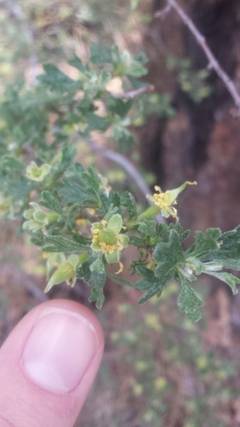
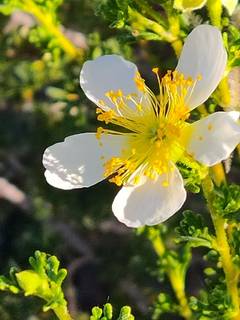
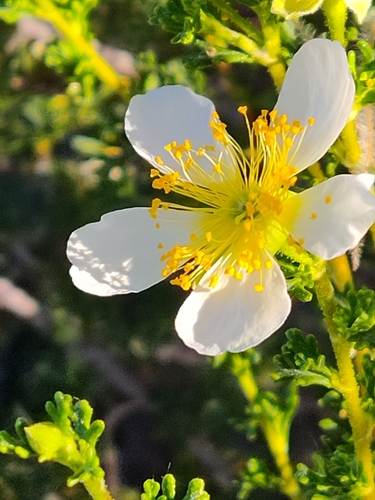
Purshia is a genus of about 10 species of drought-tolerant shrubs in the rose family (Rosaceae), native to western North America. Plants are much-branched, growing 2-12 feet (0.6-3.7 m) tall, with small, wedge-shaped leaves usually three-toothed at the tip, gray-green above and often white-woolly beneath, that may be held year-round or partly shed in drought. Antelope bitterbrush P. tridentata and cliffrose P. stansburiana are the most familiar species. In spring and early summer the branches are covered with small, five-petaled, cream to pale yellow flowers about 0.5 inch (12 mm) across, fragrant in cliffrose. Bitterbrush produces a single dry seed per flower, while cliffrose forms several feathery, plumed seeds that catch the wind. Purshia fixes nitrogen through root nodules and grows in dry, rocky, sandy soils of sagebrush steppe, pinyon-juniper woodland, and high desert. It is heavily browsed by mule deer, elk, and pronghorn, making it a key wildlife forage plant, and it resprouts variably after fire.
Native Range
Purshia is native to western North America, from British Columbia and the Great Basin south through the Rocky Mountains and Southwest into northern Mexico. It grows in sagebrush steppe, pinyon-juniper woodland, dry foothills, and high desert on well-drained, often rocky or sandy soils.Suggested Uses
Grown in dry, native, and habitat gardens, on slopes for erosion control, and in restoration of sagebrush and high-desert landscapes. The cream flowers, gray foliage, and wildlife value suit naturalistic western plantings. It supports deer, pronghorn, and birds with browse and cover.How to Identify
Appearance
Size & Dimensions
Height2' - 12'
Width/Spread3' - 10'
Colors
Bloom Information
Detailed Descriptions
Flower Description
cream to pale yellowFoliage Description
gray-greenGrowing Conditions
Sun Requirements
Requires 6-12 hours of direct sunlight daily
• Full Sun: 6+ hours of direct sunlight
• Partial Shade: 3-6 hours of direct sunlight
• Full Shade: Less than 3 hours of direct sunlight
Care & Maintenance
Care Guide
Grow Purshia in full sun in sharply drained, sandy, gravelly, or rocky soil of low fertility. The genus needs dry conditions and tolerates heat, cold, wind, and prolonged drought once established, but it declines in wet, heavy, or rich soils. Water young plants until rooted, then little to none, as established shrubs are deeply drought-adapted. Skip fertilizer, since lean soil suits the genus and it fixes its own nitrogen. Plants are slow-growing and long-lived in suitable sites. Transplanting is done young, as the deep taproot makes older plants hard to move.Pruning
Purshia needs little pruning and forms a naturally irregular, open shrub. Dead or damaged branches can be removed in late winter. Hard pruning is limited, as old wood reshoots unreliably.Pruning Schedule
Prune: February
winter
Container Growing
Suitable for container growing
Minimum container size: 7 gallons