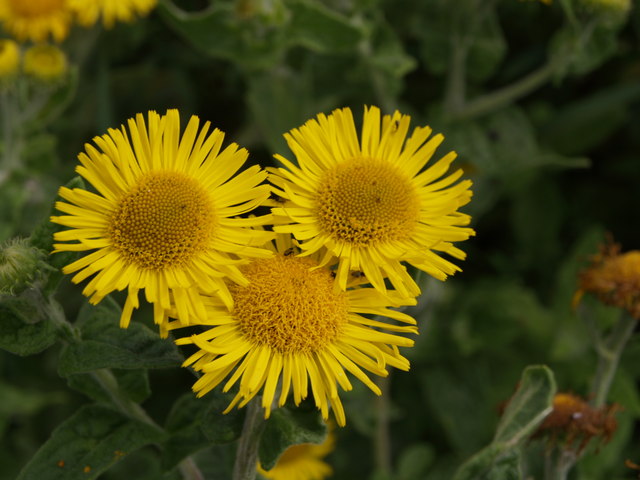
Pulicaria, Genus, dysenterica, Species,
- Genus & species
common fleabane
Overview
Pulicaria dysenterica is a rhizomatous perennial of damp ground, 20-60 cm (8-24 in) tall, with erect, woolly, branching stems and grey-green leaves that are softly hairy beneath. The stem leaves are oblong, wavy-edged, and clasp the stem with heart-shaped bases. From midsummer it carries loose, flat-topped clusters of golden-yellow daisy flowerheads 1.5-3 cm (0.6-1.2 in) across, each with narrow ray florets around a deeper yellow disc. The foliage is aromatic when crushed and was historically burned to drive off fleas, which gives the plant its common name. It spreads by creeping rhizomes to form broad colonies in marshes, wet meadows, ditches, and damp roadsides. The spreading habit lets it cover ground quickly but makes it hard to contain in mixed plantings. Top growth dies back in autumn and regrows from the rootstock in spring. It needs reliably moist soil and full sun, fading in dry or heavily shaded positions.
Native Range
Pulicaria dysenterica is native to Europe, North Africa, and western Asia. It grows in marshes, wet meadows, ditches, fen edges, and damp grassland, usually on heavy or seasonally waterlogged soils. It is not native to North America.Suggested Uses
Planted in damp meadows, pond and stream margins, rain gardens, and bog gardens where the soil stays moist. Used in wildlife plantings as a late-summer nectar source for bees, hoverflies, and butterflies. Its spreading roots make it better suited to naturalistic schemes than tidy borders.How to Identify
Appearance
Size & Dimensions
Height8" - 2'
Width/Spread1'6" - 3'
Bloom Information
Detailed Descriptions
Foliage Description
Grey-greenGrowing Conditions
Sun Requirements
Requires 6-12 hours of direct sunlight daily
• Full Sun: 6+ hours of direct sunlight
• Partial Shade: 3-6 hours of direct sunlight
• Full Shade: Less than 3 hours of direct sunlight
Care & Maintenance
Care Guide
Grow Pulicaria dysenterica in moist to wet soil in full sun, including heavy clay and ground that floods seasonally. It tolerates a wide pH range but needs consistent moisture and weakens in dry borders. The plant is hardy and needs no winter protection across temperate zones. Because it spreads by rhizomes, give it room or contain the roots where the colonising habit is unwanted. Cut back faded top growth in late autumn or leave the seed heads for wildlife. No feeding is needed on reasonable damp soil.Pruning
No formal pruning is needed. Cut back spent flowering stems in late autumn or winter, or leave them standing for seed-eating birds and winter structure. Lift and reduce spreading clumps in spring to control the colony.Container Growing
Suitable for container growing
Minimum container size: 3 gallons