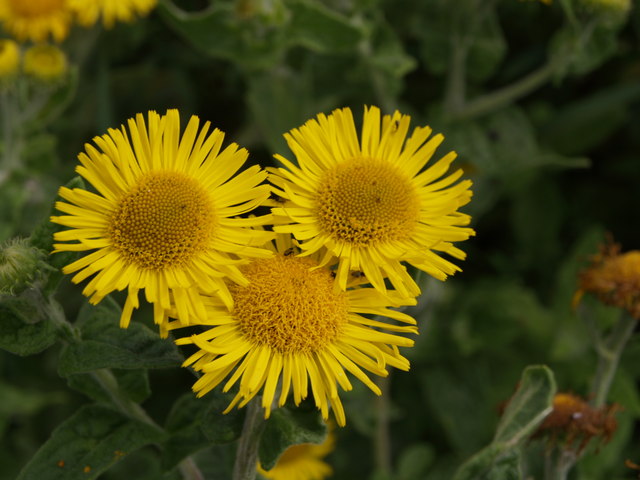
Pulicaria, Genus, spp., Multiple species,
- Genus
- Multiple species
fleabane
Overview
Pulicaria is a genus of about 80 species of annual and perennial herbs and subshrubs in the daisy family (Asteraceae), native to Europe, the Mediterranean, Africa, and Asia. The common fleabane, P. dysenterica, is the most familiar species, a spreading, rhizomatous perennial growing 12-30 inches (30-75 cm) tall. Stems and leaves are often grey-green and softly hairy, with the wavy-edged leaves clasping the stem. From mid- to late summer the plants carry loose clusters of golden-yellow, daisy-like flower heads 0.5-1.2 inches (1.5-3 cm) across, with short ray florets around a deeper yellow center. The flowers draw bees, hoverflies, and butterflies. P. dysenterica spreads by rhizomes and can form wide colonies in damp ground, so it may spread beyond its intended space. Several species grow in seasonally wet meadows, ditches, and saline or coastal soils. The common name reflects a traditional use of the dried plants to deter fleas and other insects.
Native Range
Pulicaria is native to Europe, the Mediterranean region, Africa, and temperate and tropical Asia. P. dysenterica is widespread across Europe, North Africa, and western Asia. Species grow in damp meadows, marshes, ditch and pond margins, dunes, and disturbed or saline ground.Suggested Uses
Grown in wildlife and pollinator gardens, damp meadows, rain gardens, and pond margins. The late-summer yellow flowers suit naturalistic and meadow-style plantings. Spreading species are also used to stabilize damp or disturbed ground.How to Identify
Appearance
Size & Dimensions
Height1' - 2'6"
Width/Spread1' - 3'
Colors
Bloom Information
Detailed Descriptions
Foliage Description
grey-greenGrowing Conditions
Sun Requirements
Requires 6-10 hours of direct sunlight daily
• Full Sun: 6+ hours of direct sunlight
• Partial Shade: 3-6 hours of direct sunlight
• Full Shade: Less than 3 hours of direct sunlight
Care & Maintenance
Care Guide
Grow Pulicaria in full sun to light shade in moist to seasonally wet soil; the genus suits damp meadows, pond edges, and rain gardens. Many species tolerate heavy, clay, and even brackish soils that drain poorly. Keep the soil from drying out for a longer bloom, though established plants tolerate short dry spells. Little feeding is needed. Because rhizomatous species spread, allow room for colonies to form or contain them at the edges. Plants can be lifted and divided to control spread or to propagate.Pruning
Pulicaria needs little pruning. Spent stems can be cut back after flowering or left to provide seed and winter structure. Cutting back and dividing in autumn or spring helps control the spread of rhizomatous species.Pruning Schedule
Prune: March & October
fallearly spring
Container Growing
Suitable for container growing
Minimum container size: 3 gallons
