Protea, Genus, ×, Hybrid, hybrida, Species,
- Genus & species
- Hybrid
sugarbush hybrids
Cultivated hybrids; parent species native to South Africa (fynbos)
Overview
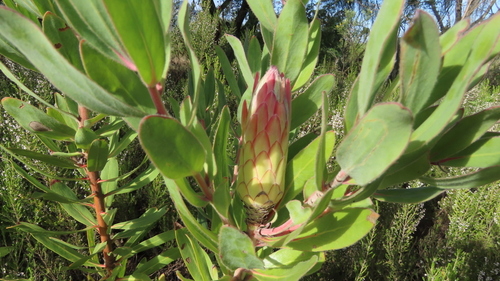
Protea × hybrida covers a group of garden sugarbush hybrids in the genus Protea, bred from South African species for their large, long-lasting flower heads. The plants are evergreen shrubs, most 3–8 feet (0.9–2.4 m) tall and as wide, with stiff, upright stems and leathery, oblong leaves 3–6 inches (8–15 cm) long. Each bloom is a goblet-shaped head 4–7 inches (10–18 cm) across in which a dense central mass of small flowers is ringed by stiff, pointed, petal-like bracts in pink, red, cream, or white. Heads form on the branch tips, mostly from autumn through spring depending on the cross, and last for weeks on the plant and as cut flowers. The shrubs need full sun and acidic, coarse, sharply drained soil low in phosphorus, and they tolerate heat, wind, and drought once established. They are damaged by hard frost, root rot in wet soil, and phosphate fertilizers, any of which can kill them. Most are grown in USDA zones 9–11 or as container plants moved under cover in winter.
Native Range
These are cultivated hybrids with no wild range of their own. Their parent species are native to the fynbos shrublands of South Africa, the source of their need for sun, sharp drainage, and lean, acidic soil.Suggested Uses
Planted in Mediterranean, coastal, and water-wise gardens in mild climates, and grown commercially and in gardens for long-lasting cut flowers. Also grown in large containers where winters are too cold for open ground.How to Identify
Appearance
Size & Dimensions
Height3' - 8'
Width/Spread3' - 8'
Bloom Information
Flower heads open mainly from autumn through spring, with the exact season depending on the cross, and some plants flower over several months. Each head lasts for weeks on the shrub and holds well as a cut flower. Heads are followed by woody seed structures that persist on the stems.
Detailed Descriptions
Flower Description
Pink, red, cream, or whiteFoliage Description
Grey-green to greenGrowing Conditions
Sun Requirements
Requires 6-12 hours of direct sunlight daily
• Full Sun: 6+ hours of direct sunlight
• Partial Shade: 3-6 hours of direct sunlight
• Full Shade: Less than 3 hours of direct sunlight
Care & Maintenance
Care Guide
Grows in full sun on coarse, sharply drained, acidic soil with a pH from 5.0 to 6.5 and low phosphorus. Needs little water once established and tolerates heat, wind, and drought. Phosphate fertilizers damage the roots, so feeding is avoided or limited to low-phosphorus formulas. Wet or heavy soil causes root rot, the main cause of death. Hard frost damages or kills the shrubs, limiting them to USDA zones 9–11 or container culture. Open air movement helps prevent fungal disease on the foliage and heads.Pruning
Stems are cut back after flowering, often by harvesting the blooms, to keep plants bushy and within size. Cutting into bare old wood is limited, as it regrows slowly. Light tip pruning of young plants builds a fuller framework.Pruning Schedule
Prune: March–April
spring
Container Growing
Suitable for container growing
Minimum container size: 7 gallons