Protea, Genus, spp., Multiple species,
- Genus
- Multiple species
protea
Overview
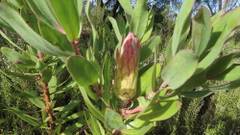
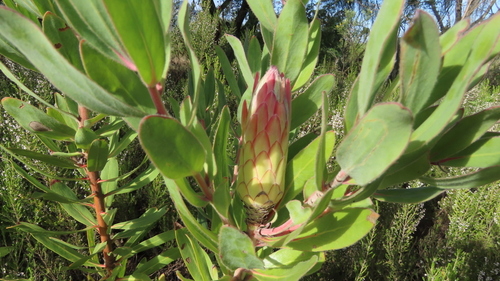
Protea is a genus of around 110 evergreen shrubs and small trees in the family Proteaceae, centered on the Cape Floristic Region of South Africa, with additional species across tropical Africa. Plants range from prostrate, ground-hugging forms to trees 26 feet (8 m) tall, though most garden species grow 3-10 feet (0.9-3 m). The leathery, often grey-green leaves are arranged spirally on stout stems. The flower heads are large cup- or goblet-shaped structures 2-12 inches (5-30 cm) across, in which a dense central mass of slender florets is ringed by stiff, colorful bracts in pink, red, cream, white, yellow, or orange; the king protea P. cynaroides produces heads up to 12 inches (30 cm) wide. Protea forms cluster (proteoid) roots adapted to nutrient-poor soils and is highly sensitive to phosphorus, so standard fertilizers can kill established plants. The genus also requires acidic, sharply drained soil and is prone to root rot from Phytophthora in wet ground. Nectar-rich heads draw birds and insects, and the long-lasting blooms are widely used in the cut-flower trade.
Native Range
Protea is concentrated in the Cape Floristic Region of South Africa, particularly the fynbos shrublands of the Western Cape, with further species extending north through tropical Africa to the highlands of Zimbabwe and Malawi. Most species grow in nutrient-poor, acidic, sandy or rocky soils.Suggested Uses
Grown in water-wise and Mediterranean-climate gardens, coastal plantings, and shrub borders on acidic soils. The genus is widely cultivated for long-lasting cut and dried flowers. Compact species are suited to large containers.How to Identify
Appearance
Size & Dimensions
Height1' - 26'
Width/Spread3' - 13'
Colors
Bloom Information
Flowering varies by species, but many bloom from autumn through spring, with peak display in winter and early spring. Individual heads remain colorful for several weeks. P. cynaroides can flower over an extended period from late autumn into spring.
Detailed Descriptions
Flower Description
pink, red, cream, white, yellow, or orangeFoliage Description
grey-green to greenGrowing Conditions
Sun Requirements
Requires 6-10 hours of direct sunlight daily
• Full Sun: 6+ hours of direct sunlight
• Partial Shade: 3-6 hours of direct sunlight
• Full Shade: Less than 3 hours of direct sunlight
Care & Maintenance
Care Guide
Grow Protea in full sun in acidic, sandy, sharply drained soil with a pH of 5.0-6.5. Phosphorus-containing fertilizers damage the cluster roots, so only low-phosphorus formulations are used, at low rates. Water young plants regularly, then deeply but infrequently once established, as the genus tolerates drought and is intolerant of soggy ground. On heavy soils, planting on mounds or slopes improves drainage and reduces the risk of Phytophthora root rot. Watering at the base rather than overhead, with good air circulation, limits fungal disease. Most species are frost-tender and grown under cover or in containers in cold-winter climates.Pruning
Prune Protea after flowering, cutting stems back to within a few inches of the previous season growth but not into bare old wood, which rarely resprouts. Removing spent flower heads keeps plants compact. Young plants can be tip-pinched to encourage branching.Pruning Schedule
Prune: April–May
spring
Container Growing
Suitable for container growing
Minimum container size: 7 gallons