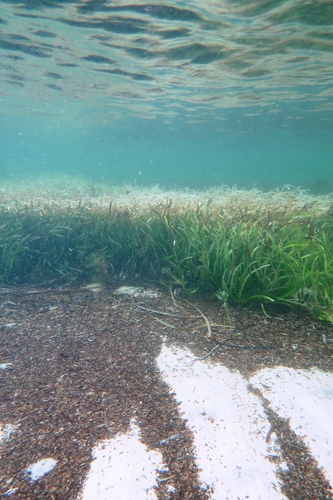
Posidonia, Genus, spp., Multiple species,
- Genus
- Multiple species
Mediterranean Sea and southern Australia
Overview
Posidonia is a genus of about nine seagrasses in the family Posidoniaceae - true flowering plants, not algae - that grow submerged in shallow coastal seas. Posidonia oceanica is found only in the Mediterranean, while the other species grow around southern Australia. Plants spread by thick, fibrous rhizomes rooted in sand and sediment, forming dense underwater meadows from clusters of ribbon-like leaves. The leaves are flat, green, 0.4-0.6 inch (1-1.5 cm) wide and 8-60 inches (20-150 cm) long, growing in tufts of 4-8 and shed and replaced through the year, leaving fibrous sheaths on the rhizome. Small greenish flowers are borne in branched clusters within the leaf tufts, usually in autumn, and are pollinated underwater; floating fruits nicknamed sea olives ripen and drift to new ground. Growth is slow, and meadows expand only inches a year, with some clones thousands of years old. Posidonia needs clear, fully marine water and light, and meadows decline where water is murky, polluted, or disturbed by anchoring and coastal works. Fibrous leaf remains form rounded balls that wash up on beaches.
Native Range
Posidonia oceanica is endemic to the Mediterranean Sea, while the remaining species occur in the temperate coastal waters of southern and western Australia. Plants grow on sandy and muddy seabeds in clear, sheltered, shallow water from the surface down to about 130 feet (40 m) where light allows.Suggested Uses
Used mainly as marine habitat and for coastal protection rather than as a cultivated plant: meadows steady the seabed, slow erosion, store carbon, and act as nurseries for fish and shellfish. Dried fibrous balls and leaves have been used locally as packing, insulation, and soil mulch. Posidonia is planted only in marine restoration and is protected in many areas.How to Identify
Appearance
Size & Dimensions
Height8" - 5'
Bloom Information
Flowers form underwater in branched clusters within the leaf tufts, usually in autumn, though flowering is irregular and many years pass without it in Posidonia oceanica. Pollination occurs in the water, without insects. Floating fruits ripen over the following months and drift to colonize new seabed.
Detailed Descriptions
Foliage Description
greenGrowing Conditions
Sun Requirements
• Full Sun: 6+ hours of direct sunlight
• Partial Shade: 3-6 hours of direct sunlight
• Full Shade: Less than 3 hours of direct sunlight
Soil Requirements
Soil Types
Water & Climate
Water Needs
